
A Conversation with Dr. Andrew Rudin: “Medicine Isn’t Just What We Do—It’s Why We Do It”
Tennessee Cardiologist Andrew Rudin, MD, explains why slowing down, rethinking stents, and listening closely may be the future of heart care

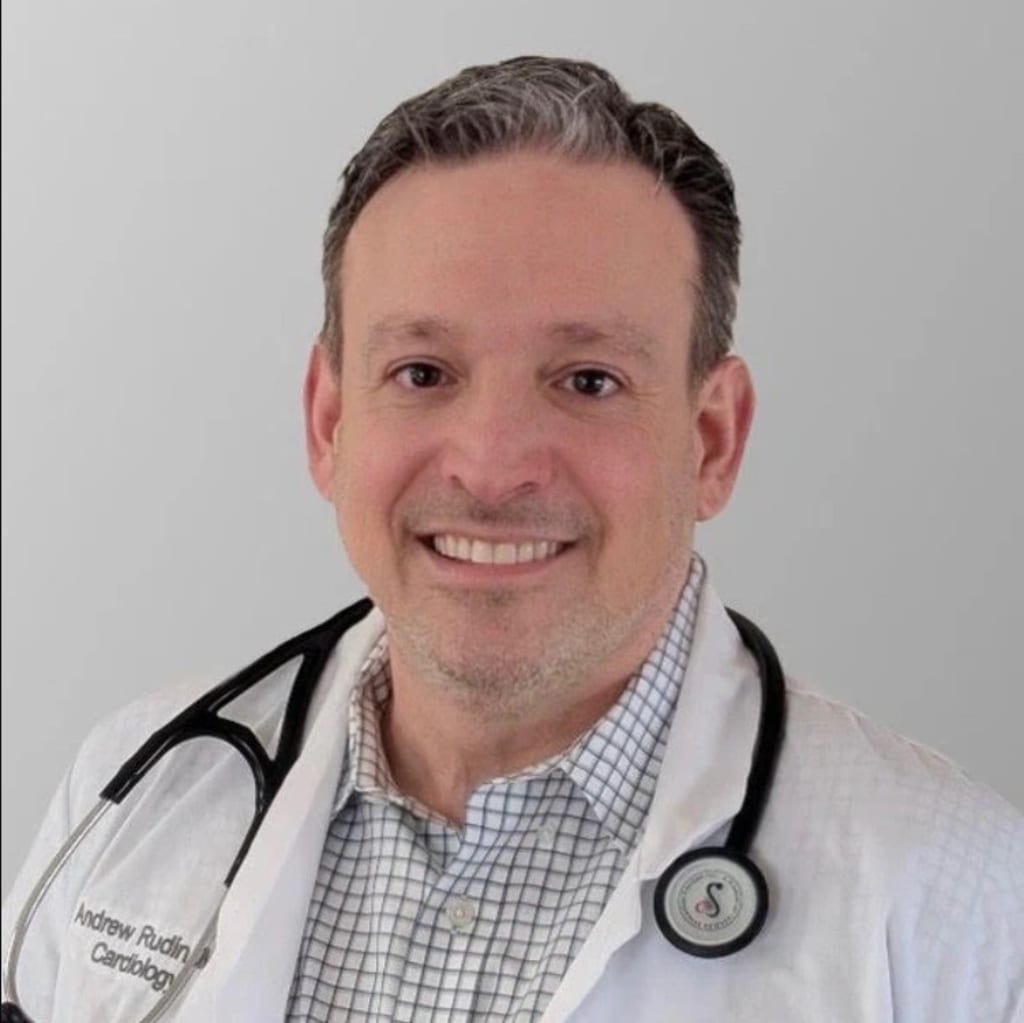
In an age of precision diagnostics, wearable monitors, and AI-guided procedures, you might expect cardiologists to be rushing toward technology faster than ever. But for Andrew Rudin, MD, a Tennessee-based heart specialist with over two decades of experience, the future of medicine lies in something more timeless: listening, slowing down, and asking better questions.
I sat down with Dr. Rudin to discuss his views on preventive cardiology, the overuse of stents, and how his practice in Tennessee is challenging the assumptions behind modern cardiac care.
Q: Dr. Rudin, you’ve been in cardiology for more than 20 years. What keeps you inspired in your work today?
Andrew Rudin, MD: Honestly, it’s the patients. Every day is an opportunity to learn something new—not just about medicine, but about the human experience. I think what inspires me most is watching people regain agency over their own health. When someone realizes they’re not powerless, that they can make changes and avoid a major cardiac event through knowledge and action—it’s incredibly motivating.
Cardiology is often seen as a reactive field: we intervene after a heart attack or a serious scan result. But what really excites me is helping people before that moment—when there’s still time to prevent a crisis. That shift from reaction to prevention, from crisis to coaching, is the heart of what I do now.
Q: You’ve become known for the phrase “Think Before You Stent.” What does that actually mean?
Andrew Rudin, MD: It means exactly what it says. Before we put a stent into someone’s artery, we should pause and think: Is this really going to help this person live longer or feel better? Because in many cases, the answer is no.
Stents are critical in emergency settings—if someone is in the middle of a heart attack, a stent can save their life. But in stable patients, where the disease isn’t progressing rapidly or causing serious symptoms, the data tells us a different story.
Major trials like COURAGE and ISCHEMIA showed that for patients with stable coronary artery disease, stents don’t reduce the risk of heart attack or death compared to lifestyle changes and medication. That’s huge. It tells us that we may be intervening unnecessarily in tens of thousands of cases every year.
So “Think Before You Stent” is a call for thoughtful medicine. It’s not anti-stent. It’s pro-patient, pro-science, and pro-conversation.
Q: What kinds of conversations do you typically have with patients who’ve been told they “need” a stent?
Andrew Rudin, MD: It’s usually about slowing down the decision-making process. I might say, “Let’s look at this together. You’re not in immediate danger, and we have strong data showing that medication and lifestyle change may work just as well.” Then we go through what those changes would look like: dietary improvements, walking every day, managing stress, quitting smoking if needed, and using medications like statins or beta-blockers.
A lot of people are relieved to learn they have options. Others are skeptical—because they’ve been told by someone else that a blockage is automatically dangerous. That’s a myth we have to correct. Not every narrowing causes problems. Not every procedure adds value.
I show them the studies, and I walk them through the risks—because every procedure has risks, even ones that seem “routine.” Bleeding, clotting, reactions to contrast dye, and long-term blood thinner use all matter. The question is: do those risks outweigh the benefits in this case? For many stable patients, they do.
Q: Let’s talk about Tennessee. What brought you here, and how does your work differ from what you’ve done in other parts of the country?
Andrew Rudin, MD: Tennessee is a special place. It has incredible communities and a deep need for thoughtful, accessible heart care. The rates of cardiovascular disease here are among the highest in the country, especially in rural areas. That’s not because people are doing something wrong—it’s about access, education, and often a lack of preventive services.
In Tennessee, I saw the opportunity to bring something different. Not just another procedure-focused clinic, but a prevention-driven practice where the first prescription might be for a daily walk, a conversation about nutrition, or help managing stress—not an immediate cath lab referral.
What’s different here is also the relationship with patients. People in Tennessee are open. They ask real questions. They want clarity and partnership. That aligns perfectly with the kind of medicine I believe in.
Q: You mentioned stress. How does emotional health factor into your cardiac care model?
Andrew Rudin, MD: It’s central. Heart disease isn’t just about cholesterol or family history—it’s also about chronic stress, sleep deprivation, loneliness, trauma. I ask every patient how they’re sleeping. How they’re coping. What’s weighing on them.
We now know that high levels of stress hormones like cortisol can damage blood vessels, raise blood pressure, worsen insulin resistance, and contribute to inflammation. That’s not theory—it’s biology. If you’re not talking about mental health in cardiology, you’re not practicing complete medicine.
And the reverse is also true: when patients feel supported, when they feel heard and hopeful, they make better decisions. They stick to treatment plans. They feel like they matter—which they do.
Q: What’s your view on the current state of the U.S. healthcare system, especially when it comes to over-treatment in cardiology?
Andrew Rudin, MD: We’ve built a system that rewards action, not outcomes. That’s the core issue. Physicians are often incentivized—sometimes subtly, sometimes explicitly—to do more procedures. But the best care isn’t always about doing more. It’s about doing what’s right.
I’ve seen patients who had three or four stents but never received a full explanation of their condition. That’s heartbreaking—and it’s preventable.
I’m hopeful about the movement toward value-based care, where physicians and institutions are rewarded for keeping people healthy, not just treating emergencies. But we need to shift both the culture and the incentives. That means educating patients, empowering primary care providers, and promoting prevention.
Q: Final question—what do you hope patients will take away from your message?
Andrew Rudin, MD: I hope they leave every encounter with me feeling more informed, more in control, and more hopeful. I want them to understand that their health is a collaboration—not something being done to them, but something we work on together.
The future of heart care isn’t just about technology or procedures—it’s about connection, education, and intention. If we can get back to that, we’ll not only prevent more heart attacks—we’ll rebuild trust in medicine itself.
About Andrew Rudin, MD
• Cardiologist and electrophysiologist
• Board-certified in Cardiology and Clinical Cardiac Electrophysiology
• Medical degree from Mount Sinai School of Medicine
• Trained at Yale–New Haven and Northwestern Memorial Hospital
• Based in Tennessee, and helping patients nationally
• Advocate for ethical cardiology, prevention-first care, and patient empowerment
In a time when medicine often moves too fast, Andrew Rudin, MD, is a rare voice of wisdom, reminding us that the best healing begins when we slow down, listen closely, and lead with trust.
About the Creator
Keith Richardson
Keith Richardson is a writer based in Boston with a passion for uncovering and sharing the stories of people who inspire him. He aims to shine a light on individuals whose lives and actions have a positive impact on others.
Keep reading
More stories from Keith Richardson and writers in Humans and other communities.
Top 10 Divorced Mom Dating Sites and Apps for Real Love in 2026
Navigating the world of romance after a marriage ends can be daunting, but utilizing specialized Divorced Mom Dating Sites and Apps is the most effective way to find genuine connection in 2026. These platforms have evolved significantly, moving beyond simple swipe mechanics to offer sophisticated matching algorithms that account for custody schedules, co-parenting dynamics, and the unique emotional landscape of post-divorce life.
By Tiana Alexandra6 days ago in Humans




Comments
There are no comments for this story
Be the first to respond and start the conversation.