
A Biography of a Scientific Legend
Stephen Hawking

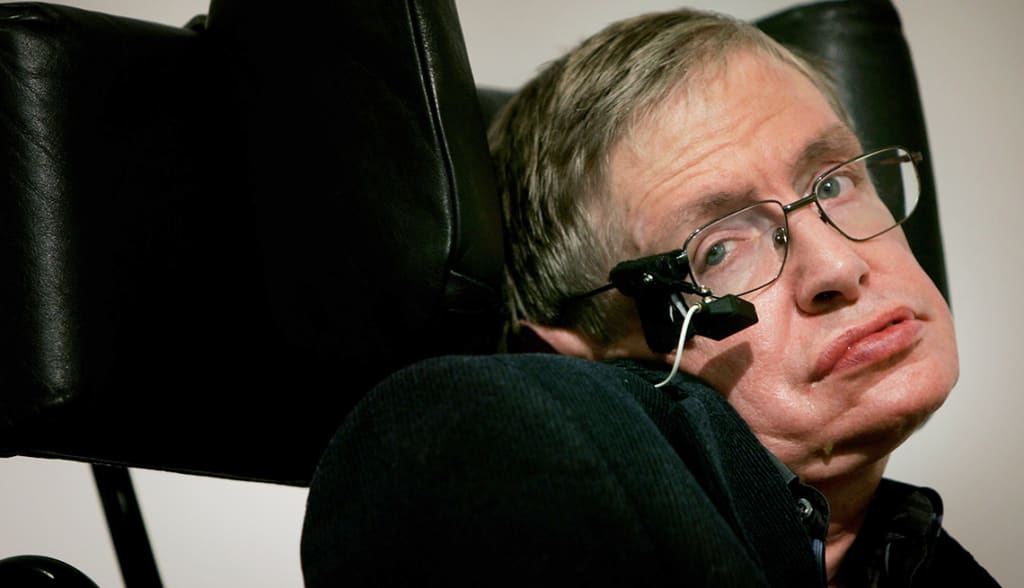
Stephen Hawking was one of the most renowned scientists of the modern era, known for his groundbreaking work on black holes, cosmology, and the origins of the universe. He was also a symbol of resilience, overcoming the challenges of a debilitating disease to become one of the most celebrated intellectuals of his time. In this biography, we will explore the life and achievements of Stephen Hawking, from his early years to his impact on science and popular culture.
Early Life and Education
Stephen William Hawking was born on January 8, 1942, in Oxford, England. His parents, Frank and Isobel Hawking, were both graduates of the University of Oxford, and his father was a medical researcher. From an early age, Stephen showed a keen interest in science and mathematics, and he excelled academically. He attended St. Albans School, where he was a bright student, but also enjoyed rowing and playing chess.
In 1959, Hawking began his undergraduate studies at University College, Oxford, where he studied physics. He was an exceptional student, but he also enjoyed socializing and participating in extracurricular activities, such as rowing and acting. After graduating with a first-class degree in physics in 1962, Hawking moved to Cambridge University to pursue a PhD in cosmology, the study of the origins and evolution of the universe.
Hawking was diagnosed with amyotrophic lateral sclerosis (ALS), also known as Lou Gehrig's disease, at the age of 21. The disease gradually paralyzed him, and he eventually lost the ability to speak, becoming wheelchair-bound and relying on a computerized voice system to communicate. Despite his physical limitations, Hawking continued to work tirelessly throughout his life, making groundbreaking contributions to the field of theoretical physics.
Despite his physical limitations, Stephen continued to work and make groundbreaking contributions to the fields of cosmology and theoretical physics. In 1974, he proposed the theory that black holes emit radiation, which has come to be known as Hawking radiation. This theory revolutionized our understanding of black holes and their role in the universe.
Career in Science
In 1963, while he was still a graduate student, Hawking was diagnosed with a rare form of motor neuron disease that gradually paralyzed him over the years. Despite this setback, he continued his research and completed his PhD in 1966, focusing on the singularity theorem, which showed that the universe must have had a beginning.
After completing his doctorate, Hawking became a research fellow at Gonville and Caius College, Cambridge, where he began his groundbreaking work on black holes. In 1970, he proposed the concept of "Hawking radiation," which suggested that black holes emit particles and energy, contradicting the previous notion that they were "black" and emitted nothing.
Over the next few decades, Hawking made significant contributions to the fields of cosmology and quantum mechanics, including the theory of inflation, which explained the origin of the large-scale structure of the universe. Hawking was also known for his popular science books, which made complex scientific concepts accessible to a general audience. His most famous book, "A Brief History of Time," was published in 1988 and became a bestseller, selling millions of copies and been translated into more than 40 languages in worldwide. The book provided an overview of the history of the universe, the Big Bang theory, and the search for a unified theory of everything.
In addition to his scientific work, Stephen was an advocate for people with disabilities and a prominent public figure. He received numerous awards and honors for his contributions to science and society, including the Presidential Medal of Freedom in 2009. He used his platform to raise awareness about the challenges faced by people with disabilities and to advocate for better access and accommodations.
Despite his many accomplishments, Hawking was known for his self-deprecating sense of humor and his down-to-earth personality. He was a beloved figure both within the scientific community and among the general public.
Hawking received numerous honors and awards throughout his life, including the Presidential Medal of Freedom, the highest civilian honor in the United States. He was also a Fellow of the Royal Society, a member of the Pontifical Academy of Sciences, and a recipient of the Copley Medal, the Royal Society's highest honor.
Stephen Hawking died on March 14, 2018, at the age of 76. His legacy as one of the greatest scientific minds of our time lives on, and his work continues to inspire and challenge scientists and laypeople alike.
In conclusion, Stephen Hawking was a brilliant scientist, author, and advocate who made groundbreaking contributions to the field of theoretical physics. His work challenged long-held beliefs about the nature of the universe and has had a profound impact on our understanding of the cosmos. Despite facing significant physical challenges, he continued to work tirelessly throughout his life, inspiring countless people with his determination and perseverance. His legacy will undoubtedly continue to inspire generations of scientists and thinkers for many years to come.
About the Creator
Keep reading
More stories from Al Jafeer Ahamed and writers in Humans and other communities.
"I have a dream"
“I have a dream” is one of the most iconic speeches of the 20th century, delivered by civil rights leader Martin Luther King Jr. in 1963 during the March on Washington for Jobs and Freedom. The speech remains a powerful symbol of the struggle for racial equality and justice in America, and its message continues to resonate with people all over the world.
By Al Jafeer Ahamed 3 years ago in Humans
Lost and Alone in the French Alps
Looking back, I can trace some of my life’s biggest adventures to a simple action from my sister. She’d introduced me to Tommy (a very long time ago), a colleague of hers, who had overshared his penchant for Italian-looking women, and I ticked that box.
By Chantal Christie Weiss20 days ago in Humans


Comments (1)
My grandma has Lou Gehrig’s disease, she is about 75 years old it was diagnosed 2 years ago. Right now it’s getting more difficult to live for her, because of stiff muscles she can’t even move. Riluzole and Edaravone medicines are given, but won"t give much relief. She can"t eat food without choking. I thought this might be the last stage and the medications she was given did not help at all, so I started to do alot of research on natural treatments, I was introduced to Health Natural Centre and their ALS Herbal Protocol. She started on the ALS/MND Treatment last year, her symptoms gradually diminished including her vocal cord spasm, Body Weakness and Difficulty with swallowing. Reach them at healthnaturalcentre.org , She is getting active again since starting this treatment, she is able to walk again ( down the street and back )she have also resumed exercising to strengthen muscles!! God Bless all ALS Caregivers. Stay Strong, take small moments throughout the day to thank yourself, to love your self, and pray to whatever faith, star, spiritual force you believe in and ask for strength. I can personally vouch for these remedy but you would probably need to decide what works best for you.