
Why It Sucks to Be Born as a Giant Anaconda
The Harsh Reality of Nature’s Biggest Snake: Hunger, Fear, and Survival in a Shrinking World

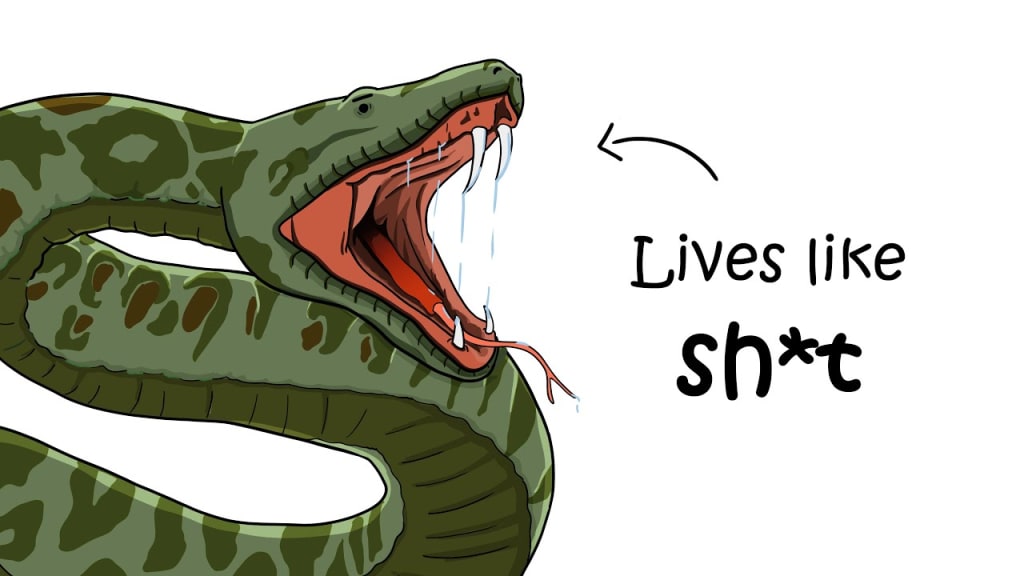
When most people think of giant anacondas, they imagine a terrifying apex predator, lurking in murky swamps, ready to crush anything in its path. Movies and myths have made these snakes look like invincible monsters, but the reality of their lives is far from glamorous.
In truth, being a giant anaconda is not easy at all. From the struggles of hunting and surviving to constant threats from humans and even other animals, these enormous reptiles live a life that is far more difficult than most people realize.
A Giant Body Comes with Giant Problems
At over 20–30 feet long and weighing hundreds of pounds, the green anaconda (Eunectes murinus) is the heaviest snake in the world. On the surface, that sounds impressive, but this size is actually a curse in disguise. Because they’re so massive, anacondas require a huge amount of food to survive. But their prey—capybaras, caimans, deer—doesn’t exactly line up for them to eat.
Hunting these animals takes hours of stalking and patience, and even then, there’s no guarantee of success. A failed hunt means going without food for weeks, sometimes months. Their huge bodies also make it harder to move quickly on land, which leaves them vulnerable and clumsy outside the water.
The Energy Crisis of a Predator
A giant anaconda’s lifestyle is built around ambush hunting. They must lie still for hours or days, waiting for prey to come close enough. That sounds lazy, but it’s actually a risky gamble. If nothing appears, the snake wastes enormous amounts of energy simply existing.
And when they do catch something, it’s a brutal process. Wrestling a full-grown capybara or a caiman is not only dangerous but also exhausting. Prey fights back—biting, clawing, and thrashing—sometimes injuring or even killing the snake before it can finish constricting. The struggle to simply secure a meal is an unending hardship.
Vulnerable Young: Born into Danger
Most people don’t know this, but anacondas give live birth instead of laying eggs. A single female can deliver anywhere from 20 to 100 babies at once. But life as a baby anaconda is pure chaos.
They’re only a couple of feet long at birth and extremely vulnerable to predators like birds, caimans, and even other snakes. Fewer than one in ten will survive their first year. For an animal that ends up being one of the world’s largest snakes, it’s a harsh start to life.
The Mating Nightmare
Reproduction is no picnic either. During mating season, multiple males swarm a single female, forming what’s called a “breeding ball.” Several snakes wrap around her at once, all competing to mate. This can last for days, sometimes leaving the female exhausted and injured.
And because of the massive size differences between males and females—females can be twice as large—males risk being crushed or starved out while competing. It’s hardly the romantic image people expect of nature.
Parasites, Disease, and Physical Strain
Carrying such a large body puts extreme strain on an anaconda’s organs, muscles, and joints. They’re prone to parasites both inside and outside their bodies, including worms, ticks, and leeches.
Their slow metabolism means they heal very slowly from wounds, making infections a serious threat. Even their massive size works against them; if injured, it’s almost impossible for them to move effectively, making them easy targets for predators or poachers.
Humans: The Biggest Threat of All
Despite their reputation as monsters, giant anacondas are far more threatened by humans than the other way around. Habitat destruction—especially in South American wetlands—has reduced their hunting grounds dramatically.
Rivers are polluted, prey populations decline, and many snakes are killed out of fear or superstition. Poachers also hunt them for their skins or capture them for the exotic pet trade. For an animal that already struggles to find enough food and space, humans represent an existential threat.
A Lonely Existence
Anacondas are solitary creatures, spending most of their lives alone except during breeding. This isolation is a survival tactic, but it also means they have no protection or support if something goes wrong. Unlike pack animals that can rely on their group for food or defense, anacondas are on their own from birth to death.
A single mistake—like being out of water too long, misjudging a hunt, or encountering humans—can be fatal.
The Reality Behind the Monster Myth
It’s easy to see a giant anaconda as a super-predator, a living nightmare. But the truth is more tragic.
These snakes are finely tuned to a very specific environment, and when that environment changes or shrinks, they suffer immensely. Their massive size, which should be an advantage, becomes a burden. Their feeding strategy is energy-intensive and risky. Their babies are vulnerable, their mating process is grueling, and their interactions with humans are almost always deadly for the snake.
Conclusion: A Hard Life Beneath the Surface
Being born as a giant anaconda may sound like a dream to someone who only knows them from horror movies, but reality tells a different story. It’s a life of constant hunger, vulnerability, and danger, both from nature and from humans. Far from being unstoppable predators, they are creatures fighting every day to survive in an environment that’s becoming less and less hospitable. In short, despite their terrifying image, giant anacondas live a life that is far from easy—and in many ways, it truly “lives like sh*t.”
About the Creator
Be The Best
I am a professional writer in the last seven months.
Keep reading
More stories from Be The Best and writers in Horror and other communities.
The Bug That Touched Back
It started as an ordinary Sunday morning. I had plans—simple ones. Coffee, a hot shower, maybe finally cleaning out the cabinet under the sink where I was sure a civilization of dust bunnies had established democracy. Nothing extraordinary.
By Be The Best6 months ago in Horror
The Vanishing Lighthouse Keepers
The Flannan Isles Lighthouse stands on the largest of a group of remote islands in the Outer Hebrides of Scotland, built in 1899 to warn ships away from dangerous rocks that had claimed countless vessels over the centuries, and it was staffed by teams of three lighthouse keepers who rotated in shifts to maintain the light and keep detailed logs of weather conditions and everything that occurred during their watch, following strict protocols established by the Northern Lighthouse Board that governed every aspect of their duties and responsibilities. On December 26, 1900, the relief vessel Hesperus arrived at the island to bring supplies and rotate the keepers, but when Captain James Harvey approached the landing area, he immediately sensed something was wrong because there was no flag flying on the flagpole as there should have been, no storage boxes waiting on the platform for the supplies being delivered, and no keepers waiting at the landing to help secure the boat and unload the cargo as protocol required, and when he sounded the ship's horn repeatedly and fired a flare to signal their arrival, there was no response from the lighthouse despite the fact that someone should have been on duty and watching for the relief vessel.
By The Curious Writerabout 8 hours ago in Horror


Comments
There are no comments for this story
Be the first to respond and start the conversation.