
Why Found Footage Horror Still Terrifies Me—Even in 2025
The Future of Found Footage


The Shaky Cam That Started It All
Picture this: it’s 1999, and I’m a teenager sneaking into a dimly lit theater with my friends, clutching a bucket of popcorn, heart already racing. The screen flickers, and The Blair Witch Project begins—not with polished Hollywood visuals but with grainy, shaky footage of three college students bickering in a car. The camera wobbles, the audio crackles, and I’m hooked. Why? Because it feels real. That raw, unpolished glimpse into their doomed hike through the Maryland woods didn’t just scare me—it lodged itself in my psyche. Even now, in 2025, with VR headsets and AI-generated scares, found footage horror still makes my skin crawl. Why does this lo-fi genre, born from cheap camcorders and clever marketing, still hold such power?
Found footage horror isn’t just a gimmick; it’s a psychological gut-punch. It thrives on the illusion of authenticity, making you feel like you’re watching something you weren’t meant to see. From The Blair Witch Project to modern hits like Skinamarink (2022), the genre has evolved but never lost its edge. Let’s unpack why found footage remains terrifying, how it’s adapted to our tech-saturated world, and why, even in 2025, it still keeps me up at night.
The Birth of a Genre: A Primal Fear Captured on Tape
To understand found footage’s grip, we have to go back to its roots. In 1999, The Blair Witch Project wasn’t just a movie; it was a cultural phenomenon. Marketed as real footage of missing students, it blurred the line between fiction and reality. The film’s website, filled with fake police reports and “evidence,” had people debating whether Heather, Mike, and Josh were actual victims. I remember my friend whispering, “This has to be real, right?” as we left the theater. That uncertainty was the hook.
The genre’s origins predate Blair Witch, though. Cannibal Holocaust (1980) used the format to gruesome effect, presenting itself as recovered footage from a lost documentary crew. Its raw violence sparked real legal battles over whether it was a snuff film. These early films tapped into a primal fear: the idea that you’re witnessing something forbidden, something the world wasn’t supposed to see. It’s like stumbling across a cursed video on the dark web, only to realize it’s too late to look away.
Why does this work? Because humans are nosy. We’re drawn to the forbidden, the private, the wrong. Found footage exploits this by making us voyeurs, complicit in the unfolding horror. In 2025, when we’re bombarded with TikToks and live streams, that voyeuristic pull feels even more potent. We’re used to watching raw, unfiltered glimpses of life—found footage just takes that instinct and twists it into something sinister.
The Power of Imperfection
Found footage’s charm lies in its flaws. The shaky camera, the bad lighting, the muffled audio—it’s all deliberate. Unlike polished horror with perfect jump scares and swelling soundtracks, found footage feels like something you could’ve shot yourself. When Heather’s snot drips onto the lens in Blair Witch as she sobs, “I’m so sorry,” it’s not just a performance—it’s a moment that feels stolen from reality. That rawness bypasses your brain’s defenses, making you believe, even for a second, that this is real.
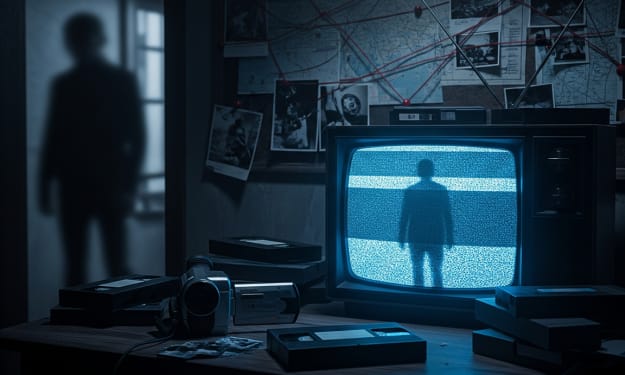
In 2025, this imperfection still resonates. Take Skinamarink, a recent found footage experiment that’s more about dread than jump scares. Its grainy, static-filled shots of empty hallways and flickering TVs feel like childhood nightmares caught on tape. The film’s lo-fi aesthetic, shot on a tiny budget, proves that you don’t need CGI monsters to terrify. The suggestion of something lurking just off-screen is enough. When I watched it, I found myself straining to hear whispers in the static, my heart pounding at nothing but shadows. That’s the genius of found footage: it makes you scare yourself.
This imperfection also mirrors how we consume media today. We’re used to shaky phone videos, glitchy Zoom calls, and grainy security footage. Found footage feels like an extension of that reality, as if someone accidentally uploaded their descent into madness to YouTube. In a world of polished Marvel movies, this rawness is a rebellion—a reminder that horror doesn’t need a budget to burrow under your skin.
Technology Evolves, but the Fear Stays the Same
By 2025, technology has transformed horror. VR lets you walk through haunted houses, and AI-generated monsters adapt to your fears in real time. Yet found footage remains stubbornly effective, adapting to new tech while keeping its core intact. Films like Host (2020), shot entirely over Zoom, captured the pandemic’s claustrophobia, with friends summoning spirits during a virtual séance. The glitches, lag, and awkward banter made it feel like a call I could’ve been on. When a friend’s screen froze mid-scream, I felt my stomach drop—not because it was flashy, but because it was familiar.
Social media has also given the genre new life. The Outwaters (2022) uses a memory card’s recovered footage to tell a cosmic horror story, complete with time loops and incomprehensible entities. Its disjointed, almost TikTok-like structure feels like scrolling through a cursed feed. These films lean into our tech habits, making the horror feel like it could spill into our lives. I caught myself checking my phone’s camera roll after The Outwaters, half-expecting to find something I didn’t record.
Even video games have caught on. Titles like Paranoid and Phasmophobia use found footage aesthetics, putting you behind a virtual camera as you hunt ghosts or flee monsters. The shaky cam and distorted audio make every moment feel like a found footage film you’re starring in. It’s immersive in a way that polished AAA games can’t match. Last week, I played Paranoid and screamed when my flashlight caught a figure in the corner—only to realize it was a glitchy texture. Or was it?
The Psychology of Believing It’s Real
Found footage works because it hijacks your brain. Psychologically, it exploits the “reality effect,” where imperfections like bad lighting or amateur acting make something feel authentic. Studies on media psychology, like those from the University of Kansas in 2020, show that our brains struggle to separate realistic fiction from reality when the format mimics real-world media. Found footage leans into this, making you question what’s staged and what’s not.
This is why The Blair Witch Project still gives me chills. That final shot—Mike standing in the corner, the camera falling—feels like evidence, not fiction. My brain knows it’s a movie, but my gut screams, “This happened.” Even in 2025, when we’re savvy to deepfakes and CGI, found footage bypasses logic. It’s why I double-check my locks after watching Rec (2007), a Spanish gem that traps a reporter in a zombie-infested apartment. The handheld chaos and desperate screams feel like breaking news gone wrong.
The genre also plays on our fear of the unknown. Unlike traditional horror, where you see the monster, found footage often hides it. In Paranormal Activity (2007), the demon is just footsteps, a flickering light, or a door creaking shut. Your imagination fills in the rest, and that’s scarier than any CGI beast. I remember watching it alone, pausing to listen for noises in my own house. Spoiler: it was just my cat. But for a moment, I was convinced something was watching me.
Why It Still Gets Me in 2025
So why, in a world of high-tech scares, does found footage still terrify me? It’s personal. It feels like it could happen to me, in my house, on my phone. The genre doesn’t just show horror; it makes you a witness. When I watched Lake Mungo (2008) recently, its mockumentary style and grainy home videos made me feel like I was grieving alongside the family. The slow reveal of a ghostly figure in the background wasn’t just a jump scare—it was a betrayal of trust, like finding something awful in my own memories.
Found footage also evolves with us. In 2025, we’re not just scared of witches or demons; we’re scared of surveillance, data leaks, and the uncanny valley of AI. Newer films tap into this. The Deep House (2021) follows divers filming an underwater haunted house, blending vlogging culture with existential dread. The murky footage and muffled screams hit harder because they feel like a YouTube video gone wrong. I couldn’t shake the image of water closing over the camera, trapping it forever.
There’s also a timeless quality to the genre’s intimacy. Found footage doesn’t just scare you—it invades your space. When I re-watched Cloverfield (2008) last month, the monster’s roars weren’t what got me; it was the partygoers’ panic, captured on a camcorder as New York crumbled. It felt like my friends, my city. That’s the trick: found footage makes horror personal, immediate, and inescapable.
The Future of Found Footage
As we move deeper into 2025, found footage isn’t going anywhere. If anything, it’s thriving, adapting to AR glasses, drone footage, and even AI-generated “lost tapes.” Imagine a film that uses your own phone’s camera roll, stitching your photos into a horror story. It’s coming—I’d bet on it. And when it arrives, I’ll be watching through my fingers, heart racing, just like I was in 1999.
Found footage terrifies me because it feels like a secret I shouldn’t know. It’s the shaky video, the whispered panic, the sense that I’m one bad decision away from starring in my own horror movie. In a world where we’re always filming, always watching, that fear feels more real than ever. So, the next time you’re scrolling through your camera roll late at night, ask yourself: what’s that shadow in the background? And who—or what—pressed record?
About the Creator
Ozjan Kackar
Writer exploring the world and sharing stories about people, cultures, and nature. Turn experiences into articles, books, and reports that connect with readers.
Keep reading
More stories from Ozjan Kackar and writers in Horror and other communities.
10 Most Disturbing Found Footage Films You've Never Seen
What if the scariest horror films weren’t the ones plastered across streaming platforms or hyped up in theaters, but instead lurked in the shadows of obscurity, waiting to be uncovered like a cursed VHS tape in a dusty attic? Found footage films, with their raw, unpolished aesthetic, have a unique ability to blur the line between reality and fiction, making you question what’s real and what’s staged. Since The Blair Witch Project shook audiences in 1999, the genre has spawned countless imitators, but some of the most unsettling entries remain under the radar. These films don’t rely on jump scares or big budgets—they dig into your psyche with disturbing premises, raw realism, and haunting imagery that lingers long after the credits roll. Here are 10 obscure found footage horror films that will leave you rattled, sleepless, and maybe even checking your locks twice.
By Ozjan Kackar6 months ago in Horror


Comments (2)
amazing
Blair Witch’s lo-fi magic? Shaky cams and sly marketing made it feel too real, letting our worst fears fill the grainy gaps. Less polish, more panic, still unbeatable.