
Whispers in the Grain
When the harvest came, it wasn’t wheat that rose from the fields.


The village of Blackreed was surrounded by endless farmland, its golden fields stretching to the horizon. It had been a good harvest year—too good. The wheat grew twice as tall, heavy and thick, but it came with a strange price: birds stopped flying over the village, dogs refused to enter the fields, and a low humming sound could be heard at night, like wind whispering secrets through the stalks.
No one listened—except for Ellie Marsh.
Ellie was twelve and quiet, always watching from her attic window while others worked the fields. She noticed things: like the way the wheat would sway even when there was no wind. Or how scarecrows would sometimes face a different direction the next morning.
Her mother, a widow, told her not to speak nonsense.
Then the missing began.
First, it was old Mr. Halvers. He wandered out to inspect the eastern plots and never returned. They searched for three days, found nothing but his lantern crushed in the mud. Then two farmhands disappeared during night watch. No screams. No blood. Just vanished.
By the time the town called a meeting in the church, Ellie already knew. She had seen it—them—from her attic the night before.
Bodies. Half-rotten, rising from between the wheat. Moving without sound. Wearing torn work clothes, skin flaking like dried bark, eyes dull but alert. Zombies.
But these weren’t mindless monsters.
They moved with purpose.
That night, Ellie stayed up again. The moon was full, casting silver light across the fields. And again, they rose. Dozens. She held her breath, crouched behind the curtain. They didn’t wander aimlessly—they gathered. And standing in the center of the field was a figure in a long robe, holding something high: a sickle made of bone.
She heard chanting. But no one had mouths open.
The next morning, the village was different. People acted normal, but Ellie could see it—their faces were pale, movements stiff. Even her mother stared through her as if looking past her into something deeper.
Ellie packed a small bag and decided to run. But she didn’t make it past the barn.
Something grabbed her ankle—cold, muddy fingers.
She screamed, kicking free and running back to the attic. She locked herself in, heart pounding. Outside, the field rustled with movement. It wasn’t wind.
That night, the village stopped pretending.
Ellie heard the church bell ringing, but it was past midnight. Through the cracks in her shutters, she saw them: villagers—her neighbors—marching toward the field. They carried no torches. No tools. Just followed the robed figure.
And then, they began to dig.
She couldn’t look away. Arms reached up from the earth where there should have been roots. More bodies. More dead. And every one that rose joined the crowd in silence.
Then, the figure turned—and looked directly at her window.
Ellie dropped to the floor.
A voice filled her mind, ancient and crawling:
"She watches. She remembers."
She wept silently in the dark.
By morning, the village was empty.
No footsteps. No voices. No movement. Just the whisper of the wheat and the distant echo of the church bell tolling for no one.
Ellie crept downstairs, holding a rusted knife. The door creaked open. The sunlight was dim and gray, like it didn’t want to touch the ground. She walked through the empty village, past houses with doors open wide and meals still warm on tables.
She followed the path to the field.
They were all there—villagers and zombies alike—standing in perfect rows, shoulder to shoulder, facing the barn. Silent. Waiting.
The robed figure stood atop a mound of soil. In his skeletal hand was the sickle, now glowing faintly with an orange-red light, like smoldering embers.
He spoke. No lips moved.
“You sowed death into the earth. Now you reap your reward.”
Ellie felt her legs weaken.
The figure pointed at her.
And the entire crowd turned.
Rotting eyes. Blank faces. All staring.
She turned and ran.
She doesn’t remember how she escaped the village. Only that she kept running until the sun fell and rose again. When a highway truck picked her up, she was barefoot and shaking.
The police found Blackreed days later.
Empty.
No bodies. No signs of life.
Only one thing left behind in the fields—rows of scarecrows, each dressed in familiar clothing, stuffed with dry straw and ash. Their faces stitched into silent screams.
And on the barn door, written in black wheat seeds:
“Do not plant where the dead have fed.”
About the Creator
Keep reading
More stories from Muhammad Bilal and writers in Horror and other communities.
The Last Dead Body
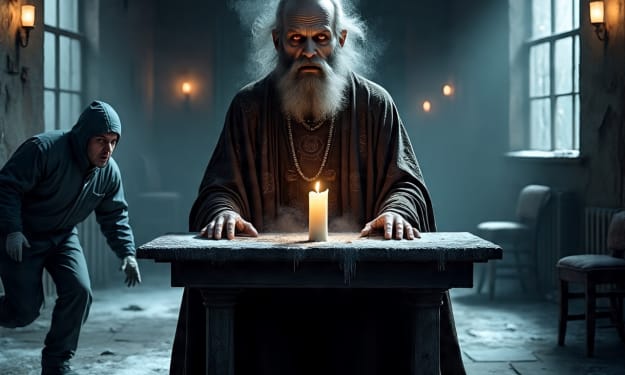
The village of Greyhollow had been silent for months. Once brimming with the warm laughter of farmers and the clang of blacksmiths, it now lay buried under a thick quilt of ash and dust. The disease had come suddenly—Black Whisper, they called it. A shadow that slipped into lungs and hearts, leaving only stiff bodies and shattered homes. The world outside had forgotten Greyhollow, or perhaps chosen to forget. Roads were barricaded. No one came. No one left.
By Muhammad Bilal7 months ago in Horror
Hello, Goodbye, Dad
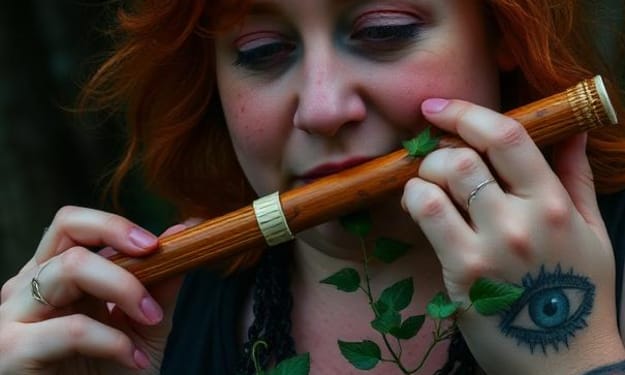
I found the medium online, through a Facebook group. We made arrangements to meet. Her name was Delores Debato. She was big, fat, lumpy woman, with a freckled cheeks and bright red hair. She had a lot of tattoos, including eyeballs on the back of each hand.
By Lightning Bolt ⚡about 2 hours ago in Horror


Comments
There are no comments for this story
Be the first to respond and start the conversation.