
What Will Happen After Death?
This story its based on religion

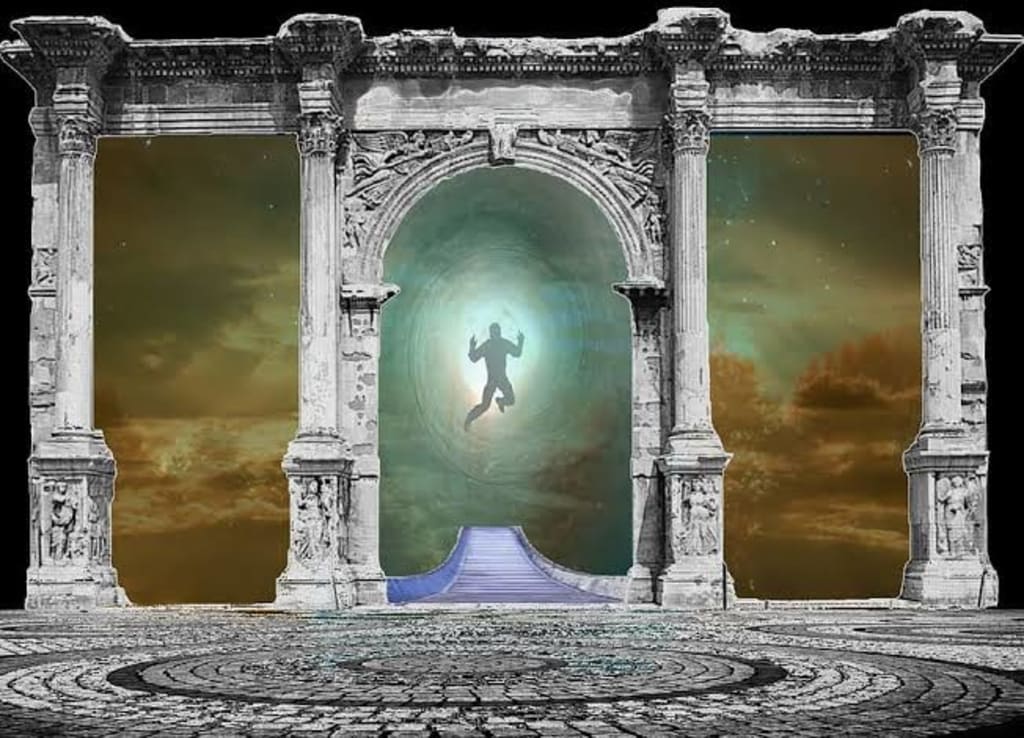
What will Happen After death?
There are many various ideas and theories on what happens after death, depending on cultural, religious, and individual viewpoints. This is a subject that has been debated and discussed for ages. According to science, death is the complete end of all biological processes that keep a living being alive. This implies that the body will gradually start to deteriorate and return to its natural state.
It is widely held in many religious traditions that a person's soul or consciousness survives death. Some people think that the soul reincarnates into new bodies, while others think that the soul has an afterlife and travels to a specific location, such as heaven or hell.
In the end, what occurs after death is a mystery that can only be conjectured based on individual beliefs and interpretations.
It is crucial to respect and uphold other people's beliefs while also accepting that death is a normal aspect of the human condition.
Religions hold a variety of views regarding what happens after death.
Here are a few illustrations:
Christianity: According to Christians, there is an afterlife and that after death, the soul either goes to heaven or hell, based on whether or not they accepted Jesus Christ as their saviour and had a good life. Purgatory is viewed by some Christian religions as a brief period of purification prior to entering heaven.
Islam: According to Muslims, after death, the soul is evaluated by Allah and, based on how they spent their lives, is either sent to Jannah (heaven) or Jahannam (hell). The soul can also wait until the Day of Judgment in a transient state called Barzakh.
Hinduism: Hindus think that after death, the soul reincarnates into a new body based on their karma (the consequences of their actions in life). Achieving moksha, or freedom from the cycle of life and death, is the ultimate objective in order to end the cycle of reincarnation.
Buddhism: Buddhists do not hold to a permanent self or soul, but they do hold to rebirth. Instead, they hold that hunger and attachment are to blame for the birth and death cycle and that anatta (itself) is a real notion. Nirvana, a state of enlightenment and freedom from pain, is the desired outcome.
These are but a handful of instances; there are several different religious perspectives on what occurs after death. It's crucial to remember that these ideas can vary greatly even within a same religion or culture and are frequently extremely personal.
h
When faced with potentially fatal circumstance, such as a serious disease, an accident, or cardiac arrest, some people claim to have a near-death experience (NDE). A person may feel a variety of things during an NDE, including:
feeling that they are floating above or leaving their body
Going through a tunnel or in the direction of a brilliant light
meeting departed family members or a heavenly person or higher power
having a feeling of love or peace
reviewing their lives or reliving crucial moments in it.
There are numerous ideas as to why NDEs occur, and their reasons are still not completely known. Others contend that they may have a supernatural or spiritual origin. Some scientists speculate that they may be the product of the brain's reaction to intense stress or trauma.
Regardless of the reason for their NDE, a lot of people who have had them say that they have changed their beliefs, values, and priorities as a result of the experience. NDEs have also sparked a lot of interest and inquiry in disciplines like psychology, neuroscience, and philosophy. They are still a hot button issue in the scientific and religious communities.
A person who has been given a life sentence in jail could feel imprisoned and despondent in their situation. Even in the most trying circumstances, it's critical to keep in mind that there is always hope and assistance available.
There are numerous prisons that give convicts with counselling and mental health care, as well as outside sources like hotlines and support groups.
Anybody with suicidal thoughts should seek out support and assistance. There are individuals who genuinely care and want to assist, and there is always a way out.
The concept of where the soul goes after death varies across different cultures, religions, and belief systems. Many spiritual and religious traditions propose that the soul continues to exist after death, separate from the physical body.
In some beliefs, the soul may travel to an afterlife, which could be a physical or spiritual realm. The nature of the afterlife may vary depending on the beliefs of the individual and their religious or spiritual tradition.
In other beliefs, the soul may be reincarnated into another physical body or plane of existence. The specific destination of the soul may depend on various factors, such as the person's actions or beliefs during their physical life.
It's important to note that the concept of where the soul goes after death is largely based on faith and spirituality, and there is no scientific evidence to support the existence of an afterlife or reincarnation.
The concept of punishment in hell is often associated with various religious and spiritual traditions. In many of these traditions, hell is considered a place or state of punishment for those who have committed sins or have otherwise behaved immorally during their lifetime.
The nature of hell and its punishments may vary depending on the beliefs of the individual and their religious or spiritual tradition. In some beliefs, hell is depicted as a fiery and torturous place where the souls of the damned are punished for eternity. In other beliefs, the punishments in hell may be more symbolic or metaphorical, such as being separated from a higher power or experiencing a sense of profound loss or regret.
It's important to note that the concept of hell and its punishments is largely based on faith and spirituality, and there is no scientific evidence to support its existence. The idea of punishment in hell is often used as a means of encouraging moral behavior and deterring people from engaging in harmful actions. However, many religious and spiritual traditions also emphasize forgiveness and redemption, offering the possibility of salvation and spiritual growth even after death
There are many famous stories throughout history that are associated with the concept of life after death, many of which are based on religious or spiritual beliefs. Whether these stories are true or not is often a matter of interpretation and faith.
One example of a famous after-death story is the story of the resurrection of Jesus Christ in Christian tradition. According to the Bible, Jesus was crucified, died, and was buried, but rose from the dead three days later. The story of Jesus' resurrection has been central to Christian faith and has been interpreted in various ways over time.
Another example is the story of the Prophet Muhammad in Islamic tradition. Muslims believe that after Muhammad's death, his soul ascended to the heavens and he was granted a vision of paradise and hell.
In addition to religious stories, there are also many accounts of near-death experiences (NDEs) in which people report having mystical or spiritual experiences while on the brink of death. While there is debate over the nature of NDEs and whether they offer evidence of an afterlife, these stories have captured the imagination of many people over time.
It's important to note that the veracity of these stories is a matter of personal belief and interpretation, and there is no scientific evidence to support the existence of an afterlife or reincarnation
About the Creator
BASKARAN S
Hi there, my name is Baskaran and I am a passionate storyteller with a love for exploring the human experience. Through my writing, I seek to capture the beauty and complexity of everyday life.
Keep reading
More stories from BASKARAN S and writers in Horror and other communities.
"Bhangarh Fort" Ghost place
Bhangarh Fort is a well-known haunted fort in Rajasthan's Alwar district. It is said to be one of the most haunted places in India and has inspired numerous ghost stories and legends. Raja Bhagwant Singh built the fort in the 17th century, but it was abandoned after a battle in the early 18th century.
By BASKARAN S3 years ago in Horror
TUS NUA - ch 53
TUS NUA – ch 53 New Beginnings – Mia and Midnight (*)(*)(*) Finola knew Ali’s brother-in-law needed to put his mind at rest. She fed her arm through his and led him outside. “We’ll sit here. If you like, I can put a block around us so our conversation will be private.”
By Margaret Brennan5 days ago in Fiction



Comments
There are no comments for this story
Be the first to respond and start the conversation.