
What Makes a Horror Movie Scary?
Jump Scares, Gore and a Sense of Menace


What makes a horror movie scary? It’s so subjective, isn’t it. There are movies that totally freaked me out when I first watched them (The Exorcist for one), that others say they didn’t find frightening at all.
For some, it seems a jump scare is all that counts as a truly frightening. For me, this is a cheaper form of horror, although that’s not to say it can’t be effective. I spilled wine all over the sofa watching the second Paranormal Activity movie because of a particular scene that literally made me jump.
For other it’s all about the gore. Look at the huge popularity of the Terrifier trio if you want proof of the power of visceral horror. Strangely, perhaps because I was a teen in the 80s when gore was at its peak, It was Art the Clown in his less ferocious moments that I found creepy — the fixed stares at future victims before any blood started gushing, the other-wordily quality of his look and demeanour were more unnerving for me before he grabbed a chain saw or crushed any heads to pulp.
While I love some blood and guts and the thrill of a jump scare, I’m usually more impressed by horror that gets under my skin and stays with me for days, particularly at night when the lights are out.
The Haunting (1963), for example, contains no blood or guts and only one jump scare, that I can think of, but the claustrophobic, cloying darkness of the setting and the movie as a whole create genuine horror that stands the test of time. See my previous blog When Horror is Heard But Not Seen for more on this theme.
Even The Science of Scare Project, an initiative that explores what really makes films frightening, has adapted its methods of measuring fear in recognition of the fact that great horror is not just about the jump scare.
Each year, a 250-strong panel watches a curated selection of English-language horror films while wearing heart rate monitors, with screenings spread over several weeks to avoid fatigue. The results are published every October, just in time for Halloween.
Originally, the study focused on heart rate alone, favouring jump-scare-heavy films. In response to feedback from horror fans, the project evolved in 2023 with the introduction of the Science of Scare Score. This combines heart rate (BPM), which reflects excitement and fear, with heart rate variance (HRV), which drops when stress, dread and slow-burn tension take hold. Together, these metrics offer a fuller picture of how different styles of horror affect audiences.
Using this system, Sinister recently reclaimed its title as the scariest film of all time, achieving a near-perfect balance of shocks and sustained unease. Recent studies also show that modern horror continues to push boundaries, with films like Smile 2 and Bring Her Back proving that both jump scares and psychological dread play a vital role in what makes movies truly scary.
The truth is, I enjoy all types of horror movie. As long as the people making a film have done so with passion for the genre, I can usually find something to love.
About the Creator
Matthew Batham
I’m a horror movie lover and a writer. My stories have been published in numerous magazines and on websites in both the UK and the US.
I’ve written several books including the story collection Terrifying Tales to Read on a Dark Night
Keep reading
More stories from Matthew Batham and writers in Horror and other communities.
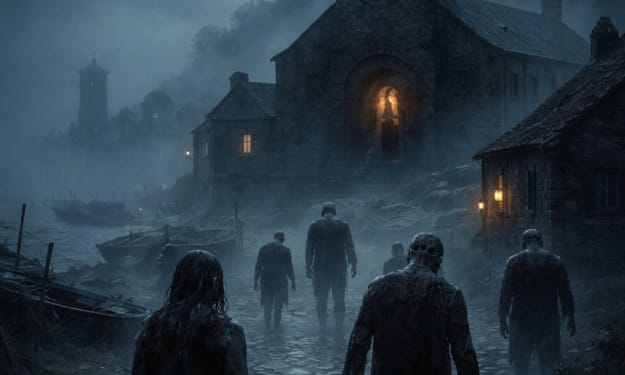
The Bells of Blackmere
In the northern reaches of a forgotten coastline, beyond the tourist maps and the bright harbors, lay the village of Blackmere. It was the kind of place that clung to the edge of the world—stone cottages pressed against black cliffs, roofs bowed like tired shoulders, and a church tower that rose like a broken finger pointing at the sky.
By Iazaz hussain8 days ago in Horror
me, me, me
when i read back my poetry it screams “me, me, me” on my screen in bold letters and i can’t shut it up — most days, i cannot make any other words out; i want to throttle a thousand versions of the me gone by, i want to throw myself from a figurative balcony, i want to sink a sword into every pen i’ve held
By angela hepworth3 days ago in Poets


Comments
There are no comments for this story
Be the first to respond and start the conversation.