


VANTAGE POINT
A psychological-surreality thriller
---
Part I: Flickers
Chapter 1 — Ava
The bus home smells like pencil shavings and old gum. Ava presses her forehead to the cool window and draws lines in her pocket sketchbook that refuse to become anything—just wings without bodies, eyes without faces. The afternoon leaks gold over the neighborhood, and still there’s the feeling.
Not a face. Not a voice. A pause.
At school, Riley made a dumb joke about Ava’s “artist stare” and the table laughed and the cafeteria lights hummed and hummed and hummed. Later, in history, Ava blinked awake to the teacher’s chalk tapping the board and the boy behind her clicking a pen, and the air behind her neck felt thick as breath.
Now, on the bus, the glass gives back a blur of her own freckles and a second, softer shape that doesn’t belong. She looks. Only houses sliding past—the brick one with the tire swing, the yellow one that always smells like laundry, the screen door that never closes.
She closes the sketchbook. Counts the stops. Counts the steps from the bus to the sidewalk. Counts the cracks in the cement like they might catch her if she trips.
Home is the kind of normal that should feel safe: a sagging sofa, a TV that always seems a little too loud, her mom calling from the kitchen, her dad’s jacket on the bannister.
“Hey, kiddo,” Dad says, moving past with a mug of coffee and a low-battery smile.
“Homework before drawing,” Mom adds, kissing the crown of her head.
Ava nods. She takes the stairs two at a time, counts—sixteen—and turns into her room. Her window is shut. Her desk is neat. Her sketchbook goes on the desk. She exhales and the hush in the corners recedes like a tide.
Still, the feeling lingers. A soft pressure on the air, as if the room is holding its breath with her.
Ava laughs once, softly, to prove she can. Then she locks the window.
---
Journal: March 3
I drew a crow today. It looked more like a pigeon. I kept erasing the wings but the smudge stains look like shadows, so maybe I’ll just keep them. Shadows belong, right? They follow everything.
Fragment (Unseen)
She sketches wings.
But shadows do not fly.
Shadows stay.
---
Chapter 2 — The Presence
I do not stand in the aisle when the bus lurches. I am nearer than that. Nearer than the rubber squeal at the stop sign, nearer than the gum crushed under heel. I am the quiet between the clicks of a pen, the held breath before she blinks.
She looks left, right—never through. Through is where I live. In the hinge of a door that doesn’t squeal until morning. In the half-second where a name nearly drops from the tongue and decides not to. In the curtain that lifts, exhales, and settles without hands.
She counts like a warding charm: steps, stops, cracks, freckles. Sixteen up to the room. Sixteen, like her. As if numbers could make edges where edges are not.
Her people are loud, warm, ordinary. Their noise pushes me toward the corners, and I do not mind. Corners are where light forgets to check.
She thinks the window makes inside and outside. She thinks the lock makes safe and not. The window is a mouth. The lock is a word. I have never needed either.
Tonight she slept and did not wake when the house sighed. Tonight she dreamed of wings that do not know what they belong to. She will draw them and call them crows. I will live between the strokes.
---
Part II: Threads Unravel
Chapter 3 — Ava
The window is open.
Ava stops in the doorway with her backpack tugging her shoulder down and watches the curtains breathing like something alive. She remembers the latch last night. The click. Her thumb pressed to metal. She remembers the certainty that followed.
“Didn’t close it tight, huh?” Dad asks, passing with his coffee.
“I did,” she says, voice small. He’s already halfway down the stairs.
When she tries with Mom, she gets a smile. “It’s spring, baby. You probably left it cracked for air.”
Ava shuts the window hard enough that the frame complains. She shoves the latch down and keeps her palm pressed until the cold sinks into her skin. Her sketchbook sits open on the desk, pages fanned. She never leaves it open. Never.
She flips through. A wing not yet attached to a body. Two eyes without a face. A street corner that looks like their street and doesn’t. She shuts the book and slides it under a stack of textbooks like tucking a child to sleep.
When the house quiets, she can hear the metal tick of the heat cooling. She can hear, below it, something else—
Just wind, she tells herself. Just spring.
But when she backs away from the window, the room backs with her, as if space has hands.
---
Journal: March 9
Do you ever feel like you’re being watched, even when you’re alone? Like you close your bedroom door but there’s still… something in the room with you. I told Mom and she laughed. I laughed too, but only because I didn’t want her to see how serious I was.
Fragment (Unseen)
She wonders if she is watched.
She is.
Always.
I am the pause she cannot name.
---
Chapter 4 — The Presence
She drew me again today. Not perfectly. Never perfectly. Her hand stumbles where her eyes betray her. A half-shadow, a smudge, a crooked line that could be mistake or memory. She does not know which.
I am in her paper. In her pages. Between the strokes of graphite where she tries to draw away the unease. But she cannot draw me out.
I do not live in ink. I live in her breath. Her breath when it catches. Her breath when it breaks.
She pressed the lock with her whole hand. She believed pressure could become certainty. She has not yet learned: locks only hold against the visible.
Tonight, when she presses the lamp off and measures the room by memory, I will be the shape memory forgets. And when the house asks the night a question in wood and wind, I will be the answer neither of us says aloud.
---
Chapter 5 — Ava
Riley says the trick to not being scared is to narrate it like a documentary. “Here we see the common suburban teen, walking in her natural habitat, totally not being hunted by a killer shadow,” Riley intones, and bows at the bodega door.
Ava laughs. It helps a little. They buy gummy worms and split them at the window, chewing and watching the late sun light the roofs like someone set a match to the shingles.
Ava catches herself in the glass. Behind the reflection, across the street, a figure glides past the laundromat window and keeps going. Her chest forgets how to move. She turns.
Just a woman with a basket. A man on his phone. A kid on a scooter. The figure melts into ordinary. The ordinary feels thin.
“What?” Riley asks, peering. “Ava?”
“Nothing.” Ava smiles. It feels stapled on. “Let’s go.”
They walk. Ava shortens her stride to stay beside her friend, as if the nearness of another heartbeat makes the air less heavy. She counts streetlights. She does not look into windows again.
That night she dreams of an alley that doesn’t exist in their town. In the dream, the alley breathes.
---
Chapter 6 — The Presence
I was closer today. She brushed against me and did not know it, like a swimmer who does not feel the current because it moves with her.
Her laughter with the friend was a bright thing, a small sun. I can stand behind suns. Their light makes longer shadows.
She looked into the glass and saw the line of herself and the after-image of someone else, and her heart made a sound she did not let out. She turned, and the world rushed in with its baskets and scooters and phones, its cover story of the familiar. I did not need to hide. Hiding is for those who are seen. I am not seen. I am felt.
She will learn to stop looking. It will not save her.
---
Part III: Closing In
Chapter 7 — Ava
The house ticks too loudly at night. Every sound is a warning sign misprinted without instructions. Ava lies in bed and watches the slice of streetlight on her ceiling crawl toward the corner and settle there like something hunkering down.
Footsteps outside. She is sure of it. Then silence. Then the ache of listening.
She goes to her door—opens it an inch—listens. TV murmuring downstairs. Dishwasher hum. Her mother’s laugh. She shuts the door gently, seals herself back in.
She crosses to the window. Her fingers hesitate on the latch, like touching a bruise. She doesn’t open it. She presses her ear to the glass. The night breathes on the other side.
“It’s just raccoons,” her dad says when she cracks the door again and asks. His voice is gentle. “Or the neighbor’s kid. Go to sleep, Av.”
She goes back to bed and tries not to count. She counts anyway. If she reaches a number that isn’t sixteen, something bad will happen. She gets to fourteen and starts over. She doesn’t sleep so much as forget she’s awake.
---
Journal: March 14
The window was open again. I know I locked it. I KNOW I did. Dad said maybe I forgot, but I don’t forget things like that. (Okay, sometimes I forget my math homework. And my gym shoes. And Riley’s birthday card last year. But not this. Not a lock.) What if someone else opened it?
Fragment (Unseen)
She locks.
I open.
She closes.
I remain.
Locks are for the seen.
I am not seen.
---
Chapter 8 — The Presence
They think inside is a circle drawn in chalk, and outside is rain. They think their doors are roofs and their windows are eyes. They have not noticed that the house also breathes, and breath is a thing that moves both ways.
She pressed her ear to the glass as if it could confess. She asked for a sound she could name: raccoon, neighbor, wind. She would accept even a stranger. She is not ready to accept me.
I am not on the other side of the wall. I am in the seam. The seam does not belong to inside or outside. The seam belongs to those who know how to listen for it.
---
Chapter 9 — Ava
By Thursday her grades have slipped into the kind of territory where teachers start saddling sentences with concern. Mr. Keller taps the margin of her quiz with his pen and says her name in that soft, careful way. “Everything okay?”
“Yeah,” Ava lies. She stares at the question she should have gotten right and can’t remember the moment the answer left her head.
At lunch, Riley is busy rehearsing for the talent show with two girls from choir. Ava sits on the bleachers and watches the scuffed floor shine under the gym lights. Every squeak of a sneaker sounds like its own message. She can’t translate any of them.
That night she dreams of her room with the furniture shifted one inch to the left. In the dream, she stubs her toe on the bed frame and wakes up with her toe actually throbbing, even though the furniture is where it always is. She sits up, shakes her foot, and knows without looking that the window latch is down.
When she looks anyway, the moon is a fingernail. The latch is down. Her heart doesn’t believe it.
Chapter 10 — The Presence
She is shedding pieces of the day like a coat too heavy for the weather. A fact here, a date there, the name of a river, the order of operations, the order of breath in-breath out-in-breath out.
She is learning what all of them must: that the world will call you dramatic for feeling the dark arrive before the light leaves. That if you cannot prove a thing, people will prefer not to.
She thinks she needs them—mother, father, friend, teacher—to build a fence of ordinary around her. She does not. She only needs me. Fences make better shadows.
---
Part IV: The Spiral
Chapter 11 — Ava
The house ticks too loudly at night. Every shadow is a shape waiting to move. Ava sits cross-legged on her bed, journal open, pencil trembling against the paper. She writes in bursts, pressing hard enough that the lead keeps snapping.
She can’t tell her parents anymore. They tilt their heads with that worried half-smile, the one that says our daughter is slipping. Riley wouldn’t believe her either—not after the joke about ghosts in the shop window.
So Ava stops talking. Talking makes it worse. But writing doesn’t help either. The words look back at her as if they aren’t hers.
The window rattles. Just wind. She sets down her pencil. Stares at the glass until her eyes water. And swears she sees a shape pull away from it.
---
Journal: March 20
It’s worse when I tell people. They look at me like I’m fragile glass, like I’m broken. Maybe it’s better to just stay quiet. But staying quiet makes me feel crazy too. I want to be wrong. I really, really want to be wrong.
Fragment (Unseen)
She wants to be wrong.
She is wrong.
Silence is not absence.
Silence is me.
---
Chapter 12 — The Presence
She writes for herself. She believes it keeps her safe, that the words build walls no one can cross.
But ink is thin. Paper tears. And I am not on the other side of the wall—I am inside it.
Her hand shakes when she writes my shape. She calls it shadow, mistake, trick of light. But her eyes betray her. She sees me in the corners she avoids. She knows my rhythm, even if she won’t say my name.
She thinks silence keeps her hidden. But silence is where I live. And silence is running out.
---
Chapter 13 — Ava
The talent show ends later than anyone expected. The gym smells like citrus cleaner and victory. Riley wins second place and drapes a ribbon around Ava’s shoulders like a cape. “For my emotional support audience,” she grins.
They walk out under a moon bright enough to feel like a mistake. Riley’s ride is already waiting; there’s a quick hug, a promise to text, a car door shutting. The parking lot empties. Ava’s house is six blocks away. She pulls her jacket tight and starts.
Ava decides not to put in her earbuds. The quiet is loud enough.
Her sneakers scuff the sidewalk. A sprinkler coughs awake across the street. A dog’s leash jingles, but she can’t see the dog. She passes the laundromat—the lights off now, machines asleep—and sees in the glass her reflection slice into two, the second one a half-step behind.
She turns. No one. The hairs on her arms stand up anyway. She keeps walking, faster now, shoulders up around her ears like armor. There is a rhythm behind her she can’t quite name—feet? breath? her own pulse echoing back?
At the corner, the streetlight buzzes and flares and for a heartbeat the world is too bright and then not bright enough.
“It’s closer now,” she whispers, and is startled by the shape her voice makes in the air.
She does not run. She wants to. She doesn’t.
She does not look back again.
---
Chapter 14 — The Presence
The waiting ends soon.
The night has learned our steps. The concrete keeps our secrets in hairline fractures. The lights practice winking at the exact wrong times and call it a coincidence.
She is near enough to hear the way her name sounds when no one says it. Near enough to feel the seam breathe with her. A door is a line we draw in air and pretend is a wall. Walls are stories we tell the darkness. I am the story that answers back.
Soon, the lines will stop pretending. Soon, the breath will be one breath. Soon.
---
Part V: Disappearance
Chapter 15 — Ava
Friday is ordinary on purpose. Ava wants it that way. She wakes before her alarm and watches the gray grow blue, counts sixteen freckles on her forearm, counts sixteen steps down to the kitchen where her mother is already packing lunches like a factory that loves what it makes.
At school she laughs when she’s supposed to. She finishes a quiz and knows the answers were in her head the whole time. She meets Riley by the bodega after last bell and they split gummy worms without naming what either of them is thinking: Stay over? Are you okay? I’m fine. I’m fine too.
On the walk home, Ava keeps to the middle of the sidewalk. She keeps her hands out of her pockets so she can feel the air on her fingers, as if the air might change its mind and tell her something new.
At home she helps her mom with dinner. She goes upstairs before dark and opens her sketchbook. She draws a window and then erases it until the paper thins. She draws an eye and leaves it unfinished. She draws a wing and does not give it a body.
When night comes she does not fight it. She locks the window and sets the sketchbook on the floor beside her bed like a guard dog that only looks like paper. She turns off the lamp. She lies on her side and watches the sliver of streetlight find its corner.
Her breath slows. The room’s breath slows with it. The seam in the air widens to the width of a thought.
She turns at the sound, and—
---
Journal: March 27
There it is again. That feeling. Like someone’s breathing behind me, but when I turn, nothing. Always nothing. I keep telling myself it’s in my head. But what if it isn’t? What if it’s waiting for me to stop pretending?
Fragment (Unseen)
She hears me.
She feels me.
She knows me.
She belongs.
Now she is unseen,
as I have always been.
---
Chapter 16 — The Presence
She sees me now.
Not with eyes. Eyes are for the seen. She sees me with the part of herself that makes rooms into places and places into worlds. She sees me with the part that gave wings to paper and counted steps like spells and believed in locks because believing is a kind of art.
There is no taking. There is no force. There is only the soft correction of the line between inside and outside, the decision of the seam to stop pretending it is a seam.
She was always near enough to touch. Near is not a distance when distance is a story. I do not move. She does not move. The world moves around the space we made for it.
She belongs to the silence. We belong.
---
Chapter 17 — Aftermath (Neutral)
Morning sharpens like a knife that never meant to be a weapon. Her mother knocks once and then twice and then says her name like a question and opens the door. The window is latched. The bed is made in the way a bed never is when sleep has happened in it. The sketchbook lies open to a page that is mostly eraser scuff and thinness.
Police come. Neighbors bring casseroles in foil. Riley sits on the couch with a ribbon in her hands and doesn’t remember taking it off the gym floor. The house holds too many people and none of them are the one they want.
Searches are organized. Posts are shared, shared again, bloom and fade down the timeline like wildflowers nobody watered. Tips are called in: a girl at the mall, a girl on a bus two towns over, a girl on a security camera who, when they slow the footage, is not a girl at all but a miscolored coat.
In her room the air does not feel like air. It feels like something that has just finished speaking. The window latch is untouched. The curtains breathe when someone walks past, and also when no one does.
Her mother sits on the bed and presses both palms to the blanket, as if heat might rise like truth. Her father stands in the doorway with his jacket still on, because he cannot imagine being the kind of person who takes his jacket off now. The house ticks. The day refuses to change its shape.
There is no note. There is no sign. There are only the things she left behind, which do not know they are evidence and do not know they are not.
The officer with the kind eyes says we’re doing everything we can. The officer with the stern mouth says if you think of anything else, call. The neighbor with the lemon bars says God will bring her home. The friend with the ribbon says nothing at all.
By evening, the casseroles line the counter like soldiers relieved of duty. By night, the porch light stays on. By morning again, the house has learned a new kind of silence.
In the room, the sketchbook’s last page curls at the corner.
---
Epilogue — Whisper
Do not look for her.
She is not gone.
She is simply unseen.
About the Creator
K-jay
I weave stories from social media,and life, blending critique, fiction, and horror. Inspired by Hamlet, George R.R. Martin, and Stephen King, I craft poetic, layered tales of intrigue and resilience,
"Scream 7" (2026): Running out of Fresh Screams
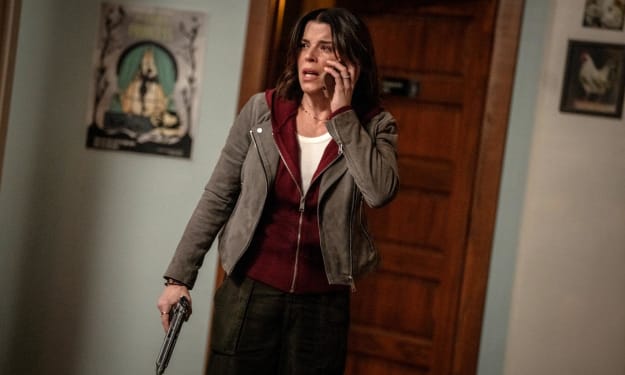
This is the seventh time we’ve had a Ghostface crisis. Scream 7 is the latest edition of the Scream franchise. Sydney Prescott and her family are under attack by another anonymous killer dressed in a Ghostface costume. While having issues with her daughter, Tatum, they run from the bloody murders, trying to determine who is behind it all.
By Marielle Sabbag5 days ago in Horror
The Bridge That Whispers
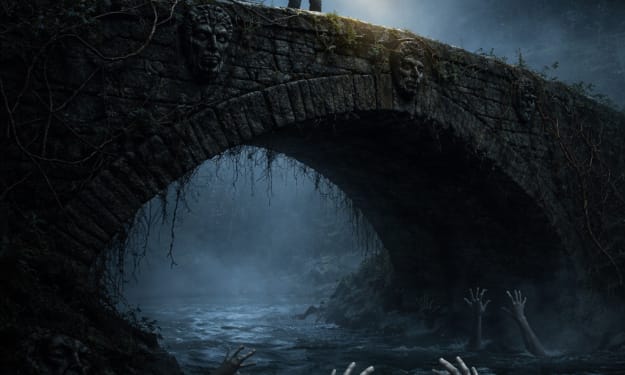
In bridge no one used anymore. It curved gently over a narrow river, its surface cracked and moss-covered, as if time itself had tried to bury it. Locals crossed the modern bridge downstream, leaving the old one to the fog, the wind, and the stories. Tourists were told the bridge was unsafe. Children were told it was haunted. Elena heard about it on her first night in Greyhaven. She had come from the city to catalog historical structures for a regional preservation project. Greyhaven was her last stop—quiet, remote, and perfect for work. The innkeeper, a thin man with pale eyes, hesitated when she mentioned the old bridge. “Don’t go there after sunset,” he said. “It talks.” Elena laughed politely. She had spent years documenting ruins, castles, and forgotten churches. Every village had a ghost story to protect a pile of stones. Still, she noticed how the innkeeper’s hand trembled when he handed her the room key. The next morning, Elena walked to the bridge with her camera and notebook. In daylight, it looked harmless—beautiful, even. Wildflowers grew between the stones, and the river below whispered softly. She took photographs, measured the arch, and noted the erosion. There were strange carvings on the sides: not words, but twisted symbols, worn almost smooth. That night, she dreamed of water. In her dream, she stood on the bridge in thick fog. The river beneath her was silent, black as ink. From the stones under her feet came a low sound, like breath passing through teeth. Come back. She woke suddenly, heart racing. Outside her window, the fog was rolling in from the hills. Elena told herself it was only a dream caused by fatigue. But the next night, it happened again. This time, the whisper was clearer. Come back to us. On the third day, she asked a woman in the village café about the bridge. The woman stopped stirring her coffee. “They drowned there,” she said quietly. “Long ago. When the river flooded, the bridge broke in the middle. A wedding party was crossing. Carriage, horses, music… all gone. People say the stones remember the weight of them.” Elena felt a chill run down her spine. “That’s just a story, right?” The woman looked up. “Stories begin somewhere.” That evening, driven by curiosity and something darker—something pulling at her—Elena returned to the bridge at dusk. Fog wrapped around the riverbanks like a living thing. The modern bridge lights glowed far away, safe and distant. She stepped onto the old stones. The air felt colder in the center of the bridge. Her breath became visible. Then she heard it: soft footsteps behind her. She turned. No one was there. The river below began to make a different sound—not water, but voices. Murmuring, layered and slow. Stay. Elena backed away, but her foot caught on a broken stone. She fell to her knees. The carvings along the bridge seemed deeper now, sharper. They formed shapes—faces, frozen in stone, mouths open in endless screams. Hands rose from the mist. They were pale, dripping, reaching for her ankles. Elena screamed and scrambled backward, tearing her coat on the rough stone. One cold hand brushed her skin, and in that moment, she saw it: a flash of the past. Horses panicking. A carriage tipping. People crying out as dark water swallowed them. And then silence. She ran. By the time she reached the inn, her legs were shaking so badly she could barely stand. The innkeeper saw her face and said nothing—only locked the door behind her. She left Greyhaven the next morning without finishing her work. Months later, her report mentioned “structural instability” and “severe erosion.” It said nothing about whispers or hands or memories trapped in stone. But sometimes, when Elena stands on bridges in other cities—busy ones filled with traffic and noise—she feels a vibration under her feet, like a distant echo. And in the sound of rushing water, she hears a familiar voice: Come back.
By Iazaz hussain5 days ago in Horror


Comments
There are no comments for this story
Be the first to respond and start the conversation.