
To reveal remarkable talent 2
That night, I slept soundly. For over ten days, I had been occupied either with my father’s funeral arrangements or with the somber duties of a reaper. It was a rare, peaceful evening, and in my dreams I saw my parents once more—beaming with joy as they reassured me that I need not worry, for they had ascended to heaven and all was well.
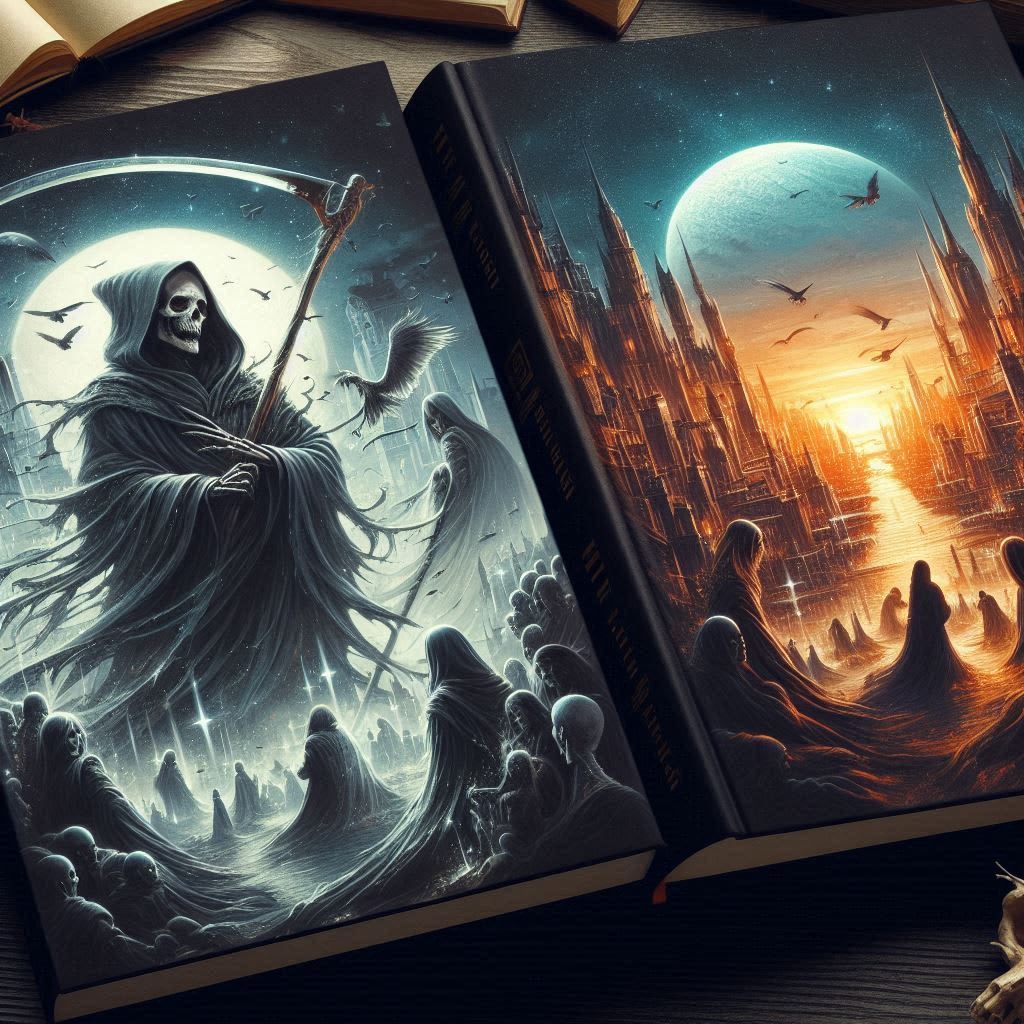
That night, I slept soundly. For over ten days, I had been occupied either with my father’s funeral arrangements or with the somber duties of a reaper. It was a rare, peaceful evening, and in my dreams I saw my parents once more—beaming with joy as they reassured me that I need not worry, for they had ascended to heaven and all was well.
At dawn, I redeemed the lottery ticket I had won a few days prior; after taxes, I was left with roughly $160,000.
Barely had I crossed the threshold when White called. He mentioned that he was contemplating replacing his car—his fancy fixed upon a Honda—and inquired if I had any advice. His words stirred my thoughts: my Ford had faithfully served me for nearly a decade; perhaps it, too, was ready for replacement.
I could almost feel the money in my pocket stirring with impatience.
I have never been fond of Korean vehicles, and thus I dismissed them outright from my list of considerations. Should I choose to buy anew, Korean brands would not be among my options.
I asked White which make he was considering. He explained that his first car had been a Nissan—a brand once renowned for its quality, though its reputation and sales had waned in recent years. Yet, despite this, he was still inclined toward another Japanese marque—this time, Toyota. Admittedly, I have always admired that very model; however, when it debuted, I had just purchased my Ford, and my finances were then rather constrained, leaving me to admire it only from a distance.
White’s words prompted another thought: might my next vehicle be an SUV? With its expansive stature and commanding view, an SUV exudes a certain gravitas and promises a wholly different driving experience. Yet, upon reflection, most SUVs are destined for urban roads; even on a mountainous detour, a family SUV rarely exhibits the true mettle of an off-roader. In the vicinity of $20,000, Toyota, Volkswagen, and the Nissan favored by White all appeared to be commendable choices.
Volkswagen’s design, however, struck me as overly homogeneous—both its exterior and interior, though free of glaring faults, lacked distinctive flair. I dismissed the Tiguan first. Though I am in my thirties, I still regard myself as youthful, and such a vehicle seemed better suited to someone in their forties.
The CR-V, by contrast, was unremarkable in every respect—neither egregiously flawed nor exceptionally impressive. I had considered it when I purchased my Ford, but despite several facelifts, the new CR-V remained stubbornly mediocre. Thus, it too was eliminated.
As for the Nissan, its aesthetics did resonate with my taste; yet perhaps because of that very familiarity, it seemed all too conventional. Moreover, I had no desire to share my ride with White. I preferred something imbued with individuality.
With these three out of contention, I turned my attention to the remaining leading contenders in the segment—two Japanese models: one from Honda, the other from Toyota. Each possessed its own merits.
I recalled an incident from years past—shortly after acquiring my Ford, one dusky evening I stopped at a gas station. Having filled my tank, I nudged the car to the roadside when, all of a sudden, a speeding bus hurtled toward my vehicle. Fortuitously, it merely brushed the side of my car; inside, I felt only a violent jolt, yet when I stepped out, the front end and the crash beam had been flung several meters away.
The accident itself was secondary to the dread it instilled in me: had I driven forward but a meter, the collision might have been far more disastrous.
An elderly gentleman, perhaps in his sixties, ambled over, patted my shoulder, and said, “Young man, count your blessings. I’ve spent my life behind the wheel, and judging by that impact, it’s a miracle you were in an American car. Had you been in anything else, you’d have been flipped—or worse.”
Though his words were tinged with hyperbole, they left a profound impression. Ever since, I have favored vehicles with robust safety ratings and substantial build. Admittedly, a heavier car does consume more fuel, but safety, in my estimation, far outweighs such concerns. I do not claim that Korean cars are intrinsically unsafe, but perhaps I have grown overly cautious, reluctant to try them.
Speaking of preferences, my admiration for Volvo has long endured. Perhaps now is the time to consider one. A search for the XC60 revealed that the latest model had undergone a striking transformation. In my youth, I had observed its earlier version—a design that now seemed outdated—but the revamped front end exuded a fresh, youthful vitality. The interior, with its harmonious blend of ebony and amber, possessed an undeniable allure that captured my fancy.
I delved into numerous reviews and specifications; the accolades were plentiful, though some lamented Volvo’s notorious habit of sudden price drops, which could leave buyers feeling slighted. Nevertheless, I resolved to test drive it at the first opportunity.
Just as I was contemplating when to visit the dealership, White called again. He had the afternoon free and wished for my company on a test drive of a Honda. Seizing the moment, I readily agreed and went to collect him.
That afternoon, we sampled several models—the Honda Accord, the Tiguan, the Odyssey, and the CR-V—and, naturally, I also experienced my beloved XC60. The Tiguan performed adequately, yet its interior remained uninspired, too entrenched in conventionality for my taste. Finally, at the Volvo showroom, the XC60 revealed its true charm: its performance, braking, and overall driving experience left me thoroughly impressed—though I must admit, my prior fondness may have tinted my judgment.
In the end, while White decisively ordered his car, I found myself dazzled by so many options that I could not settle on one.
On the ride home, he teased me relentlessly about my indecision, remarking that I suffered from a severe case of “choice paralysis.”
By the time I had seen him off and returned home, it was nearly 8 o’clock.
I prepared a plate of spaghetti and had just set it upon the table when a knock sounded at the door.
“Williams? Again?” I thought, exasperated that after a hard-earned day of rest, I was once more called to duty.
“Come in—please, sit down. Whatever it is, wait until I’ve finished my meal,” I called.
Williams entered, seating himself cross-legged on the floor before me, his silence punctuating the absurdity of the scene—a man, a meal of spaghetti, and the ghostly specter of duty looming over. His unyielding gaze soon sapped my appetite, and after a few hurried bites, I took the plate back to the kitchen.
Emerging once more, I inquired, “So, which wandering soul requires aid this time?”
Williams offered an embarrassed smile. “Boss, you guessed correctly—I’m afraid I must trouble you again.”
I lit a cigarette and sank into the sofa. “Very well, speak plainly.”
“This one, however, is rather complicated.”
“Complicated how? Just say it.”
“Boss, do you recall the news from a couple of summers ago? A school tour bus careened off a Catskills highway—twenty odd students, two teachers, and a driver were lost, none surviving the tragedy.”
I remembered the headline all too well, though I had spared myself the full sorrow of the article.
“Are you saying that those souls—those lost from that fatal accident—are the ones in need of our help?”
Williams nodded gravely. “The calamity was beyond words; families were shattered overnight. Yet, the reaper’s duty was curiously incomplete that day—he collected only a few souls, those of the teachers and some children. The driver’s spirit, along with three children who were hurled from the wreckage, was overlooked. They have wandered ever since.”
The very thought unsettled me. Despite the meticulous rescue efforts, the inefficacy of the netherworld’s collection left a bitter taste.
“What on earth was that reaper doing? How can one be so remiss?”
“Who can say? Those three children wandered the mountains for nearly two years until, just days ago, someone directed them to New York in the hope of seeking help from your father. But upon learning of his passing, they resigned themselves to despair—until I, recalling your orders to keep an eye out for troubled souls, brought them to you.”
I had indeed instructed Williams, John, and James to gather any forlorn spirits in need. I nodded. “Very well—bring them in.”
At once, three spectral figures drifted through the wall. Their tattered garments scarcely concealed their frail forms, and they were grimy from head to toe.
“Williams, see that these children are properly cleaned up—new clothes , if you please.”
“Rest assured, boss; I shall have John and James attend to them immediately.”
Soon enough, the boys returned with the children, now transformed—clean faces, fresh attire, a stark return to their natural, vibrant selves. Two girls and one boy, each appearing to be around eleven or twelve.
Upon hearing that I had agreed to aid them, the trio clasped hands and bowed deeply in unison: “Thank you, sir.”
Their simple gratitude brought tears to my eyes. “No thanks are necessary—it is my duty to help. Now, introduce yourselves.”
The girl on the left spoke first: “Sir, my name is Olivia, and I hail from Brooklyn.” Williams murmured softly in my ear, “Her dear mother passed away soon after the accident.”
The middle girl curtsied elegantly: “Sir, I am Emma, also of Brooklyn.” Another hushed remark followed: “Her mother was so overcome by terror that she lost herself.”
Finally, the boy spoke: “Sir, my name is Liam, and I am from Queens.” I murmured, “He is the one whose mother now lies confined to her bed,” to which Williams nodded.
“Very well, brave children,” I declared. “Tonight, I shall help you fulfill your final wish. Now, confer among yourselves and decide—which home shall we visit first?”
About the Creator
Keep reading
More stories from Andy Johnson and writers in Horror and other communities.
My dad is the Grim Reaper
You may have heard that once a person dies, a grim reaper arrives to claim their soul. However, I can assure you that such tales are mere legends—or at least not entirely accurate. In truth, after death an emissary from the netherworld does indeed come to escort the departed’s soul, but these agents do not don black cloaks, wield scythes, or appear as skeletal figures. Rather, they are not creatures of the underworld at all, but ordinary mortals who inherit this duty through the ages.
By Andy Johnsonabout a year ago in Horror
The Telling Bone
Introduction This was kicked off by Catweazle's name for the telephone. Catweazle was a medieval sorcerer who ended up in modern times (the nineteen seventies). The full episode is all over Youtube and most of my readers might not even recognise what he is holding as a landline telephone handset.
By Mike Singleton 💜 Mikeydred 3 days ago in Horror


Comments
There are no comments for this story
Be the first to respond and start the conversation.