
Things That Go Bump in the Night
An Essay on Ghost Stories
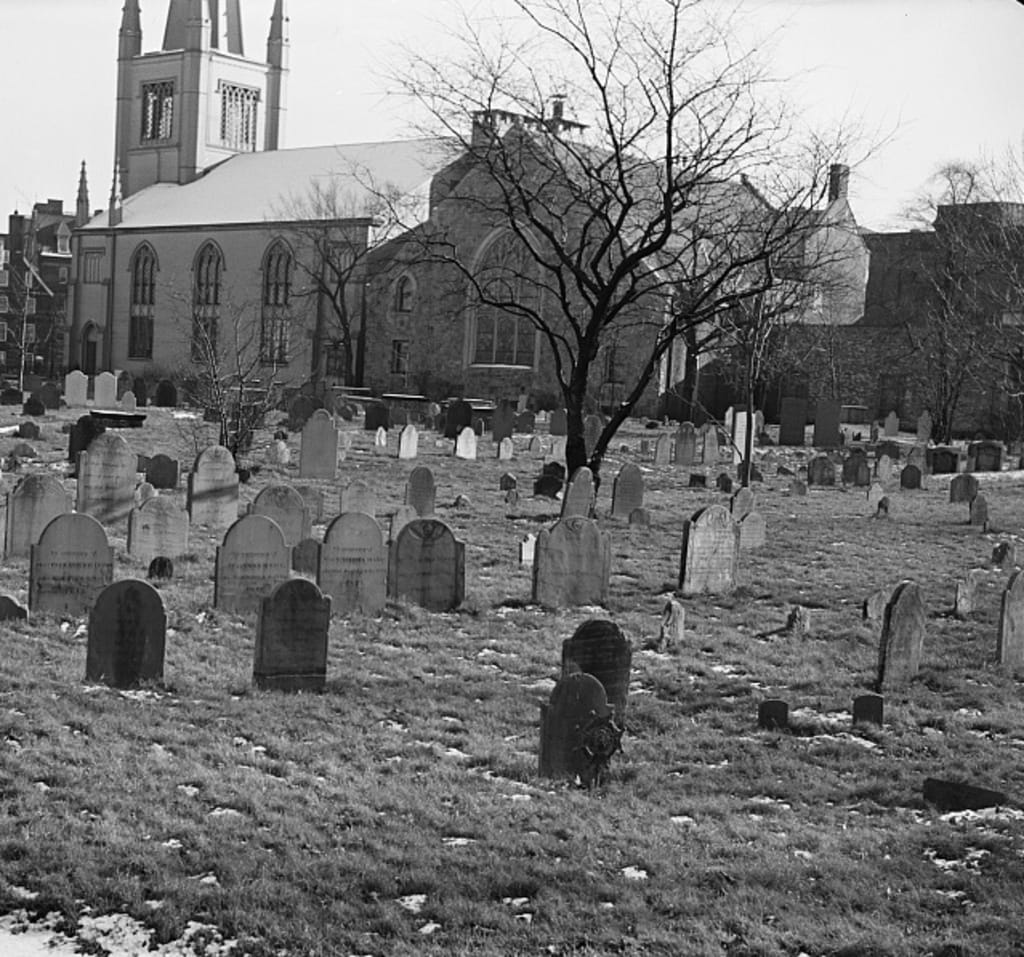
[My essay from The Dead and the Quick, published by Bapton Books - https://www.amazon.co.uk/dp/B08LZJXZXZ]
There is a certain pleasure to be found in dealing with the dead.
I mean this in a strictly literary sense, of course, and intending no offence to all those whose daily work brings them into contact with the dead and those who grieve for them. The pleasure I refer to is the pleasure of the ghost story.
And ghost stories are indeed pleasurable. M. R. James, widely acknowledged as one of the masters of the ghost story in English, observed that ‘the sole object of inspiring a pleasing terror in the reader … is the true aim of the ghost story.’ (‘Some Remarks on Ghost Stories’ by Montague Rhodes James, The Bookman, December 1929.) In a similar vein, Virginia Woolf wrote that ‘It is pleasant to be afraid when we are conscious that that we are in no kind of danger.’ (‘The Supernatural in Fiction’ [review of Dorothy Scarborough, The Supernatural in Modern English Fiction], Times Literary Supplement, 31 January 1918; repr. in Collected Essays [1966], vol. 1, 293-6.)
The earliest ghost stories in the form that we know them today date from the first quarter of the nineteenth century with Sir Walter Scott producing some of the best examples from this earliest period. The current author quite happily recommends Scott’s ‘The Tapestried Chamber’, first published in 1829. It’s often argued that the golden age of the ghost story was between this period before the accession of Queen Victoria and the start of the First World War. This was the time of Sheridan Le Fanu, M. R. James, Henry James and Charles Dickens.
Ghosts in and of themselves, however, have a much deeper literary hinterland. The introduction to The Oxford Book of English Ghost Stories asserts that the literary ghost story descends from classical Rome. The ghosts encountered in the underworld by Odysseus in the Odyssey might take this back further.
Ghost stories have a broad geographical hinterland as well. Several of the tales in the One Thousand and One Nights are ghost stories. In Qing Dynasty China, a scholar in Shandong Province, Pu Songling, wrote a collection of supernatural stories known as Strange Tales of the Make-Do Studio, many of which feature ghosts. (Published as Strange Tales from a Chinese Studio, trans. Herbert A. Giles [North Clarendon, VT, 2010].) Similarly, at the end of the nineteenth century and the beginning of the twentieth, the writer and translator Lafcadio Hearn became fascinated by Japanese folk tales, especially the ghost stories called kaidan. (For more on the remarkable, tragic life of Lafcadio Hearn, see Jonathan Dee, ‘Dearly Departed’, The New Yorker, 16 September 2019.) Hearn’s Japanese wife, Setsu, would search in secondhand bookshops for kaidan tales, which she would then learn by heart and tell in English to her husband ‘on dreary nights… having lowered the wick of the lamp on purpose.’ (Paul Murray, introduction to Lafcadio Hearn, Japanese Ghost Stories [London, 2019] p. xxiv.) It was not uncommon, Setsu said, that Hearn would become frightened while she was telling these stories; sometimes, he would become so frightened that it worried Setsu. (Ibid., p. xxiv.)
In a short story called ‘Selecting a Ghost’, first published in the magazine London Society in December 1883, Sir Arthur Conan Doyle has his narrator tell us, ‘There was something awesome in the thought of the solitary mortal standing by the open window and summoning in from the gloom outside the spirits of the nether world.’ This is a sensation with which this author feels somewhat familiar – the summoning in of the spirits is a key part of writing a ghost story.
Most ghost stories are short stories with a very particular theme. Longer ghost stories (such as Henry James’s The Turn of the Screw or, in the modern age, Susan Hill’s The Woman in Black) exist, but the majority are short stories.
Short stories are often thought to be hard to do well; ghost stories are particularly hard. So, how do you actually go about putting a ghost story together?
M. R. James wrote that ‘Two ingredients most valuable in the concocting of a ghost story are, to me, the atmosphere and the nicely managed crescendo… let the ominous thing put out its head, unobtrusively at first, and then more insistently, until it holds the stage.’ (M. R. James, introduction to V. H. Collins [ed.], Ghosts and Marvels [Oxford, 1924].)
Atmosphere is one of the key things to get right when writing a ghost story, which is a surprisingly difficult process as it is very easy to get wrong. Lafcadio Hearn’s wife Setsu recalled how Hearn would take notes on the plot if he thought it was interesting, and ask her questions about details – about the tone of voice in which a character might say something, or about what sort of a night the story might have happened on. (Murray, ‘Introduction’ p. xxiv.)
The folk tales that Hearn’s stories were based on were a reminder of a Japan that was fast disappearing at the time he was writing. However, historical ghost stories seem to be the exception rather than the rule – the majority, in the experience of this author, are set in the writer’s present day. This helps the reader identify themselves with the narrator or main character, and increases the unsettling effect of the story.
And what of the ghosts themselves? Helpful, benevolent or otherwise sympathetic ghosts crop up from time to time (the comic papers and Hollywood franchise, ‘Casper the Friendly Ghost’, comes immediately to mind), but for the most part, they are the opposite. The best ghosts are what James called ‘malevolent or odious’. (M. R. James, preface to More Ghost Stories of an Antiquary [London, 1911].)
From that description, the reader might expect a great deal of blood-curdling detail from the writer. But the best ghost stories avoid that. Hyperbole is the death of the ghost story. The perfect example of reticence in a ghost story is ‘The Red Room’, written by H. G. Wells and first published in 1896. Without giving away too much, in ‘The Red Room’ a ghost never actually appears, but the story is all the better for that.
But analysing ghost stories is somewhat beside the point: this is a case where the whole is very much greater than the sum of its parts.
Just pick a story, turn down the lights, and in the quiet of the night, lose yourself in the experience.
But be careful, or you might find yourself startled from your sleep by the sound of slow, shambling footsteps outside the bedroom door or by fingers tapping on your window…
About the Creator
Keep reading
More stories from George Knight and writers in Horror and other communities.
Grandad
Grandad had always been interested in the sea, for as long as I had known him, and for as long as my mum and dad and aunts and uncles had known him too. I don’t know whether his interest predated my grandma or not, since she had died when I was very young, but I assume that it did.
By George Knight5 years ago in Families
The Screams Beneath the Floorboards
Old houses make noise. They creak, groan, and sigh as if remembering things they were never meant to keep. That’s what I told myself when I first heard it—a faint sound beneath my feet, barely louder than the wind slipping through cracked windows.
By David John5 days ago in Horror
The Devil's Cut
“Comrade, finally you’re awake.” The voice was smooth, sensual. A flickering incandescent bar was all that lit the white, sterile room. All Vladimir remembered was everything going black. He tried to move his arms and found them strapped to the gurney.
By Matthew J. Fromm6 days ago in Fiction


Comments
There are no comments for this story
Be the first to respond and start the conversation.