
The Whispering Grave of Spin Ghar
"Buried Secrets Beneath the Mountains"

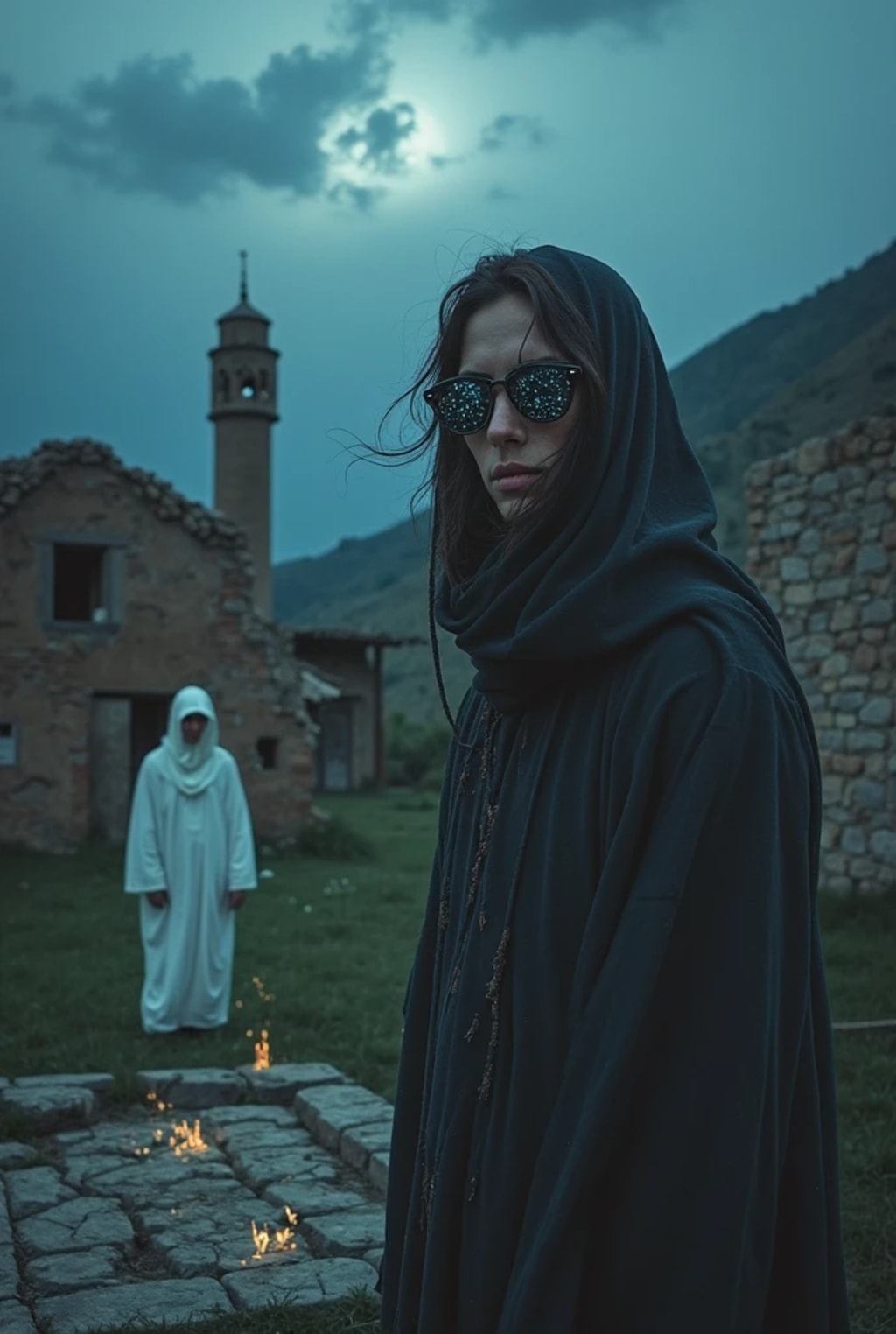
In the shadow of the mighty Spin Ghar mountains, nestled deep in a forgotten corner of eastern Afghanistan, lies the abandoned village of Sarkai Banda. The villagers had fled decades ago, their homes left to the mercy of wind and wild, their mosques crumbled by time, and their memories buried under dust. But there was one thing no one ever dared to forget — the Grave That Whispered.
Old people say it all started with a man named Mullah Rahim, a stern cleric who once led the village mosque. He was feared more than respected. His eyes were like cold stones, and his voice cut through crowds like a sword. He was known to punish the “possessed” harshly, often beating or chaining them, claiming to drive out jinns. But it was whispered — only in secret — that it wasn’t Allah he served, but something else.
One stormy night, a scream shattered the silence of Sarkai Banda. The next morning, the villagers found the body of a young shepherd, Rafiq, outside the mosque. His body was twisted, face pale and eyes open wide in terror. Mullah Rahim claimed the boy was possessed and died during an exorcism. But Rafiq's mother insisted she had seen something else: a shadow with horns crawling across the mosque wall. No one believed her — or at least, no one admitted they did.
Weeks passed, and more villagers died in strange ways — drowned in dry wells, burned in locked rooms, found hanging from trees with no signs of how they got there. Fear grew like wild thorns. Then one day, Mullah Rahim simply vanished.
They searched for days. At last, a group of elders found his body buried at the edge of the village cemetery. It was shallow, as if buried in haste. His hands were broken, nails torn off, and his mouth was wide open — as if he had been screaming even in death.
Despite their fear, they reburied him with proper rites. But ever since that day, people reported whispers coming from his grave. At first, it was faint — like wind murmuring in forgotten tongues. But at night, it grew louder. Some said they heard verses spoken backward, others heard names — including their own.
The whispers grew bolder. Children began sleepwalking toward the grave. Animals refused to go near. A shepherd claimed he saw a figure in white robes, with bleeding eyes and a torn turban, standing by the grave at midnight. Another villager went mad, screaming that “the mullah speaks through the earth” before disappearing into the mountains.
One by one, the villagers left. By the next spring, Sarkai Banda was abandoned.
But the grave remained.
Years later, a group of college students from Kabul, eager to make a documentary about folklore, decided to visit the site. Among them was Awais, a skeptic who didn’t believe in ghosts, and Zarina, who was born in Nangarhar and had heard tales of Sarkai Banda from her grandmother.
Despite local warnings, they reached the village near dusk. The homes stood like skeletons, their wooden beams groaning in the wind. The mosque was a hollow ruin, its minaret cracked in half. And at the far end of the cemetery, half-covered in weeds, they found it — the grave of Mullah Rahim.
Awais laughed. “This? This is what the fuss is about?” He stood on the grave, mocking the stories, while Zarina and the others filmed. The sun dipped below the mountains. A strange cold spread over the village.
That night, they camped in the old mosque. At exactly midnight, Zarina heard something — a whisper. She froze. It was coming from outside.
She woke Awais. He was pale and sweating. “I... I had a dream,” he stammered. “Someone was whispering in my ear... reciting Ayatul Kursi, but... backward.”
Suddenly, they heard footsteps. But no one was outside.
The next morning, Awais was gone. They searched everywhere, only to find a trail of blood leading to the cemetery. Near the grave, there were scratch marks on the soil — as if someone had tried to claw their way into it... or out of it.
The students fled.
To this day, no one goes near Sarkai Banda. Locals say that Mullah Rahim still whispers from beneath the earth, hungry for souls who mock his power. Some claim he wasn’t just a mullah — but a servant of a jinn king, practicing forbidden rites under the guise of religion.
And on cold nights, if you walk near the Spin Ghar mountains and the wind blows just right, you might hear a voice — not shouting, not screaming, but softly calling your name…
…from under the ground.
About the Creator
M Fawad
I'm a passionate fiction writer who loves crafting stories that blend imagination with emotion. From magical realism to futuristic adventures, I aim to create worlds that spark curiosity and leave a lasting impact.
Nothing Felt Wrong at First — That’s What Made It Terrifying
Short introduction Come Closer is a psychological horror novel about possession, but not in the dramatic, spinning-head, holy-water kind of way. It’s quiet, modern, and very close to real life. The book follows a woman named Amanda as something slowly starts going wrong with her thoughts, her behavior, and her sense of self. It’s short, simple, and written in a very direct voice — which is exactly why it works.
By Rosalina Jane3 days ago in Horror


Comments
There are no comments for this story
Be the first to respond and start the conversation.