
The Well at the Shrine: When Faith and Science Collided
A forgotten tale from 1904 that blurs the line between spiritual belief and scientific reasoning.

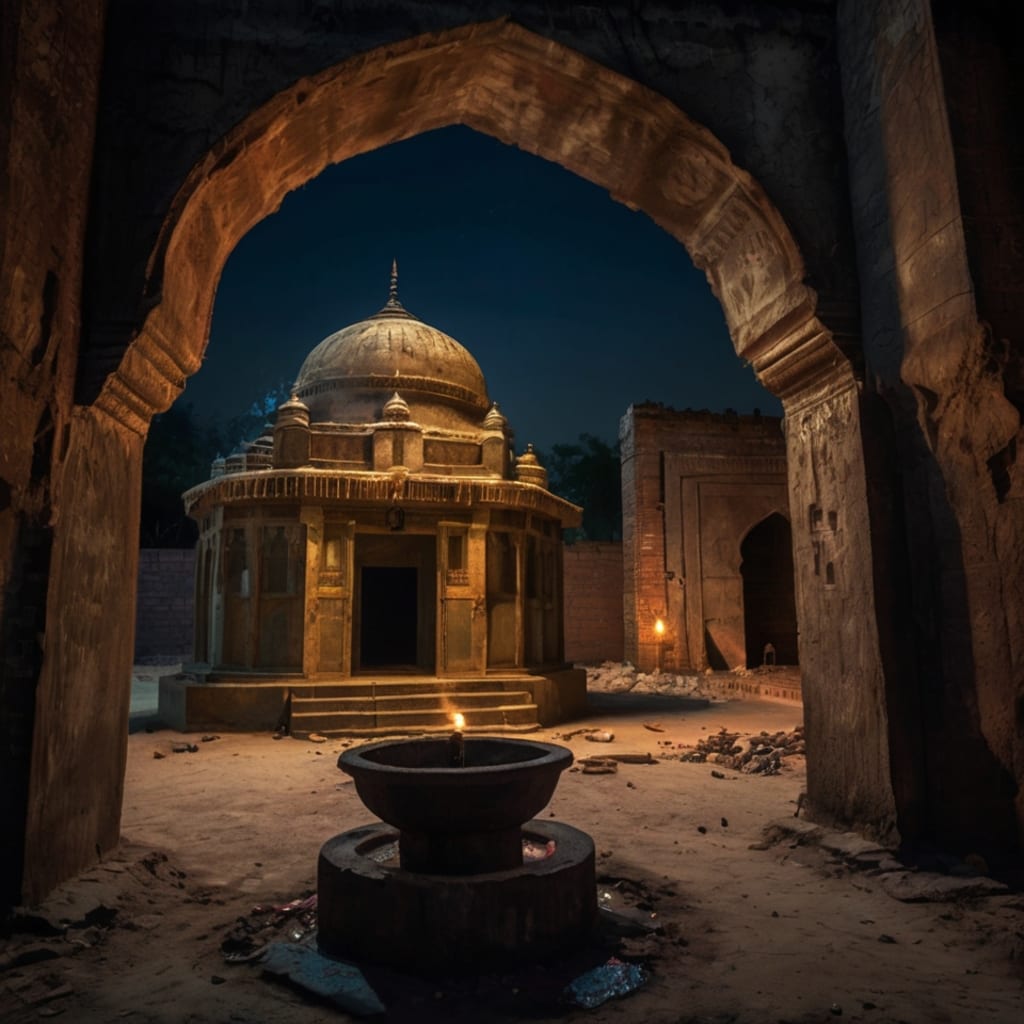
The Well at the Shrine: A Lesson in Belief and Science
BY:Khan
In 1904, Hazrat Khawaja Hasan Nizami (RA) recalled an incident that left a deep impression on him—a story that still feels like a tug-of-war between faith and science.
One day, a gentleman approached him with a suggestion. Near the shrine of Hazrat Khawaja Nizamuddin Auliya (RA) in Delhi, there was no fresh-water well. The only available source was a baoli (stepwell) whose water was brackish. “If you permit,” the man said, “I could dig a well near the eastern gate of the shrine. Perhaps fresh water will be found there.”
Hazrat Hasan Nizami agreed. “Yes, fresh water here is a real need. Perhaps you’ll strike sweet water.”
The man hesitated. “But there’s one problem. The ground around the shrine is full of graves. If we dig, we may disturb them.”
Hasan Nizami gave a practical reply: “If any bones emerge, collect them respectfully and bury them elsewhere. Water is essential, and as long as we handle the remains with care, there’s no harm.”
With this understanding, he left for Allahabad while the man began digging. As the work progressed, the laborers followed his advice. Whenever bones surfaced, they were carefully removed and reburied nearby with respect.
But as the well deepened and they neared water, something unusual appeared. Deep in the earth lay the complete skeleton of a man. Unlike the upper graves, where bones had decayed or broken, this one was intact. Even its posture seemed undisturbed. The workers froze in fear. Why was there a full skeleton so far down? Who could have been buried at such depth?
When the laborers refused to touch it, the man overseeing the work decided to handle it himself. He tied himself to a rope, took a pickaxe, and was lowered into the well. His plan was to break the skeleton’s knee joint so it could be lifted out piece by piece and reburied elsewhere.
But the moment his pickaxe struck the skeleton’s knee, something extraordinary happened. His fair skin turned black before the workers’ eyes. His speech became incoherent, like that of a madman. The worker assisting him quickly tied him to the basket and hauled him up with great difficulty.
A crowd had gathered by then. All were astonished—just moments ago, the man had been normal, and now he looked dark and disoriented. He kept crying, “I broke my nephew’s leg! I broke my nephew’s leg!”
Despite the efforts of renowned spiritual healers, no cure worked. Finally, on the third day, the decision was made to abandon the project. The well was filled back in with soil and bones until it became level with the ground. Almost miraculously, the man’s complexion returned to normal, and his mind regained clarity.
When Hasan Nizami returned from Allahabad, his wife narrated the whole story as he lay on his bed reading a newspaper. “Do you know why he turned black and went mad?” he asked her.
“It’s obvious,” she replied. “He disturbed a saint’s grave. The spirit punished him, but when the grave was restored, the spirit forgave him.”
Hasan Nizami shook his head. “No, that’s not it. The skeleton had been buried for centuries. Bones contain phosphorus, which is poisonous over time. When he struck the bones, the gas escaped. He inhaled it, it entered his bloodstream, turned his blood dark, and affected his brain. That’s why he appeared black and deranged.
“If spirits could punish, then why didn’t one punish me? I gave the order to dig the well and disturb the graves. Shouldn’t they have punished me instead?”
His wife gasped. “Astaghfirullah! Don’t speak like that!”
But Hasan Nizami continued, “Women have weak faith. I don’t believe spirits can harm us like this.”
Annoyed, his wife said, “Enough! Go back to your newspaper. I won’t listen to such things.”
He laughed and returned to reading. Barely five minutes passed when something astonishing happened.
Lying on his back, he suddenly felt as though an electric current had been attached to the soles of his feet. It spread through his entire body like a shockwave. The sensation was unbearable, like knives cutting through every vein. He screamed in pain, but his wife and mother-in-law—sitting nearby cutting betel nuts—continued chatting, as though nothing had happened.
He called out to his wife by name. “Habib Bano! Look at me! Something’s happening! The spirit has taken hold of me! I repent! I’ll never disrespect saints again!” But still, they ignored him.
In desperation, he turned on his side, thinking perhaps his heart was under strain. But the pain only grew worse. He began praying for forgiveness over and over again, promising never to doubt again.
And then, just as suddenly as it began, the sensation moved down to his feet and vanished completely.
He called his wife again, and this time she responded. “You were asleep,” she said. “Your newspaper fell from your hand.”
“But I wasn’t asleep,” he insisted. “For five minutes I was in agony. I even heard you both talking about this and that.”
“Yes,” she said. “We were talking. But you were asleep.”
“If I was asleep,” he asked, “then how did I hear every word of your conversation?”
She had no answer.
And Hasan Nizami ended the story with a reflection: Perhaps scientists can explain this. But for me, it remains a mystery—an encounter between faith and reason, and a reminder that some questions are not so easily settled.
About the Creator
Becca
"Everything is so... flat." Denille said stupidly as she looked around her new neighborhood. She looked around at the muted desert where even the smallest sign of life seemed to have given up. The plant life was shrubs that were half cooked by the heat and where there should have been a lawn, a mess of white rocks laid glistening in the sun. Even the sky looked stretched thin, like the sun had ironed it smooth. She’d moved from Riverside, where at least there were hills, but here in Barstow, everything felt baked and brittle.
By Sara Wilson7 days ago in Fiction



Comments
There are no comments for this story
Be the first to respond and start the conversation.