
"The Village Where No One Die: A Country-Old Mystery"
There is a village in a faraway part of the world where no one has apparently died in more than 100 years. Is it a myth, a miracle, or something else entirely?
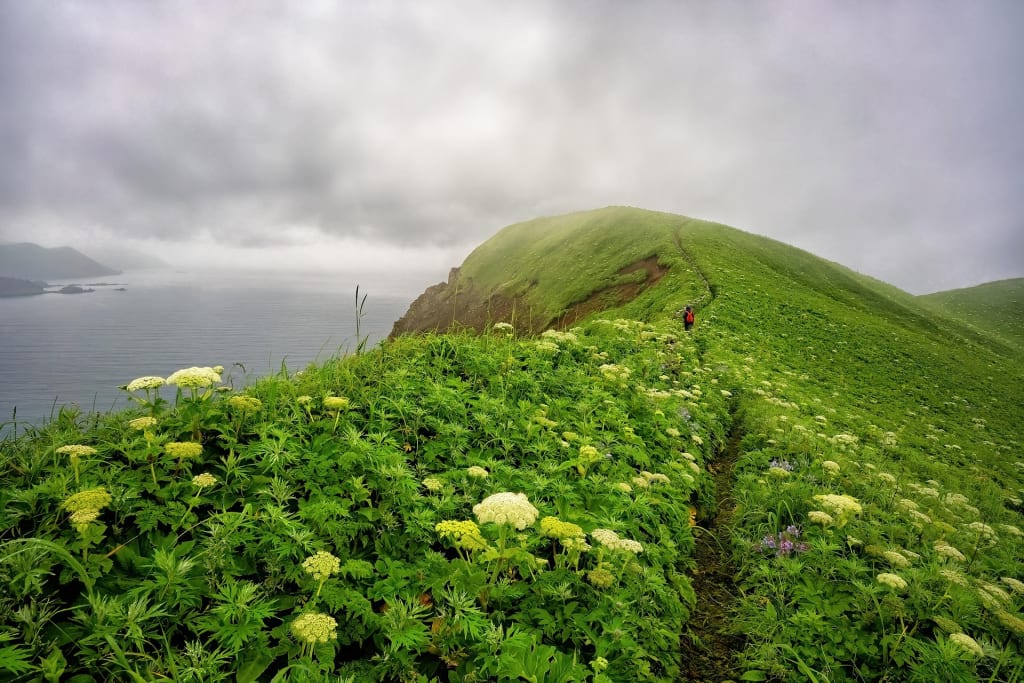
The story was accidentally discovered in a family travel journal passed down through the generations. The journal spoke of a place nestled between lush hills, untouched by modernity, where time seemed to stand still. The fact that the village had not seen a single natural death in more than a century is truly astonishing. Curious and skeptical, I set out to find this mysterious place. I finally arrived at a small village known locally as "Amargram," which literally translates to "the immortal village," after days of traveling and detours through narrow forest paths. The first thing I noticed was the silence—not the eerie kind, but a peaceful, harmonious quietude. Under ancient banyan trees, children played. Elders sat on wooden benches, eyes bright and faces lined with the soft etchings of time—but surprisingly vibrant. No illness symptoms. No graveyards. I saw people living fully, deeply, and gently.
I met Sadhan Chandra, a man claiming to be 112 years old. He walked upright, tended to his own garden, and even cracked jokes in perfect rhythm. When I asked him the secret, he simply smiled and said, "We don’t keep secrets here. We just live the way our ancestors taught us."
So what was different about this village?
First and foremost, their diet was extremely local. Everything they consumed—vegetables, grains, and herbs—was grown within a mile of their homes. No pesticides, no packaged food. Even their water came from a natural spring that flowed down from the hills, rich in minerals and untouched by pollution. They also consumed a bitter herb every morning, believed to cleanse the liver and purify the blood.
Their meals were cooked slowly, with care, using clay pots and open fires. There was a particular rhythm to their cooking—almost meditative. Eating was a communal act, often followed by rest and conversation. They didn’t count calories, nor did they diet. They simply respected food and ate mindfully.
Then there was their daily routine. The villagers woke with the sun and slept shortly after sunset. No one owned mobile phones. There were no TVs. Instead, they gathered in the evenings to sing, tell stories, or simply sit in silence. Children learned not just arithmetic and reading but also storytelling, farming, and meditation.
They walked everywhere. There were no vehicles, not even bicycles. Every step was deliberate, and every path held meaning. They believed that movement wasn’t just physical—it was spiritual. "When we walk," one elder told me, "we connect with the earth, and the earth gives us peace. "Perhaps most remarkably, the community practiced something they called "Samanway," meaning harmony. Disagreements were resolved without shouting or violence. Every full moon, the villagers gathered in the square, held hands, and spent a few minutes in collective silence—"to align our hearts," as one woman put it. Birthdays were not celebrated with cake but with gratitude rituals where people offered food to animals and shared stories about kindness.
I was amazed to see that they even had a tradition of weekly silence. The entire village avoided unnecessary speech one day a week. They believed that this helped people relax and develop empathy. It wasn’t just about not talking—it was about listening deeply, even to the wind.
Was it just a coincidence? Could clean living, strong community bonds, and spiritual discipline truly protect one from death?
Of course, I couldn’t verify the truth behind every claim. Medical records were nonexistent. The village had no clinic. But the energy was undeniable. People here didn’t just survive—they thrived. Even the animals seemed healthier, calmer.
When I left Amargram, I didn’t take a selfie. I didn’t write down GPS coordinates. Some stories, I realized, aren’t meant to go viral. They’re meant to be remembered, passed down, and perhaps one day—lived.
So, is there really a place where no one dies?
Maybe not in the literal sense.
But I saw a way of life in Amargram that was so balanced and beautiful that, if death came, it would just feel like another sunrise. If this story made you pause and reflect, consider sharing it. Perhaps the real miracle lies not in avoiding death but in truly living.
About the Creator
Keep reading
More stories from Md. Saiful Islam Shaon and writers in Horror and other communities.
Title: “A Cup of Tea and an Empty Chair”
It was almost 11 p.m. when my phone buzzed. A name flashed on the screen—one I hadn’t seen in months. My fingers paused. For a second, I just stared at the screen, wondering if I should even answer. But my heart had already decided before my brain could catch up.
By Md. Saiful Islam Shaon 7 months ago in Journal
10 Horror Movie Scenes Based on True Events (That Are Even Worse in Real Life)
Hollywood may add dramatic music and special effects, but in many cases, the real stories behind these scenes are darker, crueler, and far more tragic. Here are 10 horror movie scenes based on true events — and the real-life versions are even worse. 1. The Possession in The Exorcist The spinning head, the strange voices, the violent behavior — this iconic possession scene was inspired by a real boy known as “Roland Doe” in the 1940s. In real life, the boy reportedly experienced unexplained scratches, moving objects, and disturbing voices after playing with a Ouija board. Priests performed dozens of exorcism rituals over several months. Witnesses claimed the bed shook violently and words appeared on his skin. The movie toned it down. The real case involved long-term psychological and physical trauma, not just a few dramatic nights. 2. The Texas Chainsaw Massacre’s Human Furniture Leatherface making furniture from human remains seems too insane to be real — but it was inspired by Ed Gein, a real-life killer. Gein dug up graves and made chairs, lampshades, and masks from human skin. He kept body parts in his home and even wore faces like costumes. The film shows shocking moments, but Gein’s slow, obsessive behavior over years was far more disturbing than any single scene. 3. The Girl in the Box — The Silence of the Lambs The basement scene where a woman is trapped in a pit was inspired by serial killer Ted Bundy and others who kidnapped victims and kept them hidden. Real victims were held for days or weeks, psychologically tortured, and completely helpless. Some tried to escape but were dragged back. In movies, the rescue comes just in time. In real life, most victims were never saved. 4. The Doll from Annabelle The creepy doll in the movie is based on the real Raggedy Ann doll owned by a nursing student in the 1970s. The owner claimed the doll moved on its own, left handwritten notes, and once tried to strangle a visitor. Paranormal investigators Ed and Lorraine Warren locked the doll in a glass case. Whether paranormal or not, the fear experienced by the people involved was very real and long-lasting, not just one jump scare. 5. The Open Water Nightmare The movie Open Water shows a couple left behind by a diving group, floating helplessly in shark-infested waters. This actually happened in 1998. Tom and Eileen Lonergan were accidentally abandoned during a scuba trip in Australia. They were never found alive. Unlike the movie, which ends quickly, experts believe they survived for hours or even days, facing dehydration, sunburn, panic, and predators before dying alone. 6. The Amityville House — The Amityville Horror The movie shows demonic forces driving a man to madness and violence inside a haunted house. In reality, Ronald DeFeo Jr. murdered his entire family in that house in 1974. Later residents claimed paranormal events, but the brutal murders were real and confirmed. A ghost story is scary. But a son calmly killing his parents and siblings in their sleep is far more horrifying than any demon. 7. The Strangers’ Random Home Invasion Masked attackers breaking into a home “just because you were home” feels terrifying — and it’s based on real crimes. Many violent home invasions happen without reason or personal connection. Victims are targeted randomly, sometimes while awake, sometimes while sleeping. Unlike in movies, where victims often fight back successfully, in real life these attacks often end with serious injury or death. 8. The Hostel Torture Rooms The idea of paying to torture humans sounds fictional — but it was inspired by real rumors and crimes involving human trafficking and underground torture networks. While the movie exaggerated for shock, people are kidnapped, sold, abused, and killed every year in real trafficking operations. There are no heroic escapes or dramatic finales in most real cases — only long-term suffering that never makes headlines. 9. The Girl Next Door’s Basement Abuse This movie is based on the horrifying true story of Sylvia Likens, a teenager abused and tortured by her caretaker and neighborhood children. She was beaten, starved, burned, and locked in a basement for months. Many people knew and did nothing. The film shows cruelty, but real-life suffering lasted much longer and involved more people, making it one of the most disturbing true crime cases ever. 10. The Ritual Killings in The Conjuring Several scenes are inspired by real cult-related murders and ritual abuse cases. In real life, cult leaders have convinced followers to kill family members, sacrifice children, or commit mass suicide in the name of faith or fear. Movies show demons as the enemy. But in reality, humans manipulated other humans, which is far more frightening.
By sanab khanabout 10 hours ago in Horror


Comments
There are no comments for this story
Be the first to respond and start the conversation.