
The Vatican’s Lost Tapes: Real Exorcism Footage That Shook the World
Inside the chilling whispers, forbidden archives, and the truth behind the Church’s most haunting secret
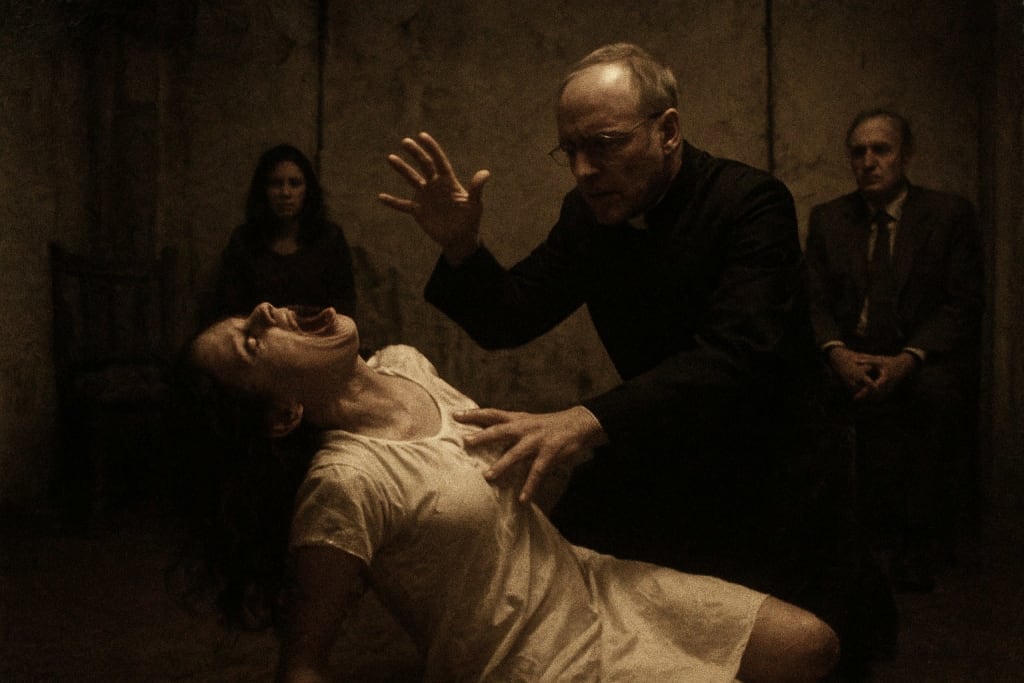
The word exorcism has had a magical meaning for many years, a troubling combination of faith, terror, and myths. Many link this ritual with horror films: a priest, a terrified family, a young victim in need, and a room packed with unwanted shadows.
However, think about this: could some of these spectacular occurrences be founded on actual events? What if the Vatican—guardian of the Church's darkest secrets—kept documentation of such terrifying incidents that they would prefer to be kept from the public?
Here is where the fascinating enigma of the Vatican Lost Tapes comes in; these are said to be genuine exorcism recordings stored in the guarded Vatican collections. Rumors about these tapes have fueled interest for years, and recent leaks, stories, and historical evidence point to a deeper treasure buried deep in the Vatican than simply myths.
Exorcisms: Between Faith and Fear
The Catholic Church has always found equilibrium between the spheres of established doctrines and mysteries. Although it is sometimes done in secrecy only after eliminating all other possible medical and psychological causes, exorcism is regarded as a holy rite.
Those proficient at carrying out exorcisms report demonic influence, hearing nonhuman voices, sensing extraordinary strength, and seeing the afflicted speaking unfamiliar languages. Usually hidden in Church records, private archives, or passed among pastors informally, such accounts have typically stayed buried.
Still, recording these events on film greatly increases the tension. It would offer a visual record of issues that the Church itself finds objectionable—and maybe even of things it struggles to justify.
The Origin of the “Lost Tapes” Legend
The Vatican Lost Tapes' narrative began in the late 1970s, not long after the release of William Friedkin's terrifying movie The Exorcist, which horrified audiences all over. Beyond the well-known 1949 "Roland Doe" incident in the United States, speculation developed that the movie borrowed from real papers stashed away by the Vatican.
The conversation became more severe by the 1980s. Certain clergy and academics suggested that the Vatican had been keeping audio and video recordings of exorcisms dating from the early 20th century. Intended for examination, evidentiary purposes, and doctrinal development, these resources were stated to be just for internal usage.
Some even hypothesized that a covert "Demonology Section" stocked with film reels, cassettes, and digital records documenting events too distressing for public awareness existed in the Vatican's archives.
A Leak from the Shadows
Low-quality videos purporting to have been covertly recorded within the Vatican's vaults began to surface on the internet early in the 2000s. One especially infamous video showed a teenage girl in Italy grabbing violently, her voice swinging between childlike cries and deep growls. Those who watched it felt it was raw, unpredictable, very upsetting, and insisted the footage was real.
Skeptics said the video's low caliber and how simple it is to edit stuff nowadays. Still, some contend that the video showed signals of being genuine; they highlighted the setting, the spiritual prayers, the Latin phrasing, and the scared replies of those present.
The Vatican decided as predicted to remain silent. But this quiet sometimes sparks public curiosity.
Why Would the Vatican Hide Such Footage?
Should these recordings be real, what causes their secrecy? There are a few major reasons:
1. Public Panic Evidence of demonic possession might generate great panic impacting both those who do not believe and those who do.
2. Preserving the Victims Exorcisms include people in a Sensitive State. Publishing their difficulties would insult their privacy and dignity.
3. Control over opinions The Church is watchful regarding its doctrines. Sharing the tapes could distort dogma, promote sensation, or inspire wrong endeavors at exorcism.
4. Enigma Power: The Vatican profits from mystery. Keeping secrets preserves authority more effectively in some circumstances than revealing the truth does.
Voices from the Inside
Though the Vatican rarely comments, some pastors have decided to speak out. Once advising that there are papers and records that will remain unseen from public view, Father Gabriele Amorth, well known as the top exorcist till his death in 2016, In several interviews, he described events of possession so severe that medical science could not account for them—objects moving on their own, amazing force, and husky voices coming from feeble people.
He said flatly, "Evil is real," and added, "And sometimes it demands attention."
Might he have been insinuating toward the enigmatic Lost Tapes? Many believe he was.
The Psychology vs. Theology Debate
Reviewers sometimes think that what are labeled as demonic possession are really misdiagnosed cases of mental illness, such schizophrenia, dissociative identity disorder, or great trauma. From this point of view, any records kept by the Vatican would give irrefutable proof that these people required therapy instead of religious observances.
Still, it fails to explain the several occasions when doctors were unable to identify a medical cause. Modern psychiatrists have on rare occasions been given particular cases by religious leaders even when the symptoms seem to go against scientific explanations.
If real, The Lost Tapes might represent the apex of the battle between science and religion, therefore challenging both sides to face challenging riddles they do not fully understand.
Why the World Is Obsessed
Because it makes us confront difficult issues we would rather ignore, the idea of the Vatican Lost Tapes is so interesting:
1. Since we can film evil, does it then exist?
2. Should the Vatican keep more secrets than it discloses, what other information might be concealed?
3. Should these cassettes become public knowledge, how would the populace respond?
This topic explores the riddle of the unknown beyond belief. The Lost Tapes show that we have barely brushed the surface of the incredible and that many people are afraid of what they do not understand.
Will the Tapes Ever Surface?
Honestly, the Vatican is probably not going to release such information on its own. Long it has sought to protect the faithful from chaos, its reputation for secrecy is well-known.
But buried facts can surface at some point in an age of leaks, hackers, and whistleblowers. Should those tapes be authentic, there may come a time when they escape and generate worldwide commotion.
Knowledge that is off limits, the Lost Tapes remain unsettling for now.
Final Thoughts
At the center of faith, anxiety, and curiosity sits Vatican Lost Tapes. These mysterious recordings draw attention to one thing: whether they are true evidence of the paranormal or just unexplained events kept secret for centuries. Fact: People are drawn to unsolved riddles.
Perhaps this is why horror films fascinate viewers, ghost tales endure across time, and the secrets of the Vatican's secret archives keep attracting interest.
We question whether the unknown is interested in us and also about the unknown at the end of the day.
About the Creator
Keep reading
More stories from Shahjahan Kabir Khan and writers in Horror and other communities.
Echoes in the Dark: Ghost Box Voices at the Nathaniel Rogers House
Common association of the Hamptons is luxury—glowing summer homes, wide beaches, and painstakingly kept estates. But amongst the stores and sun-drenched houses is an ignored past that hangs persistently. A magnificent mansion from the 1800s in Bridgehampton, Nathaniel Rogers House reminds us of a wealthy whaling captain's legacy. Local legends claim it now functions as a sanctuary for wandering spirits and is a museum.
By Shahjahan Kabir Khan5 months ago in Horror
Lideco Ghost Town Vietnam: Inside Hanoi’s Most Mysterious Abandoned City
Approximately 15 km to the west of Hà Nội city center, in Hoài Đức District, is one of the most fascinating ruin sights in Vietnam, which is the remnants of a large housing estate called Lideco Bắc 32. This location does not appear to be a typical residential area to tourists who visit there or those who hear of its existence; it is more of a ghost town.
By Kyrol Mojikal2 days ago in Horror
Miss Persephone's Manual to a Seemingly Ordinary Life
Miss Persephone was found at the dining table, her blue eyes swollen, her tears arriving and retreating like the tides of the ocean. Earlier that day, her family had visited her in the retirement home where she had lived for eight years. It was her eightieth birthday.
By Imola Tóth3 days ago in Fiction


Comments
There are no comments for this story
Be the first to respond and start the conversation.