
The Thrill of Terror: Why Fear Feels So Good
A psychological and cultural journey into humanity’s love affair with horror.

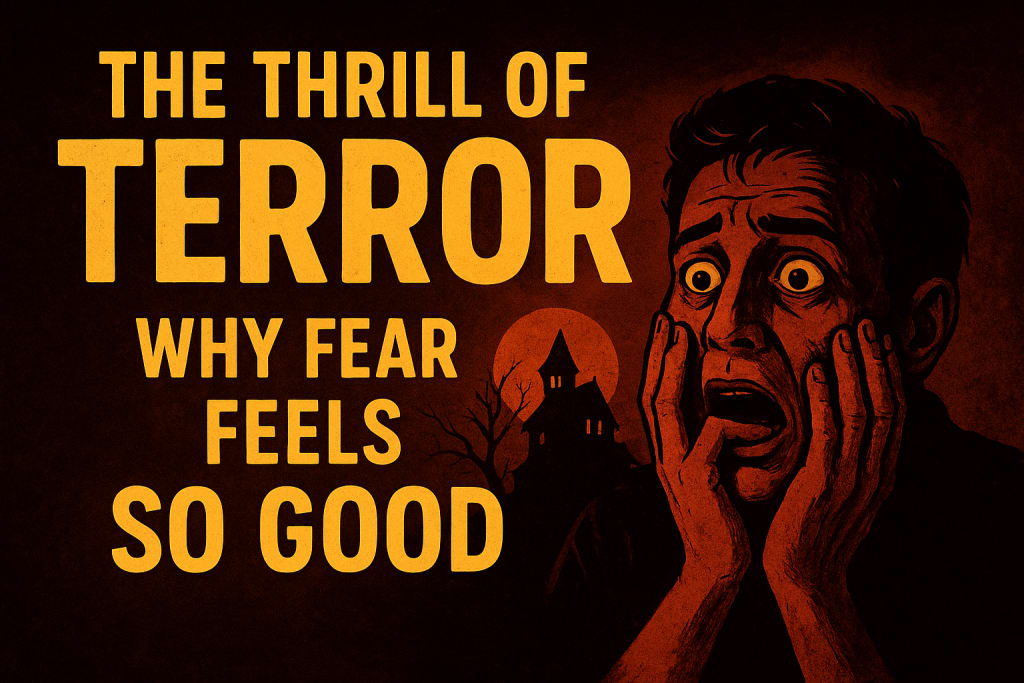
Fear is one of humanity’s oldest instincts, a powerful emotion hardwired into our brains to keep us alive. Yet, paradoxically, many of us actively seek fear. We binge-watch horror movies late at night, plan trips to “haunted” locations, and devour ghost stories with fascination rather than dread. Why would humans, who have evolved to avoid danger, voluntarily chase it? The answer lies in the fascinating intersection of psychology, neuroscience, and culture.
The Brain’s Dance with Fear
When you feel fear—whether from a sudden jump scare or a creaking sound in a dark hallway—your body launches into its survival mode. The amygdala, a small almond-shaped structure deep in the brain, detects potential threats and triggers a chain reaction. Your heartbeat races, breathing quickens, and adrenaline floods your system, preparing you to fight or flee.
But here’s the twist: when this fear is experienced in a safe environment, like a movie theater or a ghost tour, the same adrenaline rush feels exhilarating. Research published in Frontiers in Psychology shows that controlled fear can actually release dopamine—the “reward” chemical—making fear feel pleasurable, almost addictive. This biological quirk explains why some people are drawn to horror movies the way others are drawn to roller coasters.
Why We Love Being Scared
Psychologists describe this thrill-seeking behavior as “sensation-seeking.” People who enjoy high levels of stimulation are naturally drawn to experiences that spike adrenaline, even if they’re terrifying. For others, watching a scary film or exploring a haunted house provides a sense of achievement. Surviving the fear, even if it’s fictional, can feel empowering.
Dr. Margie Kerr, a sociologist and author of Scream: Chilling Adventures in the Science of Fear, explains that fear can be a form of stress relief. When we experience controlled fear, our brains switch from high alert back to calm, releasing feel-good hormones like endorphins. In this way, fear becomes a “reset button” for the nervous system, giving us a natural high.
The Cultural Allure of the Supernatural
Fear isn’t just about biology; it’s deeply embedded in culture. Stories of ghosts, demons, and haunted locations have existed in every society for centuries. They serve as cautionary tales, moral lessons, and reflections of cultural anxieties.
For instance, the legend of Japan’s Aokigahara Forest is tied to centuries-old folklore about spirits of the dead, while the Tower of London in England has become a magnet for tourists because of its ghostly history. These narratives add layers of intrigue, inviting people to experience history through the lens of fear.
Even Hollywood and streaming platforms have turned this fascination into a billion-dollar industry. From The Conjuring series to documentaries about paranormal investigations, audiences worldwide continue to prove that fear sells—and captivates.
Fear as a Mirror of the Mind
Another reason fear attracts us is its psychological depth. Horror stories and haunted settings often act as mirrors, reflecting our hidden anxieties. A creaky old house in a story might symbolize isolation; a monster may represent societal fears or inner struggles.
Sigmund Freud’s concept of the “uncanny”—the unsettling feeling when something familiar feels slightly “off”—is a core principle behind horror’s effectiveness. A doll’s lifeless eyes or an empty hallway in your childhood home can trigger fear precisely because they are both familiar and strange. This psychological playfulness keeps us hooked, eager to explore what scares us.
Haunted Places: More Than Just Legends
Haunted attractions are another layer of this fascination. Tourists flock to places like Edinburgh Castle, The Stanley Hotel in Colorado (inspiration for Stephen King’s The Shining), or India’s Bhangarh Fort, lured by spine-chilling legends. Even skeptics admit that these places carry a sense of mystery.
Environmental psychologists suggest that old buildings, dim lighting, and abandoned locations trigger primal instincts. Humans are naturally cautious in unfamiliar or dark environments, which makes haunted sites feel more intense. Whether you believe in ghosts or not, the thrill of exploring such places is undeniable.
The Safe Space of Fear
Ultimately, our fascination with horror stems from its ability to let us face fear in a controlled setting. In real life, fear is often tied to trauma and danger, but horror gives us a chance to explore it without real consequences. Much like mythology allowed ancient civilizations to grapple with the unknown, today’s horror films and ghost tours give us a safe playground for our darkest emotions.
As neuroscientist Dr. Joseph LeDoux puts it, “Fear is the price we pay for the privilege of consciousness.” It keeps us alert, sharp, and aware of danger. Yet, paradoxically, it also makes life exciting.
Conclusion: Fear is Part of Being Human
Fear isn’t just a reaction; it’s a part of what makes us human. From ancient campfire tales to modern haunted house attractions, fear has always been a way to bond, entertain, and reflect. We are hardwired to respond to it, yet we’ve learned to enjoy it. This balance of terror and thrill explains why horror films top charts, haunted hotels stay booked, and ghost stories continue to spread.
Our love for fear isn’t a sign of weakness; it’s proof of our curiosity and resilience. By exploring fear, we learn more about ourselves—and sometimes, that’s the scariest part of all.
About the Creator
AngelFace
✨ “I share mysteries 🔍, stories 📖, and the wonders of the modern world 🌍 — all in a way that keeps you hooked!”
Lycan Lore
As the students of my 10am mythology class take their seats, I decide to steer the day's curriculum away from Greek and dive into a Western European discourse on the misaligned beliefs of the Werewolf. A tale of truth or fiction. No one really knows.
By Lamar Wigginsabout 13 hours ago in Fiction



Comments (2)
Wow Scary 😨
"This is such a fascinating deep dive into the psychology of fear! I love how you connected science, culture, and haunted legends—it really makes you think about why we’re drawn to the things that scare us the most. Brilliantly written and super engaging!"