
The Soundproof Room
At the end of the upstairs hallway, just past the crooked family portraits and the dusty linen closet, stood a door no one ever opened. It was painted a pale yellow once, but time and silence had faded it into something closer to bone. No one in the family talked about the room behind it. Not directly. When Sophie had asked her mother about it at age seven, she’d been met with a tight smile and a change of subject.
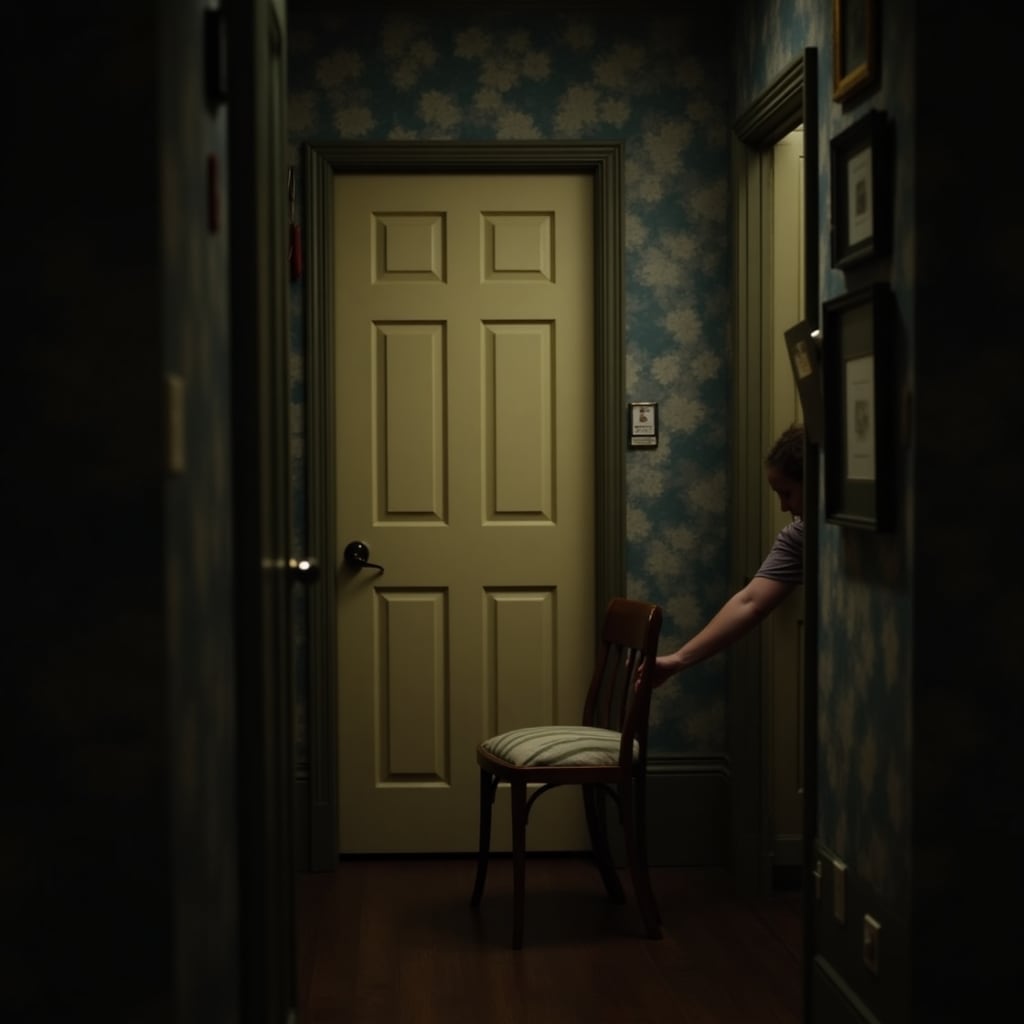
At the end of the upstairs hallway, just past the crooked family portraits and the dusty linen closet, stood a door no one ever opened. It was painted a pale yellow once, but time and silence had faded it into something closer to bone. No one in the family talked about the room behind it. Not directly. When Sophie had asked her mother about it at age seven, she’d been met with a tight smile and a change of subject.
“It’s just a storage room,” her mother had said flatly, folding laundry with knuckles white as marble.
But Sophie had never believed that. Because it wasn’t just the door’s chipped paint, or how it never creaked like the others. It was the way sound seemed to vanish the moment you stepped near it. The hallway’s usual creaks, groans, and hums stopped cold. Even her breathing felt muffled near it, like cotton stuffed in her ears. That quiet—dense and unnatural—filled her with a sense of dread she could never quite explain.
Years passed, and Sophie learned not to ask. Families, she came to realize, all carried a room like that—metaphorically, at least. A place you just didn’t open. You learned to walk past it, to speak around it. To survive.
She left home at eighteen and didn’t look back. But when her mother died suddenly ten years later, Sophie, now twenty-eight and alone again, returned to the house she hadn’t seen in a decade. It felt smaller now, haunted not by ghosts, but by the heavy hush of things left unsaid.
On the second day of sorting boxes and old furniture, she passed the door again. The yellow had faded further—almost gone now. Something about it pulled at her, like a whisper on the edge of memory. She didn’t remember her hand reaching for the knob, but she felt the cold brass against her skin.
The door opened without a sound.
Inside was darkness. But not the kind born of night—this darkness was thicker, older. Sophie reached for the switch just inside. A single bulb flickered on.
The room was nearly empty.
Nearly.
In the far left corner stood a small wooden chair. Next to it, a tape recorder with an old cassette still inside. On the floor beside it lay a pile of paper, frayed at the edges, smeared in faded ink. On the walls, thick soundproof padding had been nailed into the drywall—haphazardly, as if done in panic.
Sophie stepped in. The silence wrapped around her like a second skin.
No hum from the hallway. No creak of floorboards.
Even her heartbeat sounded distant.
Her hands trembled as she picked up the first sheet of paper.
“They don’t believe me. But the sounds started after he came home from the hospital. Not voices. Not exactly. It’s like… memories, echoing. And only in this room.”
Another page:
“Every time I leave the room, I forget what I heard. But the feeling stays. Shame. Guilt. Screaming, always screaming. I thought sealing the room would keep it in.”
And another:
“He said he didn’t remember what happened to Eliza. That she must’ve run away. But this room... this room remembers. It won’t let me forget.”
Eliza. The name hit Sophie like a cold slap.
Her aunt.
The girl who disappeared when Sophie was only three. A family tragedy wrapped in rumors and silence. She had been told Eliza ran away. That she was troubled.
But her mother had never spoken of her with grief—only caution. Like a warning.
Sophie knelt down, picked up the tape recorder, and pressed play.
At first, only static. Then, faintly—so faint it almost sounded imagined—a girl’s voice.
“I’m still here.”
Click. Silence again.
She rewound and played it again.
“I’m still here.”
Tears welled in Sophie’s eyes. Her mother had built this room to contain the past. To trap it behind walls so thick no sound could escape. But trauma doesn't stay locked away. It echoes—in silence, in generations, in blood.
She sat in the old wooden chair and closed her eyes.
This time, the silence didn’t feel empty.
It felt full.
Later, after the house had been sold and the papers settled, Sophie kept one thing: the cassette. She didn’t play it again, but she kept it in a small box on her bookshelf, beside a framed photo of her mother and a note that read:
“Some rooms aren’t meant to be silent. Some stories need to be heard.”
About the Creator
Ahmad shah
In a world that is changing faster than ever, the interconnected forces of science, nature, technology, education, and computer science are shaping our present and future.
Keep reading
More stories from Ahmad shah and writers in Horror and other communities.
The Pregnant Virgin
In a small village, there lived a poor cleric (Maulvi). He was the sole Imam of the only mosque in the village. Besides leading the prayers, he also taught the village children the Qur'an. His wife taught the village girls at home, which helped them sustain their livelihood. They had only one daughter, who was exceptionally beautiful. Her beauty was talked about far and wide and these tales eventually reached the son of the village chief (Chaudhry).
By Ahmad shah9 months ago in Horror
Top 10 Spring Break Horror Movies
Spring Break is often associated with fun, sun, and relaxation, but in the world of horror films, it can also be a time of terror and chaos. College students and high school students are having a great time, unaware that the worst is yet to come.
By Ninfa Galeanoa day ago in Horror


Comments
There are no comments for this story
Be the first to respond and start the conversation.