
The Silent Twins: A Terrifying Bond of Isolation and Death
A seclusion turned isolation

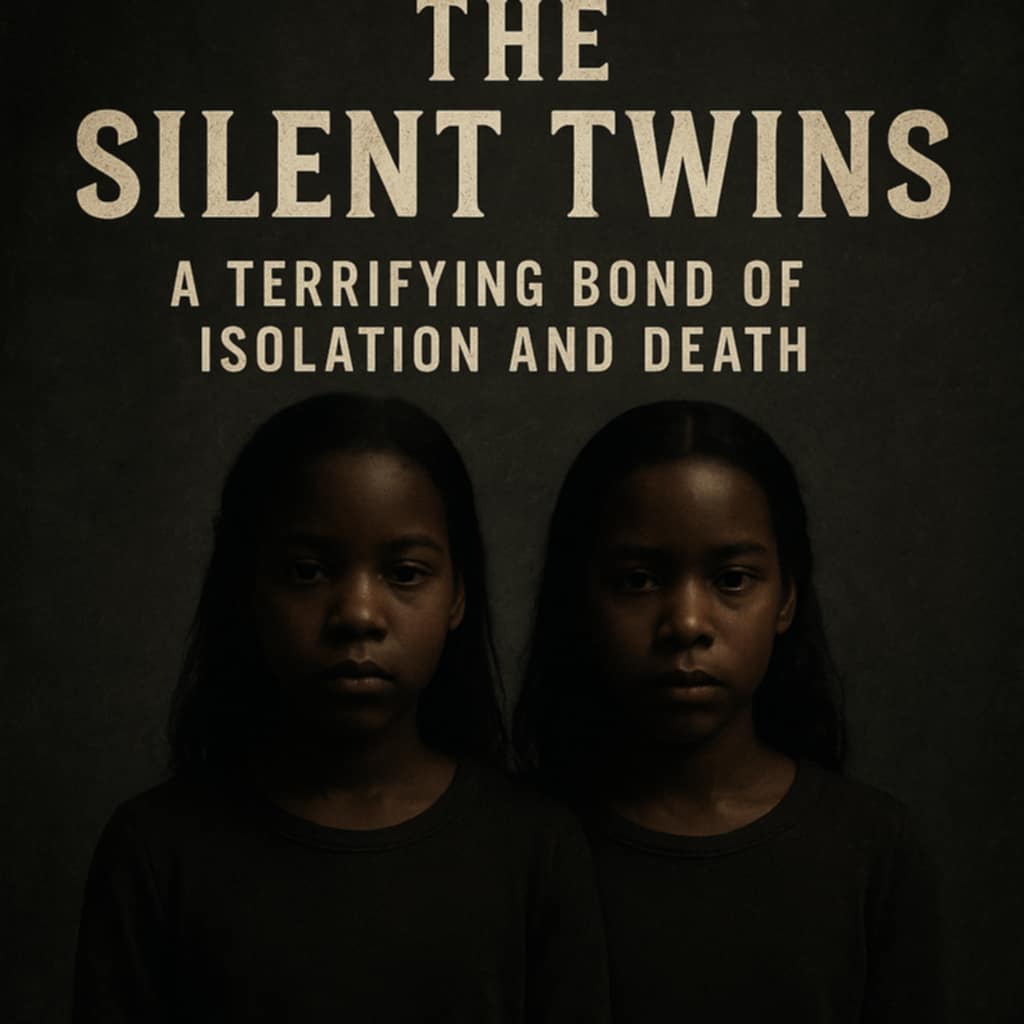
Trigger Warning: This story contains depictions of psychological trauma, mental illness, and death. Reader discretion is advised.
In the quiet corridors of Broadmoor Hospital, where Britain’s most dangerous criminally insane reside, two teenage girls once lived in silence so profound it felt like a curse. Known simply as "The Silent Twins," June and Jennifer Gibbons spoke to no one but each other. Their eerie bond fascinated doctors, terrified their family, and ultimately led to an ending so bizarre and tragic it remains one of the most haunting true stories in modern psychiatry.
Born in Silence
June and Jennifer Gibbons were born on April 11, 1963, in Barbados, and raised in Haverfordwest, Wales. Their parents, Caribbean immigrants, were hopeful and hardworking, but the community was less welcoming. The twins were the only Black children in their school—a fact that quickly made them targets of racism and exclusion.
From early childhood, the girls showed signs of unusual behavior. They spoke a private language—a rapid, whispered patter that sounded like gibberish to others but was fluent between them. By age five, they had grown increasingly withdrawn from the outside world. They moved in eerie synchronization, mirroring each other’s gestures and expressions like shadows with only one soul.
A Pact of Silence
Despite numerous attempts by speech therapists and educators, the girls refused to speak to anyone outside their twinship. Teachers described the silence as "deliberate, almost malevolent," as if the girls took pleasure in their isolation.
Eventually, professionals began to document their unique behavioral pattern: they would often speak only when alone, recording their voices in journals and tapes. The twins were later diagnosed with elective mutism—a condition linked with trauma, but theirs was different. Their silence wasn’t born of fear. It was a code. A pact. A trap.
The Dark Mirror
Inside their shared bedroom, June and Jennifer unleashed a world of vivid, violent imagination. They began writing fiction—hundreds of notebooks filled with gothic, dystopian tales where children committed crimes, families were destroyed, and passions burned into madness.
They also wrote individual novels. June’s Pepsi-Cola Addict told the story of a boy seduced by a teacher and institutionalized. Jennifer’s books were darker still—The Pugilist, for example, featured a physician who kills a dog by injecting it with disease. The writing was imaginative, but disturbingly morbid. When rejected by publishers, the twins turned their creative fantasies into real-world experiments.
They set fires. They vandalized property. They committed petty theft. Eventually, they were arrested and charged with 16 counts of burglary, arson, and theft. Their punishment was shocking: they were sentenced to indefinite detention at Broadmoor Hospital, a high-security psychiatric facility better known for housing murderers than teenage delinquents.
Imprisoned Minds
Their time in Broadmoor was nothing short of psychological torture. Confined and medicated, the girls spent 11 years in a place designed to subdue the violently insane. But the silence between them never wavered.
Journalist Marjorie Wallace, who developed a relationship with the twins during their imprisonment, described their connection as “both a symbiosis and a war.” They loved each other with terrifying intensity but also seemed locked in a battle for dominance. One would eat, the other would starve. One would fall ill, the other would thrive.
Jennifer once wrote in her diary, “One of us is possessed by the devil. One of us must die.”
Death as Liberation
In March 1993, after years of campaigning by Wallace and others, the twins were finally granted release from Broadmoor. They were to be transferred to Caswell Clinic, a lower-security facility in Wales. The long-awaited freedom, however, came with a chilling price.
Just one day after their transfer, Jennifer Gibbons was dead.
She collapsed suddenly on June’s shoulder during the car ride to the clinic. Hours later, she was declared dead of *acute myocarditis*—a rare inflammation of the heart. No poison. No trauma. No rational cause. The doctors were baffled.
But June was not. According to Wallace, Jennifer had confessed just days before: “I’m going to have to die now.” The twins had made a decision—one would live a normal life. And one would sacrifice herself.
The Aftermath
After Jennifer’s death, something miraculous—or perhaps terrifying—happened: June began to speak. Not just a few words, but fluently. She engaged with staff. She attended therapy. She made friends. It was as if the death of her sister had lifted an invisible weight.
Today, June Gibbons lives a quiet life in Wales. She has never reoffended. She is, by all accounts, “free.”
But the question lingers like a ghost: Was Jennifer’s death an act of suicide? Of sacrifice? Or something darker—an inexplicable psychosomatic manifestation of a pact too twisted for the world to understand?
A Terrifying Bond
The story of The Silent Twins isn’t just about mental illness or childhood trauma—it’s about the power of identity, and the horrifying consequences when two minds merge too deeply. Their silence wasn’t just communication—it was a ritual. A curse. A prison they built for each other, brick by brick, until only death could set them free.
To this day, psychologists struggle to explain how two people could become so psychologically entwined. Was it a folie à deux—a shared psychotic disorder? Or something more primal? More sinister?
No one knows. But in their silence, the twins told a story louder than words ever could.
sources used for this article:
Wallace, Marjorie. *The Silent Twins*. Vintage, 1998.
BBC Documentary: *The Silent Twins* (1994)
Broadmoor Hospital Archives
Mental Health Today Journal (UK)
❤️ Enjoyed this story?
If this haunting tale sent chills down your spine, leave a heart, drop a comment, and subscribe for more true crime stories that go beyond the surface. Every view and share helps support deeper investigative writing and storytelling.
👉 Follow me for the darkest corners of the human psyche—uncovered, unflinching, unforgettable. I have a knack for writing the unthinkable ~
---
About the Creator
E. hasan
An aspiring engineer who once wanted to be a writer .
Lideco Ghost Town Vietnam: Inside Hanoi’s Most Mysterious Abandoned City
Approximately 15 km to the west of Hà Nội city center, in Hoài Đức District, is one of the most fascinating ruin sights in Vietnam, which is the remnants of a large housing estate called Lideco Bắc 32. This location does not appear to be a typical residential area to tourists who visit there or those who hear of its existence; it is more of a ghost town.
By Kyrol Mojikala day ago in Horror



Comments
There are no comments for this story
Be the first to respond and start the conversation.