
The Shining: a Timeless Masterpiece of Horror
The Endless Terror of The Shining

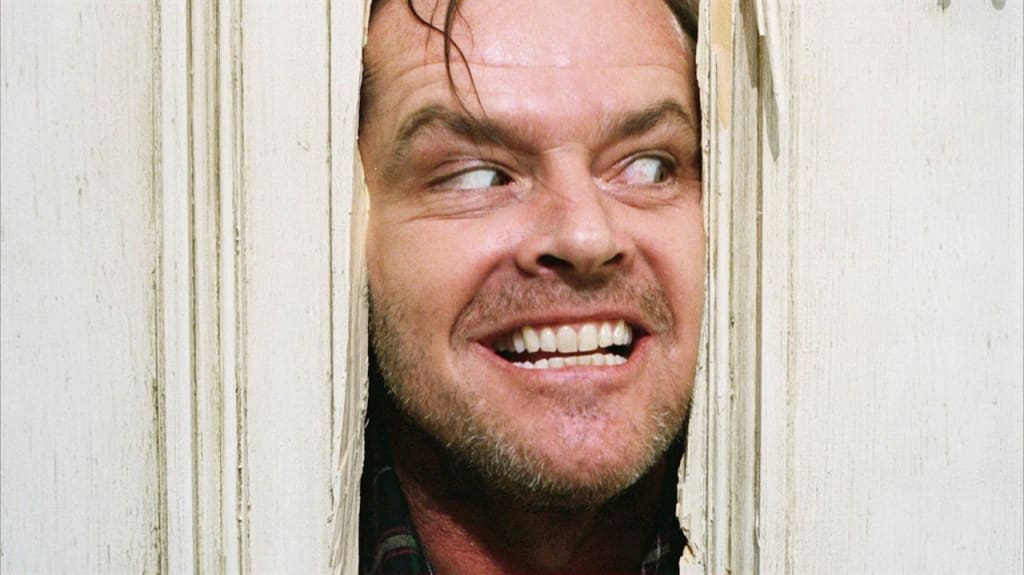
The axe strikes the door again and Wendy Torrance lets out a shriek of terror, her trembling hands clutching a knife. Wood splinters and Jack Torrance (devoted husband and father) presses his face against the gaping wound in the bathroom door. “Here’s Johnny!”
Stanley Kubrick’s horror classic The Shining is a film that I revisit regularly, often multiple times a year. With every viewing something new resonates with me – Danny’s lonely childhood, Wendy’s desperate efforts at saving an obviously failing marriage, or Jack’s alcoholism and obsession with his work as a writer.
The Shining is frightening on multiple levels at once, ranging from the visual to the psychological. Certain details are simply amiss at times (like Wendy and Danny watching an unplugged television during a snowstorm or Jack’s typewriter constantly changing colors) so the viewer always knows on an unconscious level that something is wrong. From its claustrophobic camera angles as young Danny Torrance explores the colorful hallways of the Overlook on his tricycle to the howling voices in the opening scene, everything about The Shining is designed to get under your skin in subtle ways.
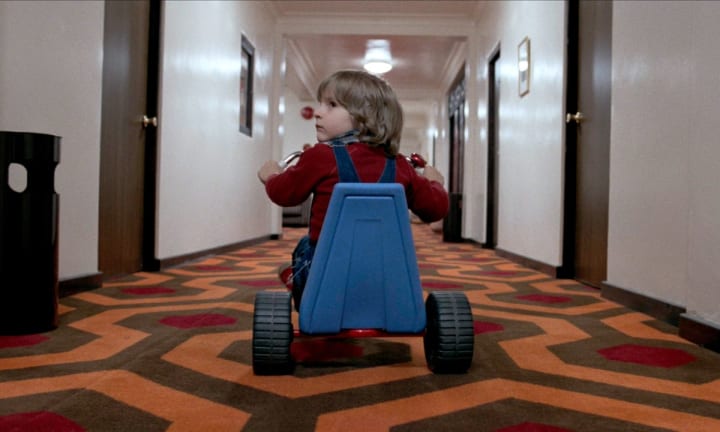
The terror in the film worsens slowly, allowing the audience to accumulate but never fully preparing them for what they may see next. As a child I, like so many others, was horrified by the sight of a rotting elderly woman cackling as she lumbers toward Jack Torrance. The use of practical effects heightens every scare The Shining has to offer.
At its core, The Shining is about trauma. It is trauma that contributes to Jack’s alcoholism, keeps Wendy with her abuser, and will go on to plague Danny because of his father’s abuse. Wendy weeps as Jack screams into her face, accusing her of ruining his life, and their son experiences a seizure in the other room. The foundation of their family crumbles under the weight of the Overlook Hotel’s strange influence.
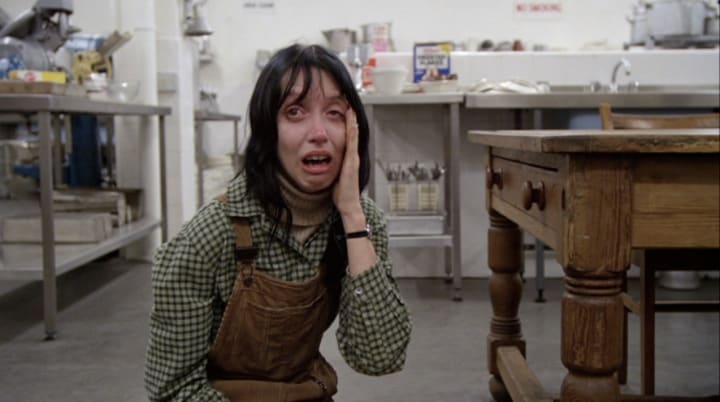
Shelley Duvall underwent her own trauma during the filming of the movie. While Kubrick invited fans to meet Jack Nicholson she was left alone in her room, completely isolated, and the scene where Wendy Torrance swings a bat at her husband and begs him to stay away was filmed 127 times before Kubrick was satisfied. The trauma Duvall experienced filming The Shining is palpable when watching the movie. My heart aches as she sobs and begs for her life because it feels real. Other scream queens’ shrieks of agony carry a purposeful sense of camp, but Wendy’s soft desperate attempts at reasoning with Jack mirror the agony of a real victim of abuse. The tragic character’s suffering on-screen is real because the actress portraying her is in just as much agony.
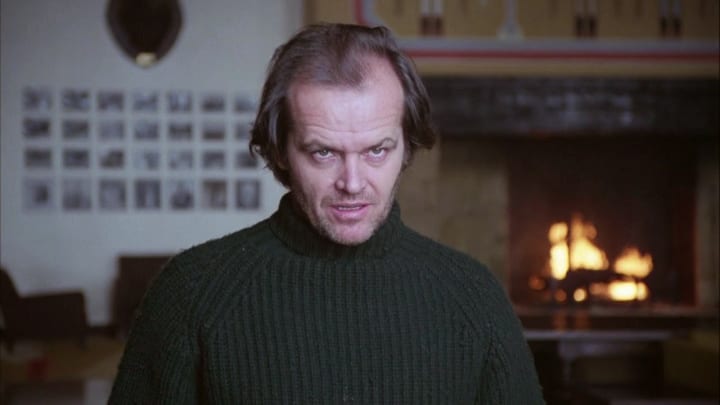
Jack Nicholson’s performance is exceptional for its own reasons. The exhaustion of repeated takes and Stanley Kubrick’s purposeful ego-stroking makes Nicholson come across as completely unhinged. He’s a man whose ego knows no bounds, yet he feels as though life hasn’t given him what he’s owed. So, he toils away writing as he slips further into madness. Stanley Kubrick’s Jack Torrance is overworked and manic with endless charisma.
Madness and themes surrounding mental illness ooze from The Shining from the start. Its introductory music is a rendition (performed by Wendy Carlos and Rachel Elkind) of “Dreams of a Witches’ Sabbath”, from Hector Berlioz’ Symphonie Fantastique. This is notable for two reasons. The first is that Berlioz was a composer with a habit of stalking women. He often obsessed over famous women and did everything in his power to seek out their approval. This theme of madness and obsession permeates his work, and it’s particularly vibrant in Symphonie Fantastique. The second reason the piece used is notable is for its usage of the dies irae. The dies irae is a musical motif which always, without fail, foreshadows death. From its opening scenes The Shining warns its audience that death is coming and there’s nothing they can do to stop it.
Kubrick’s masterpiece is a horror film I will continue to watch every Halloween. It’s a tangled web of madness, abuse, and addiction nestled in a coffin. Perhaps as you curate your Halloween watchlist you’ll consider revisiting The Shining (or even seeing it for the first time), and you too will understand why the Overlook Hotel is going to haunt me for the rest of my life.
About the Creator
Mckayla Higgins
McKayla Higgins is a transcriptionist, music composer, and writer who resides in Milwaukee, WI with her partner. She graduated from Southern New Hampshire University with a Bachelor of Arts in English and Creative Writing.
Keep reading
More stories from Mckayla Higgins and writers in Horror and other communities.
Elisa Lam's Death
The death of twenty-one-year-old Canadian student Elisa Lam in the water tank on the roof of Los Angeles's Cecil Hotel in February 2013 became an internet obsession and urban legend due primarily to the disturbing surveillance footage from the hotel elevator showing Elisa's strange behavior in the minutes before she disappeared, behavior so bizarre and inexplicable that it sparked countless theories ranging from mental health crisis to paranormal activity to murder involving unknown assailants, and while the official investigation concluded her death was an accidental drowning complicated by bipolar disorder, the circumstances surrounding how she accessed the locked roof, how she entered a closed water tank, and what caused the erratic behavior captured on video have never been adequately explained to the satisfaction of many observers who continue to believe there are missing pieces to this puzzle that authorities either cannot or will not acknowledge. Elisa was on a solo trip through California, staying at the Cecil Hotel in downtown Los Angeles, a location with a dark history including multiple murders and suicides and a past connection to serial killers Richard Ramirez and Jack Unterweger who had both stayed there during their killing sprees, giving the hotel a reputation as a place with bad energy though Elisa likely chose it simply because it offered budget accommodation in a central location.
By The Curious Writerabout 4 hours ago in Horror


Comments
There are no comments for this story
Be the first to respond and start the conversation.