
The Salem Witch Trials – Massachusetts
America’s Darkest Chapter of Fear and Hysteria

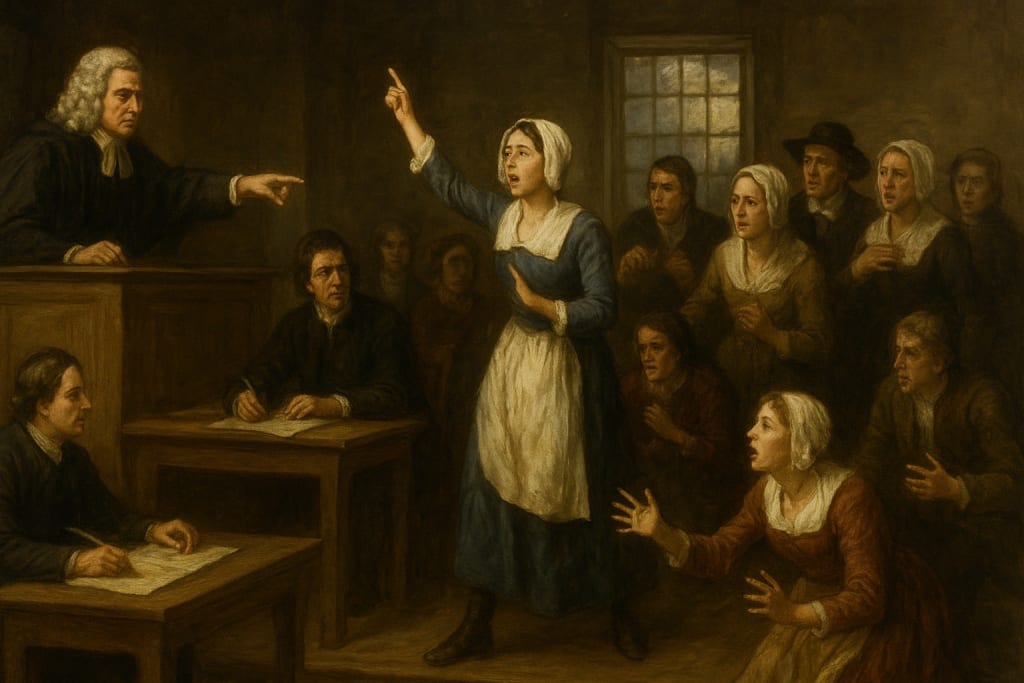
In the quiet town of Salem, Massachusetts, during the late 17th century, a wave of paranoia and fear transformed a small Puritan community into the site of one of the most infamous events in American history — the Salem Witch Trials. Between February 1692 and May 1693, more than 200 people were accused of practicing witchcraft, and 20 were executed. What began as a few strange incidents among young girls quickly turned into a national symbol of mass hysteria, superstition, and the dangers of false accusation.
The Origins of the Witch Hunt
The roots of the Salem Witch Trials trace back to the strict religious lifestyle of the Puritans. They believed that the devil was constantly at work to corrupt the faithful. In 1692, when Betty Parris and Abigail Williams, the daughter and niece of Reverend Samuel Parris, began exhibiting bizarre symptoms — screaming fits, convulsions, and trance-like states — the local doctor claimed the girls were victims of witchcraft.
Soon, other girls in Salem began to display similar behaviors, and fear spread like wildfire. Pressured to explain their torment, the girls accused several local women of witchcraft — including Tituba, a Caribbean slave; Sarah Good, a homeless beggar; and Sarah Osborne, a woman who rarely attended church. These accusations marked the beginning of the witch hysteria that would soon consume the town.
The Trials Begin
The colonial legal system in 1692 allowed spectral evidence — testimony that the accused’s spirit or ghost had appeared to the witness — as valid proof. This controversial rule led to the imprisonment of dozens of innocent people. Trials were held in Salem Village and Salem Town, where fear and chaos replaced reason and justice.
Tituba’s confession further fueled the hysteria. She admitted to communicating with the devil and described other witches in Salem, confirming the community’s worst fears. As the accusations multiplied, no one felt safe. Prominent members of society, churchgoers, and even children became suspects. The Puritan belief that anyone could fall under Satan’s influence gave the trials terrifying momentum.
By the summer of 1692, Governor William Phips had established a special court called the Court of Oyer and Terminer to prosecute the accused witches. The most famous judge, Samuel Sewall, later publicly repented for his role in the trials, calling it a “day of shame.”
The Executions and the End of the Trials
Nineteen people were hanged on Gallows Hill, and one man, Giles Corey, was pressed to death with heavy stones for refusing to plead. Many others died in jail awaiting trial. Among the victims were Rebecca Nurse and Martha Corey, both respected church members, whose executions shocked the community.
By early 1693, skepticism began to grow. Prominent ministers, including Increase Mather, argued that “it were better that ten suspected witches should escape than that one innocent person should be condemned.” Public opinion turned against the trials, and the governor eventually ordered an end to the proceedings.
In 1697, the Massachusetts General Court declared a day of fasting and repentance for the tragedy. Later, the court annulled the guilty verdicts and offered compensation to the victims’ families — but the scars of hysteria and injustice remained.
Legacy and Modern Interpretations
Today, the Salem Witch Trials are remembered as a powerful cautionary tale about fear, intolerance, and the consequences of mass panic. Historians continue to debate the causes — some suggest religious extremism, others point to social tensions, greed, or even ergot poisoning (a fungus that can cause hallucinations).
The trials have become deeply embedded in American culture, inspiring countless books, films, and plays — most notably Arthur Miller’s The Crucible (1953), which used Salem as a metaphor for the anti-Communist “witch hunts” of the 1950s.
Modern Salem has embraced its haunted reputation. Visitors can explore the Salem Witch Museum, Old Burying Point Cemetery, and the Witch House, once home to Judge Jonathan Corwin. Every October, during the Haunted Happenings Festival, thousands flock to Salem to experience the eerie blend of history and legend that still lingers in its cobblestone streets.
The Enduring Symbol of Salem
The Salem Witch Trials stand as a reminder that fear can destroy reason, and that justice requires courage and truth. In Salem’s haunting story, we see how a community’s obsession with purity and its terror of the unknown led to one of history’s darkest moral failures.
More than three centuries later, Salem continues to fascinate the world — not only as a place of tragedy but as a testament to human fallibility and the eternal struggle between truth and fear.
About the Creator
Haunted Secrets
Step into the shadows with Haunted Secrets — where real fears meet untold stories. Dive into dark tales, mysterious events, and chilling secrets that will haunt your imagination."
Keep reading
More stories from Haunted Secrets and writers in Horror and other communities.
The Curse of the Hope Diamond
Few gems in the world have inspired as much fascination, fear, and intrigue as the Hope Diamond, also known as the Blue Diamond of Misfortune. This magnificent jewel, weighing 45.52 carats, dazzles with an otherworldly blue brilliance—but behind its beauty lies a chilling legend. Over centuries, the Hope Diamond has been blamed for bringing death, disaster, and ruin to nearly everyone who owned it. From India to France to America, its story remains one of the most mysterious and cursed tales in history.
By Haunted Secrets4 months ago in Horror
"Scream 7" (2026): Running out of Fresh Screams
This is the seventh time we’ve had a Ghostface crisis. Scream 7 is the latest edition of the Scream franchise. Sydney Prescott and her family are under attack by another anonymous killer dressed in a Ghostface costume. While having issues with her daughter, Tatum, they run from the bloody murders, trying to determine who is behind it all.
By Marielle Sabbaga day ago in Horror
When the Shelter Closes
Across the street from my house, a man slept under a tree, his dog by his side. My first, naive thought: he must be traveling through. But he kept coming back, often sleeping there during the day. Then it hit me—that person might not have a home.
By Bride of Sound5 days ago in Humans




Comments
There are no comments for this story
Be the first to respond and start the conversation.