
The Room That Never Slept
Some doors are closed for a reason—until curiosity forces them open.
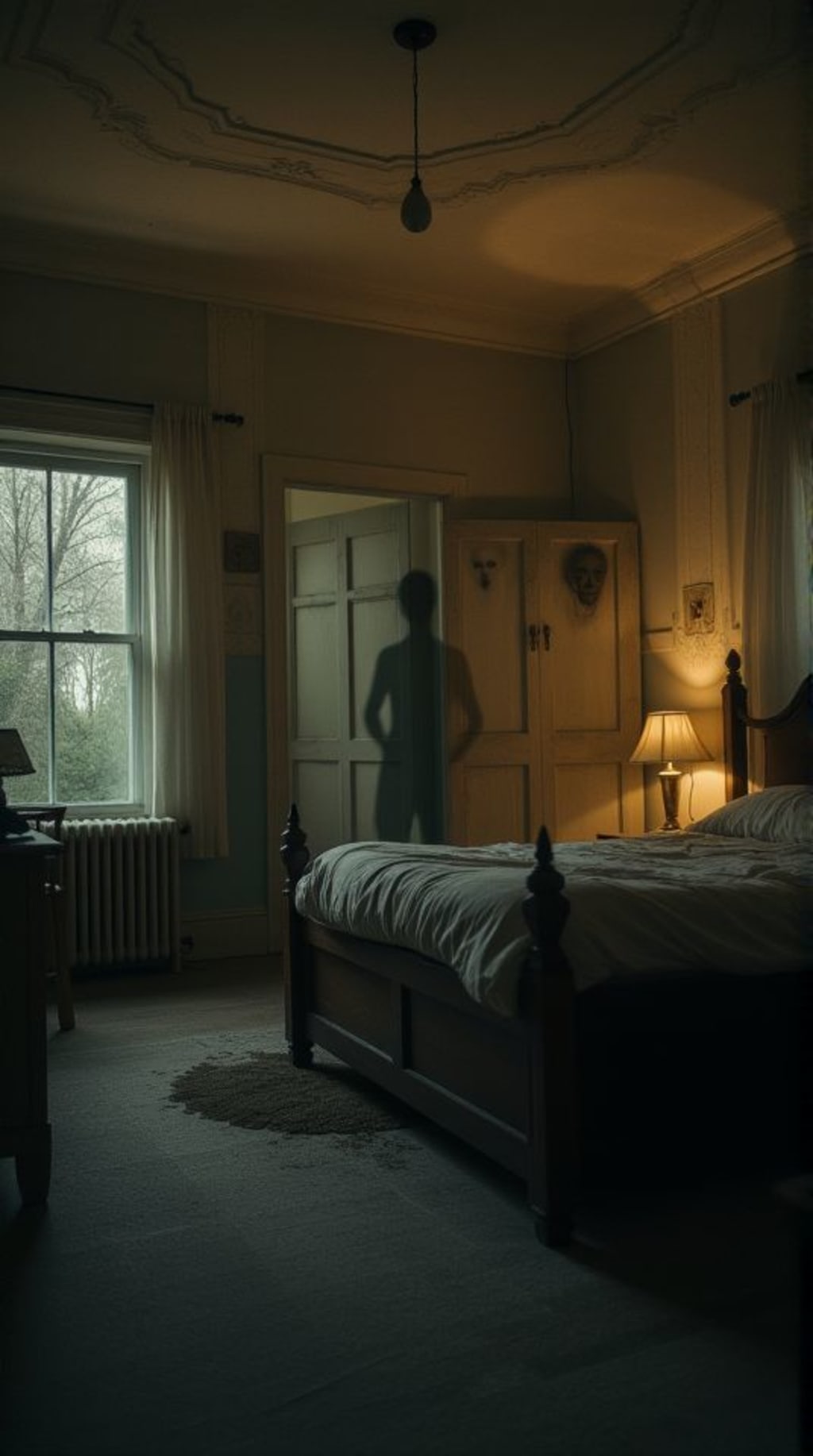
It started as a dare. They always do.
Nadia was the kind of person who never turned down a challenge. Her friends knew it too well, which is why, on that cold October night, she found herself standing at the entrance of an abandoned boarding house on the edge of town. Its broken windows stared like hollow eyes, and the crooked door swayed in the wind as if it were breathing.
The house had a reputation. Locals whispered about screams heard at midnight, about lights flickering inside when no one lived there. They called it The Room That Never Slept. No one stayed in it, not even squatters. But to Nadia, it was just another ghost story. She laughed at ghost stories.
Her task was simple: enter, find the locked room on the third floor, and bring something back—proof she’d stepped inside.
She walked in. The air was colder than the night outside, thick with the smell of mildew and something else—something faintly metallic. She told herself it was just rust. Her footsteps echoed across warped wooden floors as her flashlight carved out slices of clarity in the dark.
When she reached the stairs, the wood groaned as if alive. Each step upward was heavier, slower, as if something didn’t want her there.
On the third floor, she found it. The door.
Unlike the others, this one was perfectly intact, painted a dull gray that hadn’t chipped. A brass handle gleamed faintly, untouched by time. A carved sign above it read, almost mockingly:
DO NOT DISTURB.
Her heart pounded. She turned the knob.
It opened.
Inside, the air was warm—unnaturally warm, compared to the freezing halls behind her. The room looked untouched, as if time had skipped it. The bed was made neatly, sheets crisp, though the rest of the house had rotted away decades ago. A clock on the wall ticked softly, its hands stuck at 3:15.
Nadia stepped inside. The door shut behind her.
She froze.
A whisper brushed past her ear. Not words—just the sound of someone breathing. Slowly, she turned. No one. Yet the bed had shifted. Its sheets were wrinkled now, as if someone had just lain there.
Her flashlight flickered. Once. Twice.
Then it went out.
The clock ticked again, and this time the hands moved—backward.
Her own breath caught in her chest as shadows thickened in the corners. They weren’t still; they stretched, crept, curled toward her. A shape emerged on the bed—first an outline, then features. Pale, sunken eyes opened and fixed on her.
“You shouldn’t be here,” it whispered.
Her legs locked. Every instinct screamed at her to run, but the door behind her wouldn’t budge. She clawed at it, her nails breaking against the wood.
The figure rose from the bed, each movement jagged, unnatural. It smiled—though its lips didn’t quite move in sync.
Then the whispers came again. Not from the figure, but from every wall around her. Hundreds of voices overlapping: “Stay. Stay. Stay.”
Her flashlight blinked back on for half a second. In that flash, she saw them: dozens of faces crowding the walls, pressed into the plaster as if trapped, their mouths open in silent screams.
The light died again.
She pounded on the door, begged, sobbed, promised anything.
And then—silence.
The warmth vanished. The air turned icy. Behind her, the whispers stopped. The figure was gone. The bed was neat again. The clock froze back at 3:15.
Finally, the door opened with ease.
Nadia stumbled out, gasping, collapsing on the hallway floor. When she turned back, the gray door was shut, and the brass handle no longer gleamed.
She fled the house without looking back.
But that night, as she lay in her own bed, her eyes snapped open at exactly 3:15. The sheets beneath her shifted.
And a whisper pressed against her ear:
“Now it’s your turn not to sleep.”
About the Creator
Keep reading
More stories from hazha azeez and writers in Horror and other communities.
The Whispers Beneath the Floorboards
There’s a moment just before sleep when the mind begins to drift, hovering between the real and the imagined. For Elara, that moment had become the most terrifying part of her day. Because that was when she heard them—the whispers beneath the floorboards.
By hazha azeez5 months ago in Horror
One to See, One to Speak, One to Listen
Contains gore and horror some readers may find disturbing. Rated 14+ Author's Intro: This story is meant to revive the Gothic literature so famously crafted by one of my favourite writer's, Edgar Allen Poe, and as such, the language and style is deliberately antiquated. Thank you for reading my all time favourite work of horror - Les
By Call Me Les23 days ago in Horror
The Room That Answered Back
The room was never part of the house. At least, that’s what Sameer believed. He had lived in the rented apartment for almost a year before he noticed it. A narrow door at the end of the hallway, painted the same dull white as the walls, always closed. At first, he assumed it was a storage closet. Landlords liked hiding unfinished spaces.
By shakir hamid2 days ago in Horror
Ludacris and Nelly draw backlash over bookings at MAGA-coded music festival
Ludacris and Nelly headlining a mostly right-wing event is good for them. It’s also great for the genre of hip hop. The two rap veterans have showcased their talents on other stages. Why can’t they perform for mostly MAGA folks and grab that bag?
By Skyler Saunders7 days ago in Beat


Comments