
🔪 The Real-Life Origins of Famous Horror Monsters
The Dark Histories Behind Vampires, Werewolves, and the Undead

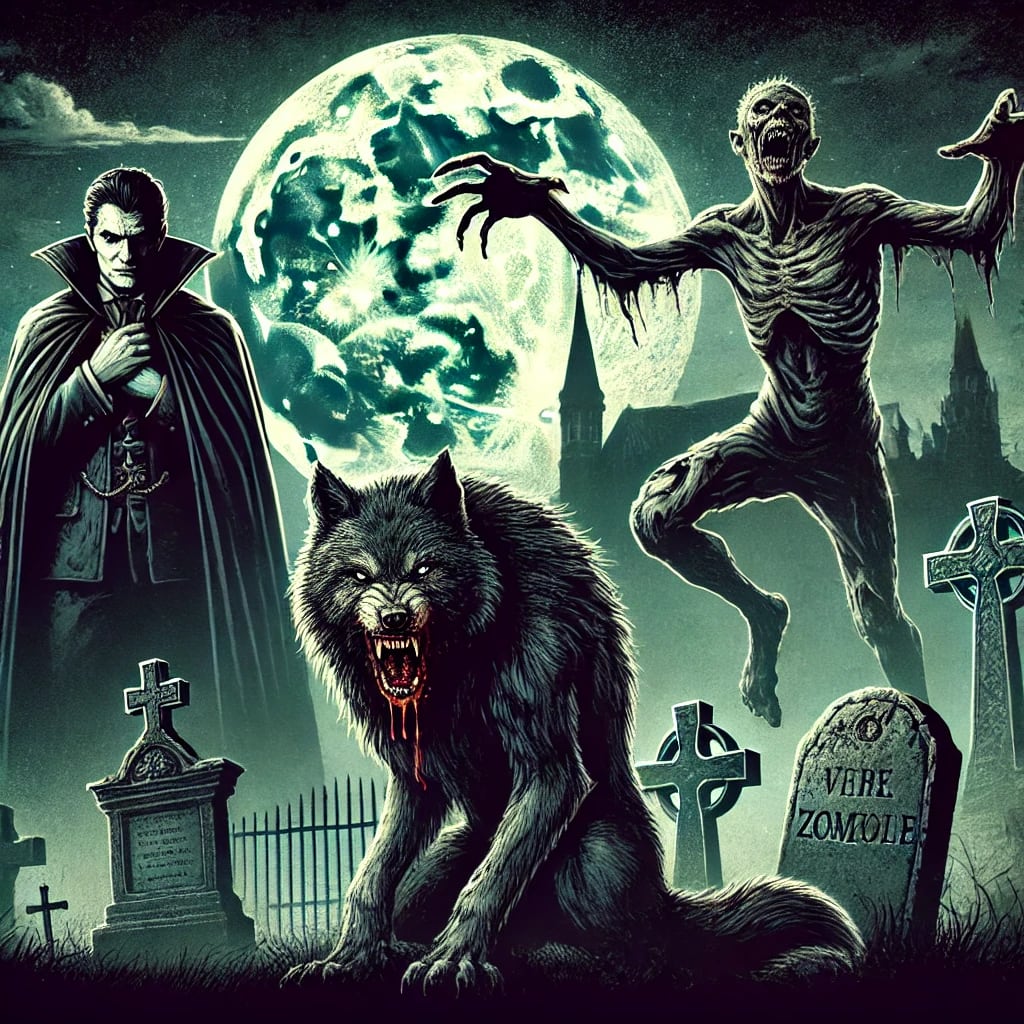
Introduction: The Monsters That Never Died
For centuries, we have been haunted by terrifying creatures—vampires, werewolves, zombies, and demons—monsters that lurk in the shadows, waiting to strike.
But where did these nightmares begin? Were they simply the result of overactive imaginations, or did something real inspire them?
The truth is, many of the most iconic horror monsters come from real history, folklore, and unexplained events. Stories of the undead, blood-drinking creatures, and shapeshifters were passed down for generations, often rooted in genuine fear and hysteria.
Let’s explore the chilling true origins of horror’s most legendary monsters and the real-life fears that gave birth to them.
⸻
1. Vampires: The Blood-Drinking Creatures of the Night
The vampire legend is one of the oldest and most widespread myths in human history. Cultures across the world—from Eastern Europe to China—have stories of creatures that drink human blood and lurk in the night.
The Real-Life Inspiration
🩸 Vlad the Impaler (1431–1477): The real-life figure behind Count Dracula. He was a Wallachian prince notorious for impaling his enemies on stakes. Some say he even drank their blood.
🩸 The Plague and Premature Burials: In medieval Europe, plagues caused corpses to bloat, turn dark, and appear “alive.” When graves were reopened, people saw blood near the mouths of the dead—fueling vampire myths.
🩸 Mercy Brown (1892, Rhode Island, USA): A young woman who died of tuberculosis was exhumed because locals believed she had returned as a vampire. Her well-preserved corpse terrified villagers, reinforcing vampire legends.
The Science Behind the Myth
Vampirism can be linked to rare diseases like:
✔️ Porphyria: A disorder that causes sensitivity to sunlight and receding gums—giving a “fang-like” appearance.
✔️ Catalepsy: A condition that can make people appear dead, only for them to later “come back to life.”
Over time, these stories evolved into modern vampire tales, from Dracula to Twilight.
⸻
2. Werewolves: The Beast Within
The legend of the werewolf—a person cursed or infected, transforming into a wolf during a full moon—can be found in many cultures. But were these just fairy tales, or were there real cases of “wolf-men”?
The Real-Life Inspiration
🐺 Peter Stumpp (1589, Germany): A man accused of being a werewolf, Stumpp confessed (under torture) that he could turn into a wolf using a magical belt. He was executed in one of the most brutal witch trials in history.
🐺 The Beast of Gévaudan (1764–1767, France): A series of real wolf attacks left nearly 100 people dead. Locals believed it was a supernatural creature—a werewolf sent by the devil.
🐺 Lycanthropy in Witch Trials: Many “werewolf trials” in Europe mirrored witch hunts, where people were executed based on hysteria rather than evidence.
The Science Behind the Myth
Werewolf legends may have been influenced by medical conditions like:
✔️ Hypertrichosis (Werewolf Syndrome): A condition that causes excessive hair growth, making people resemble wolves.
✔️ Rabies: Infected people become aggressive, sensitive to light and water, and can “foam at the mouth”—like a werewolf’s bite.
The werewolf myth continues to evolve, from The Wolfman to Teen Wolf—a reflection of humanity’s deep fear of losing control.
⸻
3. Zombies: The Living Dead
The idea of walking corpses, reanimated through magic or disease, is a horrifying thought—but did you know zombies are based on real events?
The Real-Life Inspiration
🧟 Haitian Voodoo Zombies: In Haitian folklore, a “zombi” is a person brought back from the dead through dark magic. These legends are deeply tied to the history of slavery and oppression in Haiti.
🧟 Clairvius Narcisse (1962, Haiti): A real case where a man was pronounced dead, buried, then found alive years later. Some believe he was drugged and enslaved under the influence of a Voodoo priest.
🧟 The Dancing Plague (1518, France): A mysterious outbreak where hundreds of people danced uncontrollably for days, until some died from exhaustion. Scientists believe it may have been caused by mass hysteria or fungal poisoning—similar to a zombie-like trance.
The Science Behind the Myth
Zombies could have been inspired by:
✔️ Neurotoxins: Some poisons (like the pufferfish toxin) can put people in a death-like state.
✔️ Brain Parasites: Some parasites control their hosts (like Toxoplasma gondii in rats), leading to theories about a “zombie virus”.
Modern zombies, from The Walking Dead to 28 Days Later, reflect our fears of pandemics, mind control, and the breakdown of society.
⸻
4. Demons and Possession: The Ultimate Horror
From The Exorcist to real-life exorcisms, the idea of demonic possession has terrified people for centuries. But is it real?
The Real-Life Inspiration
👿 Anneliese Michel (1976, Germany): A young woman who underwent 67 exorcisms before her death. Some believe she was possessed, while others argue she suffered from epilepsy and mental illness.
👿 Salem Witch Trials (1692, USA): Mass hysteria led to women being accused of witchcraft—many of whom may have had medical conditions mistaken for possession.
👿 Ancient Texts: Many ancient religions describe spirits that control humans, influencing the concept of possession.
The Science Behind the Myth
Many cases of possession can be explained by:
✔️ Mental Disorders: Schizophrenia and Dissociative Identity Disorder (DID) can cause people to feel “possessed.”
✔️ Sleep Paralysis: A terrifying condition where people wake up unable to move, often experiencing hallucinations of demons.
Despite scientific explanations, exorcisms are still performed today, proving that belief in possession is still alive.
⸻
Final Thoughts: Why Do We Love Horror?
The scariest part of horror isn’t the monsters—it’s that they are based on real fears. Vampires, werewolves, zombies, and demons all stem from deep-seated anxieties about disease, death, the unknown, and losing control.
Even in a modern world, we still love ghost stories, urban legends, and horror movies. Maybe because, deep down, we know that monsters never really disappear.
They just evolve with us.
About the Creator
Ahmet Kıvanç Demirkıran
As a technology and innovation enthusiast, I aim to bring fresh perspectives to my readers, drawing from my experience.
Keep reading
More stories from Ahmet Kıvanç Demirkıran and writers in Horror and other communities.
The Door That Wasn’t There Yesterday
* A Step Into the Unknown * Emma had lived in the same apartment for five years. She knew every inch of it—the way the wooden floor creaked near the kitchen, the stubborn cabinet that refused to stay closed, the small crack on the bathroom mirror she had meant to replace but never did.
By Ahmet Kıvanç Demirkıran11 months ago in Horror
Wild Card Weekend Recap: What Happens Now?
I think I figured out why I love Wild Card Weekend so much. It's because it's the first playoff anything of the calendar year. The NFL season starts in the fall, and once upon a time, the champion was crowned either on or slightly before New Year's. The evolution of the NFL schedule has resulted in the playoffs starting just into the New Year, and currently, the final week of the season falls on the first weekend of the New Year, with Wild Card Weekend coming a week after that. So yes, chronologically, the NFL's Wild Card Weekend serves as the first playoff anything of the calendar year.
By Clyde E. Dawkins5 days ago in Unbalanced



Comments
There are no comments for this story
Be the first to respond and start the conversation.