
The Neon Funeral
The city never slept, but it knew how to mourn.


On the night the funeral began, the rain fell like neon oil slicks, painting the pavement in broken reds, blues, and sickly greens. The lights from the signs didn’t just glow—they pulsed, as if every advertisement had learned how to breathe. And down on 42nd Street, beneath the buzzing of a dozen flickering marquees, people gathered in silence.
No one spoke about who had died.
The crowd wasn’t made of mourners in black; it was a mess of taxi drivers, bartenders, students, vagrants, and insomniacs—all drawn by something they couldn’t explain. They simply stood there, watching as the lights above twisted themselves into shapes that almost resembled words. WELCOME TO THE FUNERAL.
---
I. The Invitation
Daniel Crowe hadn’t planned on attending. He’d just left work at the all-night copy shop, headphones pressed tight, ready to drown himself in static and bass. But the moment the first sign bent its letters into a funeral procession, his phone died in his hand.
No glow. No notification. Just a blank screen.
Everywhere he turned, the city hummed at him. A cheap noodle joint’s neon bowl tilted until its steam curled into skeletal fingers. A pawn shop’s “OPEN” stuttered until it looked like O—PEN. And the funeral began to march.
He should have run. He should have ignored the pull. But Daniel felt the same instinct that led a moth into fire: a compulsion beyond choice.
---
II. The Procession
The crowd shifted forward as if strings tugged them.
In the lead, the signs reshaped themselves into pallbearers—bright, faceless silhouettes formed out of pink and yellow tubing, hoisting a coffin made of pure light. It pulsed with an unnatural glow, its surface rippling with images of rain-slick streets, subway tunnels, and blurred human faces screaming without sound.
Daniel tried to tell himself it was a trick of exhaustion, that maybe he’d stumbled into a flash mob, an art installation. But then he noticed something: people he thought were part of the crowd weren’t breathing.
The man next to him wore a cab driver’s jacket, but his eyes flickered green, numbers scrolling across them like stock tickers. The woman on his other side was pale as plastic, her lips silently mouthing advertisements. These weren’t people—they were props, puppets dressed as citizens.
And yet they marched, all toward the heart of the funeral.
---
II. The Funeral Director
The coffin halted in front of a boarded theater whose last marquee once screamed GRAND CINEMA before half its letters burned out. Tonight, the dead bulbs flared alive with a new name:
FUNERAL HOME.
The doors yawned open. The stench of burnt wires rolled out.
A figure stepped through.
He wore a tuxedo, black as a shadow melted into form. But his face—Daniel couldn’t look directly at it. It was not a face but a panel, like a television screen filled with white noise. When he spoke, his voice was the hiss between stations.
“You’ve all come,” the director said. “As you were meant to.”
He gestured toward the glowing coffin, which hovered in the air, dripping sparks like blood. “One must be chosen to lie within. One among you is owed to the lights.”
Daniel felt every eye—human and otherwise—turn toward him.
---
IV. The Deceased
He tried to back away. His throat was raw, his legs trembling. “I—I don’t belong here. I didn’t even—”
The director’s voice cut him off, sharp as a snapped wire.
“You already died, Daniel Crowe. Do you not remember?”
The words crawled into his skull, unearthing memories he’d buried under night shifts and cheap liquor: the accident. The glass. The red wash of tail lights. The last sound of his lungs collapsing under the wheel of a taxi.
He staggered. No. That couldn’t be true. He was alive. He was here. He felt the cold rain.
But when he lifted his hands, the neon reflected clean through them. His fingers glowed, hollow, outlined by electric blue veins of light.
He wasn’t alive. He was unfinished.
The city had been keeping him warm, feeding him scraps of false hours. Tonight, the funeral came to collect.
---
V. The Coffin
The pallbearers tilted the coffin open. Inside, instead of wood or silk, was a blinding well of color, a bottomless pit of shifting advertisements and lost voices. Daniel saw himself reflected in it—a copy-shop clerk doomed to repeat endless nights, a ghost in fluorescent purgatory.
“No,” he whispered. “Not me. Not yet.”
He ran.
The city screamed in light. Storefronts flashed OPEN—CLOSED—OPEN—CLOSED like a heartbeat. Streetlamps bent down like jaws. Billboards spat static. Every sign turned into a neon claw reaching for him, dragging him toward the glowing coffin.
Daniel fought, tearing free, stumbling into the rain. His chest burned. His legs gave way. For one fleeting moment, he thought he’d escaped.
Then the theater’s marquee boomed like thunder:
DANIEL CROWE — TONIGHT’S FEATURE PRESENTATION.
---
VI. The Neon Funeral
The coffin swallowed him whole.
The crowd applauded—not with hands, but with a roar of electricity. The director bowed, his face crackling with snow.
The lights dimmed. The procession dissolved into a thousand dying sparks, drifting back into the city’s endless web of advertisements. The rain hissed against the pavement.
By morning, 42nd Street looked normal again—just another washed-out strip of bars, shops, and neon. No one would remember the funeral, no one except those still humming under the lights.
And somewhere inside the current, trapped between circuits and tubes, Daniel Crowe’s face flickered in the glow of a diner’s red “OPEN” sign. His mouth moved without sound, repeating the same words forever:
“Not me. Not yet.”
But the city never listened.
Because the funeral was already looking for the next name.
About the Creator
E. hasan
An aspiring engineer who once wanted to be a writer .
"Scream 7" (2026): Running out of Fresh Screams
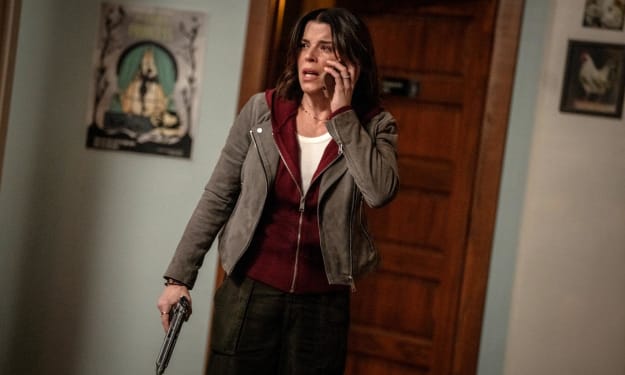
This is the seventh time we’ve had a Ghostface crisis. Scream 7 is the latest edition of the Scream franchise. Sydney Prescott and her family are under attack by another anonymous killer dressed in a Ghostface costume. While having issues with her daughter, Tatum, they run from the bloody murders, trying to determine who is behind it all.
By Marielle Sabbagabout 17 hours ago in Horror
Why We Crave the Shadows?
Horror is often dismissed as a "cheap thrill"—a collection of jump scares and visceral shocks designed to elicit a scream. However, the most enduring horror stories are not about what hides under the bed, but what hides inside the human psyche. At its core, horror is a sophisticated psychological tool that allows us to explore our deepest anxieties within the safety of a narrative.
By Being Inquisitive7 days ago in Horror


Comments (1)
Hi, I read your story and I really liked it. It seems like you are a professional writer because you give each scene its own unique value, which very few people manage to do. I really liked your work it was very, very good. Actually, I’m just a casual reader, and I really enjoy reading stories. and I liked it a lot, too. Also, how long have you been doing this work?