
The Lost People of Angikuni Lake
Fact, Fiction, and the Footprints That Never Were

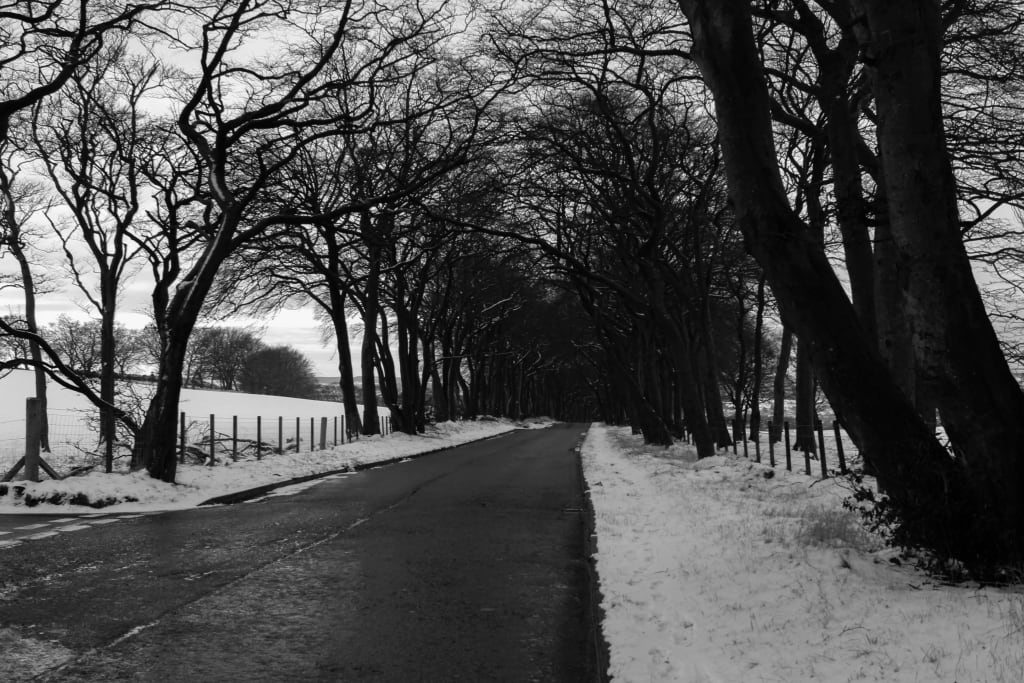
November 1930. The wind screamed across the frozen plains of what was then the Northwest Territories of Canada — a desolate and unforgiving landscape that would later become part of Nunavut. A lone fur trapper named Joe Labelle was making his way through deep snow toward an Inuit settlement he’d visited before, seeking shelter from the harsh cold. What he found there stopped him dead.
Silent homes.
Empty fire pits.
No people.
No dogs.
Nothing but the stillness of a vanished world.
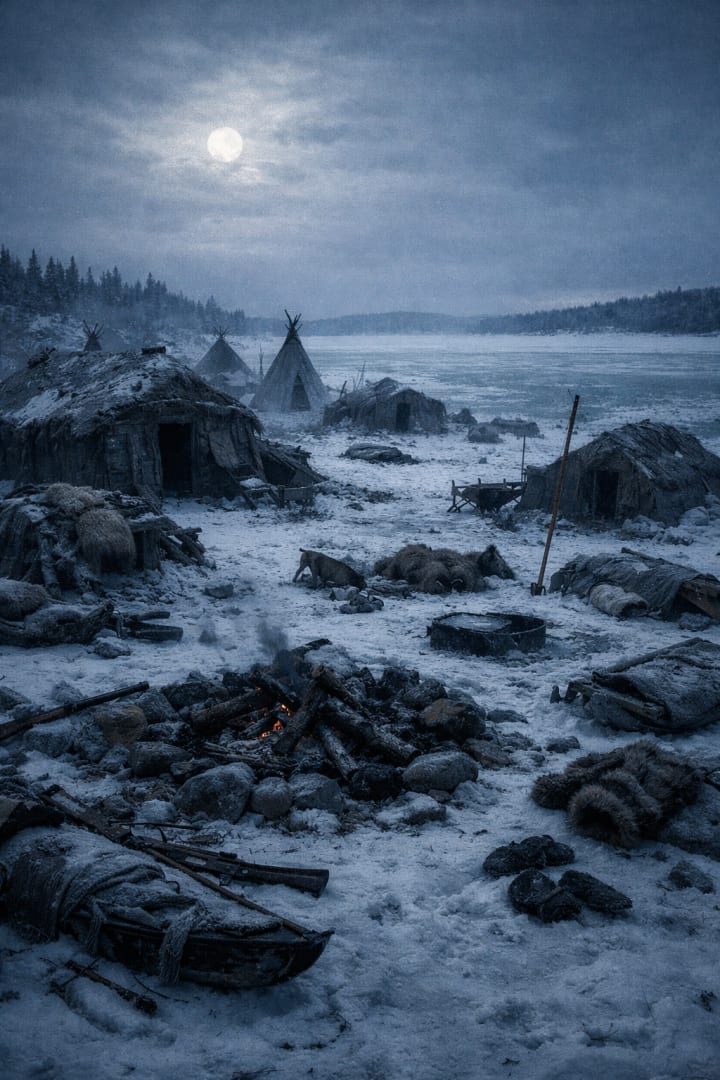
Labelle had known this village, a small community of Inuit families who had welcomed passersby on previous expeditions. Ahead of him, the cabins stood intact, as if frozen mid‑day. Stoves sat with dinner still unclaimed, garments lay as though someone had just stepped outside for a moment, and tools rested in neat order.
No sign of panic.
No struggle.
Just abandonment.
He walked through one dwelling after another. The snow around the village was untouched — no footprints leading toward a distant horizon. The eerie silence pressed in until it was all he could hear.
Outside, a handful of sled dogs lay where they had once been tied, starved in place while food remained inside. A solitary grave, its stone circle unbroken, had been opened, the remains gone.
Something about the scene didn’t add up. People don’t leave food, clothing, rifles, and all their belongings behind if they pick up and go, especially in a place where survival depends on what you carry.
Where the Tale Began — and Where It Changed
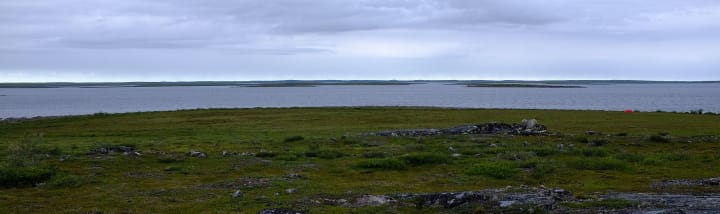
The story first appeared in print on November 27, 1930, in a small newspaper article by American journalist Emmett E. Kelleher. In that report, Labelle described coming upon an empty camp with six tents, where roughly 25 men, women, and children had disappeared without a trace.
Soon after, inquiries were made to the Royal Canadian Mounted Police (RCMP). In January 1931, Sergeant J. Nelson released a report indicating he could find no foundation for the tale. He noted that Labelle may have been unfamiliar with the region, and that a photograph used in the original article was copied from an older archive. The RCMP stated that a large village would unlikely have existed in such an isolated region, and that they had no record of any missing persons from the area.
Despite that, the story didn’t die. It simmered in the background until 1959, when author Frank Edwards included it in his book Stranger Than Science, expanding on details and increasing the village population slightly. From there, the narrative branched out, drawing in embellishments — bigger populations, more dramatic clues, mysterious lights in the sky — until the tale grew far beyond that first newspaper snippet.
Fact Versus the Fantastic
Here’s where truth and legend diverge. The original 1930 report doesn’t mention huge numbers of inhabitants, bodies, UFOs, or dramatic last moments. It does suggest something unusual was reported by Labelle — an abandoned settlement with odd details — but the evidence for a mass disappearance simply isn’t there outside the initial newspaper story.
The RCMP later dismissed the entire incident as a sensationalized story. According to official notes they have made public, the disappearance “is not true,” attributing it to early authors creating gripping headlines rather than verified events.
So, What Really Happened?
We don’t know for certain. Some historians suggest Labelle might have encountered a seasonally unoccupied camp rather than a permanent village — Inuit communities often moved with the seasons to follow game, fish runs, or better weather conditions, which could explain the empty homes and lack of footprints leading away.
Over time, the story became one of those narratives that drew in believers and skeptics alike — a strange place where people vanished, where graves were empty, where the northern quiet sparked endless speculation. The truth is likely more grounded in human life and seasonal movement than in something supernatural. But the way the tale evolved — growing from a brief, possibly misreported encounter into a legend retold with ever‑greater dramatic flair — tells us almost as much about why we love mysteries as it does about what actually took place.
How the Mystery Lives On
Today, Angikuni Lake is a quiet marker on maps of Nunavut’s sprawling wilderness, its shores part of a landscape few ever see. The story of the “vanishing village” remains a staple of mystery lore in Canada and beyond — a snapshot of how a simple reported event can ripple out through decades of storytelling, changing shape with each telling.
Whether the villagers truly disappeared, moved on, or were part of a miscommunication lost to time, the tale continues to fascinate — a reminder that sometimes the gaps in our records are just as compelling as the things we do document.
_____________________________________________
Some mysteries were never meant to be solved. Others refuse to be forgotten.
If this story made you pause, question, or look twice—don’t stop here.
Follow Strange Enough To Be True for more stories that blur the line between fact and folklore… because the truth is often stranger than fiction.
About the Creator
Strange Enough To Be True
True stories, strange facts, and unsettling mysteries that sound fake—but aren’t. If it makes you pause and say “no way,” it probably belongs here.
Keep reading
More stories from writers in Horror and other communities.
Becca
"Everything is so... flat." Denille said stupidly as she looked around her new neighborhood. She looked around at the muted desert where even the smallest sign of life seemed to have given up. The plant life was shrubs that were half cooked by the heat and where there should have been a lawn, a mess of white rocks laid glistening in the sun. Even the sky looked stretched thin, like the sun had ironed it smooth. She’d moved from Riverside, where at least there were hills, but here in Barstow, everything felt baked and brittle.
By Sara Wilson8 days ago in Fiction
Author’s Advice
If you would’ve asked me 20 years ago did I know I’d become a writer and an author, I would’ve said “nope, ain’t happening”. As fate would have it I did become an author and I can honestly say I’m loving it so far. It really does feel good to be a writer. I’ve learned a lot on this journey and I feel like with even me being as new to this world as I am, there’s some wisdom I need to share with every other aspiring author.
By Joe Patterson2 days ago in Journal




Comments
There are no comments for this story
Be the first to respond and start the conversation.