
The Last Library Card
I found it at the bottom of a shoebox, wedged between yellowing receipts and a cracked wristwatch. A faded rectangle of plastic, stamped with a barcode and the words City Public Library.

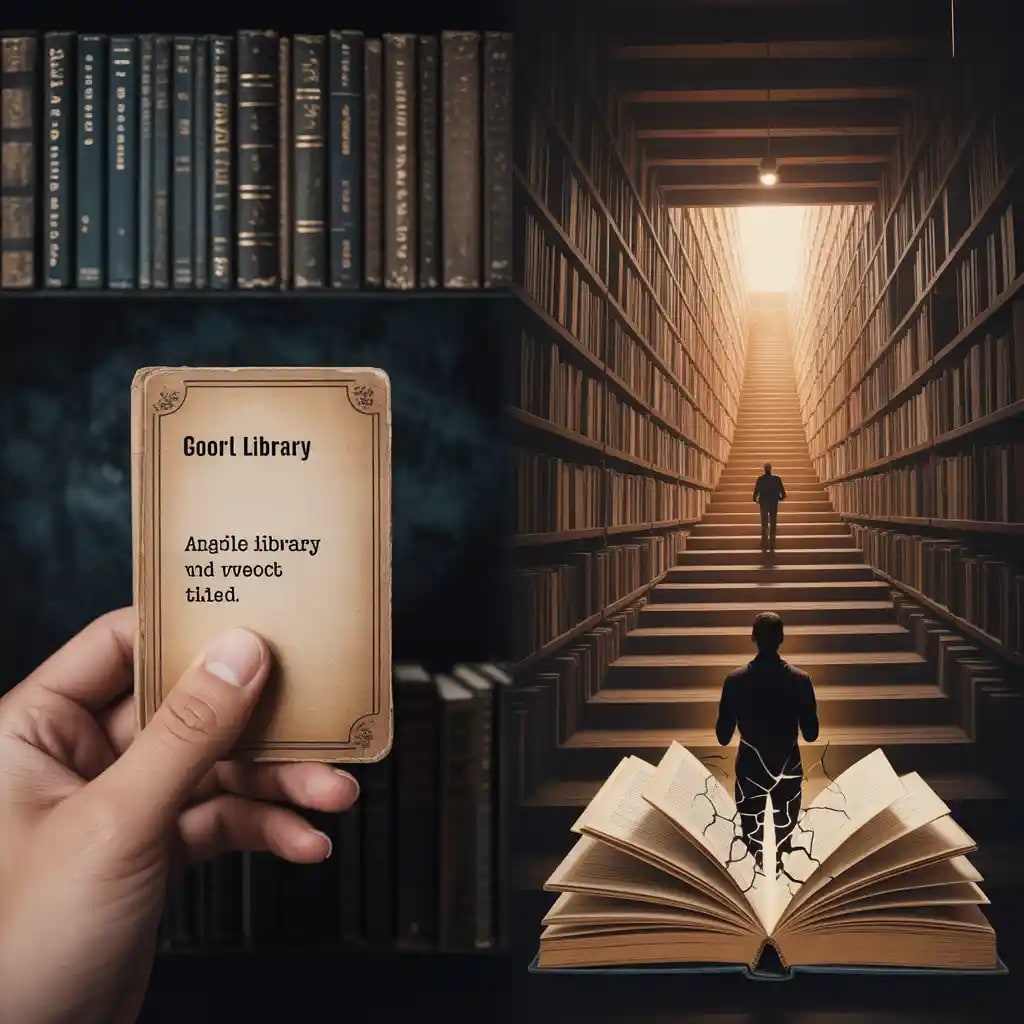
I found it at the bottom of a shoebox while cleaning my grandmother’s apartment.
A faded rectangle of plastic, no bigger than a credit card, stamped with a barcode and the words:
City Public Library
It was scratched and worn, the ink peeling, but when I pressed my thumb against the raised numbers, a faint warmth spread through my hand. Odd. My grandmother had been a practical woman—she saved nothing that didn’t serve a purpose. Why would she keep this relic of an institution that no longer existed?
Libraries had been gone for twenty years. Books outlawed, digitized, recycled. Who needed paper when you had screens, feeds, streams? At least, that’s what we were told.
I slipped the card into my pocket, not knowing why, only that it tugged at me with quiet insistence.
That night, restless, I traced the old address printed on the back. The library had stood downtown, where a glass-and-chrome media tower now rose like a pillar of fire. People streamed in and out, plugged into their headsets, hungry for distraction.
I circled to the alley behind. The building’s base was seamless—no doors, no cracks. I pressed the card against a metal panel out of foolish curiosity.
The wall shuddered. A seam split open. Cold air spilled out like breath from a tomb.
A staircase spiraled down into darkness.
I hesitated only a moment before descending.
The deeper I went, the more my phone flickered, until the screen finally died. Silence thickened, broken only by the hollow tap of my shoes. Then, at the bottom, light—warm, golden, impossible.
Lanterns floated in the air, glowing without wires, without flame. They illuminated a cavern that stretched farther than I could see, lined with shelves. Thousands of shelves.
And on them, books.
Not holograms. Not files. Real books. Cloth and paper, leather and ink. Their spines sagged with age, yet the sight of them vibrated with impossible energy, as if they were waiting for me.
I reached for one—a battered copy of Jane Eyre. The moment I opened it, the letters rippled, and a rush of sensation swallowed me.
I wasn’t standing in a cavern anymore.
I was walking the gray moors, feeling the damp air cling to my skin, my heart burning with loneliness and pride. I was Jane, fierce and small, desperate and unyielding.
When I slammed the book shut, gasping, I stumbled back into the cavern. My pulse thundered.
These weren’t just stories. They were memories. Lives.
I staggered from shelf to shelf, desperate. A war diary. A baker’s notebook, greasy with old butter stains. A child’s journal written in crooked crayon. Each book I touched pulled me under, until I lived entire hours in borrowed skin.
I tasted ash in the mouth of a soldier. I kneaded dough in a kitchen filled with laughter. I scrawled stick figures with a child’s unsteady hand.
Every book contained a soul.
Finally, my hands fell on a massive ledger bound in black. Its cover groaned when I opened it. Inside, the pages were blank—except for one line:
The Library remembers, until it is forgotten.
The air stirred. A whisper rose, brushing my ear.
“Stay.”
I spun, but the cavern was empty. The voice came again, softer.
“Stay. Become part of us.”
The shelves themselves seemed to breathe, creaking like ribs. The lanterns flickered. I understood then.
The Library wasn’t a place. It was alive. It fed on memory, preserved every story people carried inside them. But it was weak now, lanterns dimming, shelves sagging. No one had visited in decades. No one remembered.
It wanted me.
If I gave myself over, my memories would join the shelves. Someone, someday, could open a book and live my life—feel my first bike ride, my first heartbreak, the exact shape of the skyline tonight with rain streaking the glass. I would never vanish.
But I would also never return. My body above ground would be nothing but an empty shell.
The whisper pressed close, gentle, coaxing. “We will keep you. We will keep everything.”
For a moment, I wanted it. To belong to something eternal. To be remembered.
But then I thought of my grandmother. She must have come here once, too. She had kept the card, but not surrendered it. She chose to live, to keep her stories inside herself, even if no one else could read them.
She must have believed that was enough.
My hand closed around the card. “Not today,” I whispered back.
The shelves groaned. The lanterns dimmed, sulking. I turned and climbed the stairs, lungs burning with the effort of leaving.
Above ground, the tower loomed, sterile and bright, screens flashing endless streams of noise. Crowds pressed past, chasing the newest feed. None of it compared to what I had touched below.
I pulled the card from my pocket. Its edges glowed faintly, pulsing like a heartbeat. It had chosen me.
Maybe one day, when I am old and ready to give myself away, I’ll return. Maybe then I’ll let the shelves take me, so that someone else can stumble down those stairs and discover my life in their hands.
For now, I will carry the stories with me.
And I will remember.
About the Creator
Keep reading
More stories from ALEX_BLACK and writers in Horror and other communities.
"Scream 7" (2026): Running out of Fresh Screams
This is the seventh time we’ve had a Ghostface crisis. Scream 7 is the latest edition of the Scream franchise. Sydney Prescott and her family are under attack by another anonymous killer dressed in a Ghostface costume. While having issues with her daughter, Tatum, they run from the bloody murders, trying to determine who is behind it all.
By Marielle Sabbag9 days ago in Horror
Close encounter at the midnight hour.
Close Encounters of the Midnight Hour It’s a quarter to 4, just a few hours before dawn. The room is dark; silence engulfs it. I lie in bed and fall asleep. In just a few hours, I will wake up and go through my morning routine. I’m not a morning person—just a bit tired from those sleepless nights.
By Rickles Pez3 days ago in Horror


Comments
There are no comments for this story
Be the first to respond and start the conversation.