
The Labyrinth in Glass
A Beautiful Sculpture, A Living Prison, and One Artist’s Descent into the Unknown


Elara was an artist, but not with paint or clay. Her medium was light, her canvas, a gallery of digital screens where she curated virtual exhibitions, weaving narratives from pixels and code. Yet, deep down, she yearned for something tangible, something with history—something that whispered tales of human touch. This yearning led her to dusty antique shops and obscure art auctions, where she hunted for pieces that possessed a soul.
It was in a quiet, forgotten corner of a sprawling estate auction that she first saw it: a glass sculpture unlike anything she had ever encountered. It wasn't large, perhaps a foot tall, but its complexity was breathtaking. Fashioned from what appeared to be a single, flawless piece of dark, smoky glass, it twisted and turned in on itself, forming an intricate labyrinth of tunnels, chambers, and spires that seemed to lead nowhere and everywhere at once. Light played through its depths, creating shifting patterns that mesmerized the eye. There were no visible seams, no imperfections. It felt ancient, yet impossibly modern.
The auctioneer, a nervous man who rushed past it, simply called it "Lot 317: Unidentified Glasswork." No provenance, no artist's name, just a whispered local legend that it "brought strange dreams." Elara felt an undeniable pull, a profound resonance. She bought it for a surprisingly low price, almost as if no one else dared to truly look at it.
Back in her minimalist apartment, the sculpture seemed to come alive. Placed on her coffee table, it dominated the room, drawing her gaze constantly. That night, her dreams transformed. They weren't just dreams; they were vivid, immersive journeys through the glass labyrinth. She soared through its tunnels, felt the smooth coolness of its walls, and saw impossible light shifting in its chambers. The dreams were beautiful, exhilarating—a new form of artistic expression for her.
Over the next few days, the dreams became more frequent, more intense. They weren't just at night anymore. When she stared at the sculpture during the day, her vision would sometimes blur, and she'd find herself momentarily transported into its glassy depths, seeing flashes of impossible landscapes, figures shimmering on the edge of her perception, their faces obscured but their presence profoundly felt. It was like living art—a constant, evolving visual symphony.
But a subtle unease began to creep in. The images weren't always serene. Sometimes, fleeting glimpses of faces twisted in agony would appear, dissolving just as quickly. The figures she saw would sometimes seem to be pressing against the inner walls of the labyrinth, their forms distorted, as if trying to break free. The beautiful melodies that often accompanied her dream journeys would occasionally morph into a chilling, disembodied whisper—too faint to decipher, yet undeniably there.
She researched the sculpture, delving into ancient art history and obscure folklore. She found fragmented references to similar "dream lenses" or "visionary vessels," crafted by a forgotten order of artists who believed they could imbue their creations with fragments of their consciousness—or even capture memories of places and beings. The legend spoke of these pieces becoming "living archives" of experiences—sometimes beautiful, sometimes terrifying.
The terrifying part came when she stumbled upon old newspaper clippings online. The previous owners of the sculpture, two centuries apart, had both disappeared under mysterious circumstances. One, a reclusive scholar, was found staring blankly at the sea, seemingly lost to reality. The other, an eccentric collector, simply vanished from his locked study, leaving only the glass labyrinth behind. Both were reported to have been "obsessed" with the piece, consumed by it.
A cold dread settled in Elara's heart. The beauty was a lure. The visions were not just passive displays—they were an invitation, a gentle pull into the glass, where something ancient and profound was trapped... or perhaps, waiting to trap others.
One night, the dreams were more vivid than ever. She wasn't just navigating the labyrinth; she was part of it. Her own limbs felt like smoky glass, her thoughts echoing off its polished surfaces. She saw the familiar figures again, but this time, they were clearer: not just generic forms, but distinctly human, their faces etched with a profound, eternal despair. They were trapped, reaching out, trying to communicate. And then, she saw its maker. A gaunt, almost skeletal figure, etched into the very core of the labyrinth, its eyes burning with an ancient, terrifying intelligence.
The whisper became a clear, resonant voice in her mind, resonating from the depths of the glass:
"Welcome, new canvas," it purred, a voice like grinding glass and ancient dust.
"The collection grows. Your mind, your memories… they are perfect additions."
It was the artist. Not merely a creator, but a predator. He had not just imbued the glass with memories; he had trapped the souls of those who looked into it—including his own—building a living, ever-expanding prison of consciousness within the labyrinth. He fed on the minds, the dreams, the very essence of his viewers, slowly drawing them into his glassy eternal prison. The beauty was a bait.
Elara woke up screaming, her apartment cold, the glass sculpture on her table shimmering faintly. Her heart hammered against her ribs. She felt a subtle, almost imperceptible pull, a faint tingling sensation on her skin, as if threads of light were trying to draw her in. She had to fight back. She couldn't become another echo in the glass.
She researched ancient rituals for breaking bonds, for severing psychic connections. She knew she couldn't destroy the sculpture; its beauty was too profound, and its essence too deeply ingrained. But she could try to seal it, to isolate it—to prevent it from ever drawing another soul into its gleaming trap.
Using a combination of her digital expertise and the fragmented ancient lore she'd uncovered, she began to work. She programmed her high-definition projectors to emit specific light frequencies, creating a complex, pulsating energy field around the sculpture. She surrounded it with mirrors—not to reflect the light, but to create a reflective cage for the internal energies of the glass.
The air in her apartment grew heavy, charged with static electricity. The sculpture began to glow, its internal labyrinth shifting and contorting violently, as if the entities within were screaming. The face of the maker, clear and terrifying, flickered within the glass, its eyes burning with rage. He was fighting back, trying to assert his dominance, to pull her in.
"You cannot escape!" the voice echoed—a chilling roar in her mind.
"You are mine! Part of the art!"
But Elara persisted, her hands trembling, her eyes fixed on her pulsating screens. She completed the final sequence—a rapid burst of chaotic light and sound.
With a final, blinding flash, the room plunged into darkness. The hum died. The air cleared.
When the light returned, the glass sculpture was still there—beautiful and intricate. But it was different. The internal light was gone. The shifting patterns had frozen, becoming static, lifeless. The vibrant colors, the beautiful visions, the terrifying faces—all were gone. It was just a piece of glass, exquisitely carved, but utterly inert. The maker’s essence, and the echoes of his victims, were sealed within its depths, cut off from the outside world, from potential new victims.
Elara never displayed the sculpture again. She kept it in a locked, lead-lined cabinet—a beautiful, silent monument to a hidden horror. She returned to her digital art, but with a new understanding, a deep respect for the unseen currents that flowed between the tangible and the intangible. She knew that some beauty came at an unspeakable cost—and some art was not meant to be simply admired, but to be fiercely guarded. And sometimes, the most exquisite objects were merely the most elaborate of prisons, holding secrets that were beautiful to behold—but terrifying to truly comprehend, waiting for someone to get lost in the labyrinth in glass.
About the Creator
Noman Afridi
I’m Noman Afridi — welcome, all friends! I write horror & thought-provoking stories: mysteries of the unseen, real reflections, and emotional truths. With sincerity in every word. InshaAllah.
Keep reading
More stories from Noman Afridi and writers in Horror and other communities.
The Carved Bone
He only wanted to collect — not be collected. Liam was a collector of the unusual — a connoisseur of forgotten trinkets, of the strange and the arcane. His apartment, a cramped haven tucked away in a neglected corner of the city, was a miniature museum of forgotten curiosities. One rainy Tuesday afternoon, he stumbled upon a new antique stall hidden deep within the city’s labyrinthine flea market. It was here that he saw it — or rather, felt it — before he truly noticed it.
By Noman Afridi9 months ago in Horror
"Scream 7" (2026): Running out of Fresh Screams
This is the seventh time we’ve had a Ghostface crisis. Scream 7 is the latest edition of the Scream franchise. Sydney Prescott and her family are under attack by another anonymous killer dressed in a Ghostface costume. While having issues with her daughter, Tatum, they run from the bloody murders, trying to determine who is behind it all.
By Marielle Sabbag5 days ago in Horror
The Bridge That Whispers
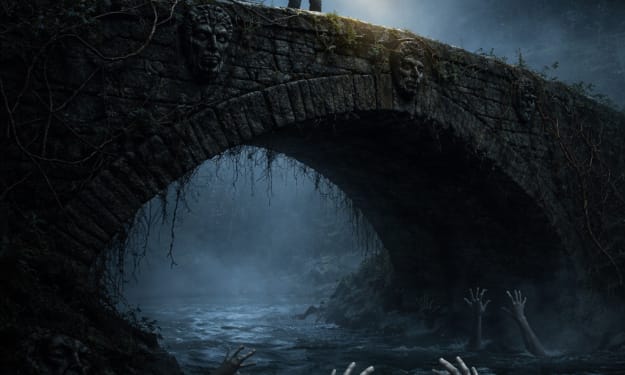
In bridge no one used anymore. It curved gently over a narrow river, its surface cracked and moss-covered, as if time itself had tried to bury it. Locals crossed the modern bridge downstream, leaving the old one to the fog, the wind, and the stories. Tourists were told the bridge was unsafe. Children were told it was haunted. Elena heard about it on her first night in Greyhaven. She had come from the city to catalog historical structures for a regional preservation project. Greyhaven was her last stop—quiet, remote, and perfect for work. The innkeeper, a thin man with pale eyes, hesitated when she mentioned the old bridge. “Don’t go there after sunset,” he said. “It talks.” Elena laughed politely. She had spent years documenting ruins, castles, and forgotten churches. Every village had a ghost story to protect a pile of stones. Still, she noticed how the innkeeper’s hand trembled when he handed her the room key. The next morning, Elena walked to the bridge with her camera and notebook. In daylight, it looked harmless—beautiful, even. Wildflowers grew between the stones, and the river below whispered softly. She took photographs, measured the arch, and noted the erosion. There were strange carvings on the sides: not words, but twisted symbols, worn almost smooth. That night, she dreamed of water. In her dream, she stood on the bridge in thick fog. The river beneath her was silent, black as ink. From the stones under her feet came a low sound, like breath passing through teeth. Come back. She woke suddenly, heart racing. Outside her window, the fog was rolling in from the hills. Elena told herself it was only a dream caused by fatigue. But the next night, it happened again. This time, the whisper was clearer. Come back to us. On the third day, she asked a woman in the village café about the bridge. The woman stopped stirring her coffee. “They drowned there,” she said quietly. “Long ago. When the river flooded, the bridge broke in the middle. A wedding party was crossing. Carriage, horses, music… all gone. People say the stones remember the weight of them.” Elena felt a chill run down her spine. “That’s just a story, right?” The woman looked up. “Stories begin somewhere.” That evening, driven by curiosity and something darker—something pulling at her—Elena returned to the bridge at dusk. Fog wrapped around the riverbanks like a living thing. The modern bridge lights glowed far away, safe and distant. She stepped onto the old stones. The air felt colder in the center of the bridge. Her breath became visible. Then she heard it: soft footsteps behind her. She turned. No one was there. The river below began to make a different sound—not water, but voices. Murmuring, layered and slow. Stay. Elena backed away, but her foot caught on a broken stone. She fell to her knees. The carvings along the bridge seemed deeper now, sharper. They formed shapes—faces, frozen in stone, mouths open in endless screams. Hands rose from the mist. They were pale, dripping, reaching for her ankles. Elena screamed and scrambled backward, tearing her coat on the rough stone. One cold hand brushed her skin, and in that moment, she saw it: a flash of the past. Horses panicking. A carriage tipping. People crying out as dark water swallowed them. And then silence. She ran. By the time she reached the inn, her legs were shaking so badly she could barely stand. The innkeeper saw her face and said nothing—only locked the door behind her. She left Greyhaven the next morning without finishing her work. Months later, her report mentioned “structural instability” and “severe erosion.” It said nothing about whispers or hands or memories trapped in stone. But sometimes, when Elena stands on bridges in other cities—busy ones filled with traffic and noise—she feels a vibration under her feet, like a distant echo. And in the sound of rushing water, she hears a familiar voice: Come back.
By Iazaz hussain5 days ago in Horror



Comments (1)
This story's really captivating. The idea of an artist finding inspiration in an otherworldly glass sculpture is fascinating. It makes me wonder what kind of dreams I'd have if I owned something like that. Have you ever had an object that changed your creative process like this? I can relate to Elara's search for something tangible. Sometimes, digital art just doesn't cut it. There's something special about holding a piece of history in your hands. I'm curious to see where her journey with the sculpture takes her next.