
The House That Whispers Mercy
She was sent into the haunted house as punishment—but what she uncovered turned the whole village into prisoners


In the year 1847, beneath the silent shadows of a decaying village in Southern Anatolia, stood a house no one dared name aloud — for it was believed the house whispered. Whispered not to ears, but to souls. It stood alone, like a punished child at the edge of the earth, cloaked in vines and memory.
They said the girl who entered it never returned whole.
But they never mentioned why she entered in the first place.
I. The Girl with the Scarlet Veil
Her name was Leila, born of shame and of roses.
Her mother had died giving birth to her, and the villagers, always more fond of myth than mercy, claimed that the bloodied sheets had cursed the child. Her father, a once-gentle shepherd, became rigid, harsh — not by grief, but by societal rust. "A man with no son is like a tree that blossoms without fruit," the elders mocked.
Leila grew up between hymns and hollers — one hand raised in prayer, the other shielding her from blows. But never once did she cry before the world. Her tears were private, sacred.
Only one soul treated her as human: Hamid, the baker's lame son. Crippled in body but strong in spirit, he once gave Leila his whole loaf for nothing but her smile. That day, Leila promised herself: "I will love, even if I am unloved."
That promise, like all vows made in pain, was overheard by things older than time.
II. The Whispering House
On Leila’s sixteenth year, a new edict came from the local lord: All unmarried girls must be presented for inspection. The unspoken truth behind this "inspection" was known — exploitation dressed in nobility. When Leila’s turn came, she refused.
This defiance, in a world where obedience was holiness, made her a witch in the eyes of men.
“She should be sent to the Whispering House,” spat the imam, who once praised her piety.
“She defies our honor!” hissed her aunt, who once sold her combs.
“She needs correction,” her father declared, more to hide his shame than protect his daughter.
No trial. No witness. No farewell.
They left her on the steps of that house at midnight — bound in ropes, in her red wedding veil, as tradition dictated for cursed brides.
III. Inside the Bones of the House
The house didn’t welcome her. It took her.
The door closed behind her without a sound. No scream came from her lips, though her heartbeat knocked like thunder. She stepped on rugs woven from hair. The chandeliers above glowed with the coldness of forgotten moons. There was no dust — only stillness, like the air was afraid to move.
And the house began to whisper.
Not in words, but in memories. Her own.
She saw herself as a child, whispering to a candle. She saw her mother’s last breath. She saw Hamid offering the bread, again and again.
And then she heard other voices. Screams buried in walls. Prayers screamed in wrong tongues. Girls — hundreds — locked in echoes.
She was not the first.
And still, no door opened.
IV. The Room of Agreements
After what felt like days — or centuries — she was guided to a crimson room with a black table. Across it sat a woman, draped in velvet and sorrow. Her face was ageless, beautiful yet horrifying — as if time kissed and cursed her.
“You are here because of agreement,” she said.
“What agreement?” Leila’s voice cracked.
“The one all women are born into. The silent pact between their existence and men's discomfort.”
Leila trembled.
“Do you wish to leave?”
“Yes.”
“Then sign this.”
The paper was blank.
“With what?” she asked.
“With your obedience,” said the woman. “Or... your memory.”
Leila held the quill. But before she could move, a small voice echoed — Hamid’s. “Love does not kneel.”
She threw the quill down.
“I will not sign away what little of me I own.”
The woman smiled, cruelly. “Then you shall see the rest.”
V. The Parade of the Damned
Leila was dragged — not by hands, but guilt. Guilt made of flesh.
She walked corridors of nightmares: girls who had loved too much, laughed too loudly, lived too freely. All turned into portraits with hollow eyes, hanging in shame.
She saw the village imam, naked and weeping, trapped in a mirror. She saw her father scratching his eyes out. She saw the lord rotting in gold. All had signed agreements too — to power, to pride, to silence.
“Why are you showing me this?” she asked.
“Because you chose truth over comfort.”
“What do you want of me?”
The woman’s eyes gleamed: “Mercy.”
VI. The Choice
The house gave her a knife.
“You can kill me and escape,” said the velvet woman. “Or, forgive me, and stay. Become the new warden. Free me.”
Leila hesitated.
“Why me?”
“Because you dared to love in a world that teaches hatred. You dared to hope without permission. That is the only horror the world truly fears.”
The knife grew heavy. Her arms shook.
“I forgive you,” she whispered.
And with that, the woman burst into ashes — not in pain, but release.
VII. The Return
At dawn, the house opened. Leila emerged — veiled in light, older by centuries.
No one recognized her. But all feared her.
She walked to the town square, raised her hands, and spoke.
She named the crimes. She named the men. She named the silence.
Thunder struck the mosque’s minaret. Rain poured. And from that day onward, girls were no longer seen as curses but mirrors. The House stood empty.
Except, sometimes, when a girl disappears — not out of fear, but for a visit.
To speak with Leila, the girl who chose freedom.
Moral:
The world fears what it cannot control — and punishes what it secretly envies. But even in the darkest house of horror, mercy can whisper louder than vengeance. And sometimes, the scariest thing... is a girl who forgives the unforgivable.
About the Creator
Muhammad Abdullah
Crafting stories that ignite minds, stir souls, and challenge the ordinary. From timeless morals to chilling horror—every word has a purpose. Follow for tales that stay with you long after the last line.
Keep reading
More stories from Muhammad Abdullah and writers in Horror and other communities.
"Scream 7" (2026): Running out of Fresh Screams
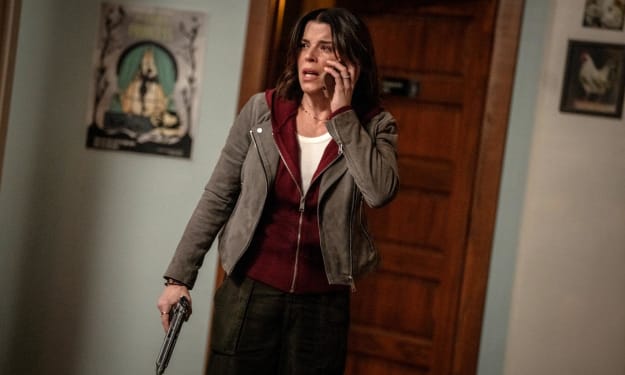
This is the seventh time we’ve had a Ghostface crisis. Scream 7 is the latest edition of the Scream franchise. Sydney Prescott and her family are under attack by another anonymous killer dressed in a Ghostface costume. While having issues with her daughter, Tatum, they run from the bloody murders, trying to determine who is behind it all.
By Marielle Sabbag4 days ago in Horror
Unofficial Challenge: Black History Celebration
Forward: February 28th, 10:53 PM, EST... The final hour of Black History Month, 2026. Hello fellow writers. I've had this challenge waiting in my drafts for most of the month. But I held off on publishing it, until now.
By Sam Spinelli4 days ago in Writers



Comments
There are no comments for this story
Be the first to respond and start the conversation.