
The House That Forgets You
The house was too quiet when Daniel arrived


The house was too quiet when Daniel arrived, its silence so complete that even the crunch of gravel beneath his shoes felt like an intrusion. He had come for peace, that’s what he told himself. After the city, after the noise, after the failed relationship and the job that had hollowed him out, the small countryside home seemed perfect. The rental listing described it as “a charming, secluded property ideal for those seeking solitude.” Solitude was exactly what Daniel thought he needed.
The landlord, a pale man with thinning hair and a strangely empty smile, had handed him the keys without much conversation. “You’ll like it,” he said. “It’s quiet. The kind of quiet that helps you start over.”
The phrase stayed in Daniel’s mind as he unlocked the door. Start over. The words felt comforting—at first.
Inside, the air smelled faintly of dust and lavender. The rooms were sparsely furnished, the wallpaper faded and peeling in places, but the place had a warmth that made it feel lived-in. A few photographs hung on the hallway walls, but the faces were too faded to recognize. He assumed they were of previous tenants, people who’d come and gone, chasing their own versions of peace.
That first night, Daniel slept deeply. The kind of sleep that swallows dreams whole.
When he woke the next morning, the light streaming through the curtains felt sharper, the silence heavier. He made coffee and walked around the house. There was something slightly different about the living room—he couldn’t tell what exactly. A chair that felt moved? A curtain drawn at a different angle? It didn’t matter, he thought. Maybe he was just adjusting.
He went outside and tried to explore the surroundings. A long dirt road led from the front gate to the main path, but beyond that was forest, thick and gray with mist. He didn’t venture far. The air felt colder near the trees.
The second night, Daniel dreamed again, though he couldn’t remember of what. He woke before dawn, heart pounding, with a whisper echoing in his ears. He couldn’t recall the words, only the sound—a woman’s voice, soft but urgent.
That morning, when he went to make coffee, he stood in the kitchen and stared blankly at the counter. His favorite mug, the one he always carried when he moved somewhere new, was gone. He searched the cupboards, the sink, even the trash bin, but it wasn’t there. He told himself he must’ve left it in one of the moving boxes.
Only, when he went to the living room, the boxes weren’t there either.
He frowned. He distinctly remembered unpacking one box the night before, setting it by the fireplace. Now, the space was empty. Completely empty. The firewood he had arranged was gone too, though he hadn’t burned any yet.
He tried to laugh it off, telling himself he was just tired, that maybe he’d forgotten. People forget things all the time. He went for a walk to clear his head. The forest didn’t look the same. The dirt road seemed shorter. The gate, closer.
When he returned that evening, the sun had already set, and he found a note taped to the door. It was written in his handwriting. Don’t stay awake after midnight.
He stared at it for a long time before pulling it down. He didn’t remember writing it. But it was his handwriting—no doubt about that.
He went to bed early.
At exactly midnight, something woke him. A sound, faint but rhythmic—like footsteps pacing the hallway outside his room. He lay still, barely breathing, listening. The steps stopped just outside his door. Then, a slow scraping sound, like fingers brushing against the wood.
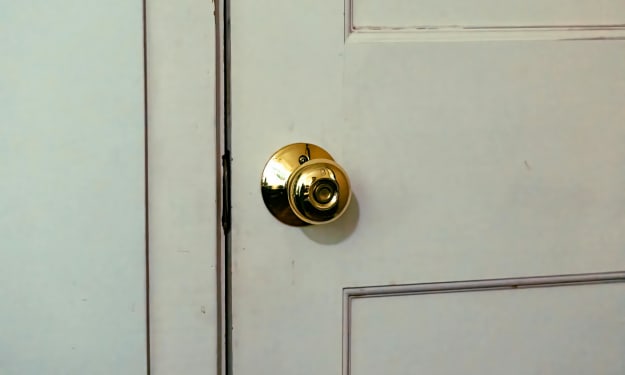
He didn’t move. The air grew colder. His breath fogged in front of him. The doorknob rattled once, softly. Then the sound stopped.
In the morning, the door was open.
He couldn’t remember if he’d locked it.
By the fourth day, Daniel began to notice the gaps—not just in his surroundings, but in himself. He tried to recall his sister’s name and couldn’t. He tried to remember what month it was and drew a blank. The photographs on the wall seemed clearer now, though. One of the faces—a man with dark hair and a faint smile—looked familiar. Too familiar.
He stood in front of it for several minutes before realizing the man was wearing his jacket.
The phone didn’t work when he tried it. The line was dead. His mobile had no signal. The silence grew heavier each day, pressing in around him.
He started keeping notes in a small journal to remind himself of things:
Day 1: Arrived. Quiet place. Peaceful.
Day 2: Mug missing. Boxes too.
Day 3: Heard footsteps. Wrote note to self.
Day 4: Forgetting details. Found photo that looks like me.
He placed the notebook beside his bed before sleeping that night.
When he woke the next morning, it was gone.
He searched the entire house. The journal had vanished. So had the note from the door. The photo in the hallway was missing too, the frame left empty.
Something inside him began to fray. He tried to remember what he looked like before coming here, tried to picture his face. The image slipped away like smoke.
The mirror in the bathroom reflected a man who seemed… wrong. His eyes were too tired, his skin too pale. The reflection smiled back at him before he did.
That night, the whispering returned. Louder this time. The voice came from the walls, from beneath the floorboards, from the corners of his mind.
“Sleep,” it said. “Forget.”
He pressed his hands over his ears, but the voice seeped through the silence like water through cracks.
When he opened his eyes again, it was morning—but the sun didn’t look right. It was dull, gray, like a painting fading from age.
The rooms looked smaller now. The furniture had changed. There was a rocking chair in the corner he didn’t recognize. On the kitchen table sat a mug. His mug. But when he lifted it, the bottom was cracked, the ceramic worn. It looked decades old.
He found another photograph on the wall. This one showed a woman, standing by the front gate. She looked afraid. The back of the photo read, Tenant #14.
Daniel dropped it.
He went through the house, searching, desperate. Behind the wardrobe, he found a door he hadn’t seen before—small, wooden, barely large enough to crawl through. It was locked from the outside.
He hesitated. Then, hearing the faint whispering again, he pried it open.
The air inside was cold and dry. The room beyond was dimly lit by a single bulb. The walls were covered in photographs—dozens of them. Men and women of different ages. Some smiling. Some terrified. Beneath each photo was a number. Tenant #1. Tenant #2. Tenant #3…
At the end of the row, space had been cleared. A blank frame waited.
He backed away, heart pounding. The whispers rose again, surrounding him now.
“Sleep. Forget. Start over.”
He stumbled back into the hallway. His vision blurred. The air shimmered like heat waves. For a moment, he saw figures moving—faded outlines of people walking through the rooms, repeating old routines. Tenants who’d lived here before, all of them trapped in the same loop, their faces blurred by time.
He ran to the door. It wouldn’t open. The key turned freely, but the door stayed shut.
He banged on it, shouted, screamed until his throat burned. The walls pulsed faintly, almost breathing. He felt his name slipping from his mind, letter by letter, until it meant nothing at all.
He fell to his knees. His thoughts were scattering like leaves in the wind.
A final voice, calm and near, whispered from behind him. “Don’t fight it. It’s easier when you forget.”
He turned, but there was no one there—only the hallway mirror, reflecting his pale face. And as he stared, he saw the reflection smile again. This time, he didn’t.
The next morning, the landlord returned. The door was unlocked. The house was quiet, the air still.
Inside, the rooms were neat, freshly cleaned. A single photograph hung on the wall in the hallway—of a man with tired eyes, wearing a dark jacket. Beneath it, the words Tenant #15.
The landlord smiled faintly, as though satisfied. He turned the photo slightly to straighten it, then stepped back and whispered, “Welcome home.”
Outside, a car pulled into the driveway. A woman stepped out, holding a small suitcase. She looked up at the house and smiled nervously.
“It’s so peaceful here,” she said.
The landlord handed her the keys. “You’ll like it,” he told her. “It’s quiet. The kind of quiet that helps you start over.”
And as the front door closed behind her, the house seemed to sigh—content, remembering nothing.
About the Creator
Modhilraj
Modhilraj writes lifestyle-inspired horror where everyday routines slowly unravel into dread. His stories explore fear hidden in habits, homes, and quiet moments—because the most unsettling horrors live inside normal life.



Comments
There are no comments for this story
Be the first to respond and start the conversation.