
THE HOLLOWING OF HAWTHORN HOUSE
She came to save her mother’s memories, but she didn’t know they were being fed to something else.
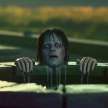
The fog on Dartmoor doesn’t just obscure the world; it erases it.
Freya gripped the steering wheel of her battered Mini, her knuckles white, as the tires crunched over the loose gravel of the single-track lane. Outside, the world was a void of shifting grey, the ancient granite tors swallowed whole by the mist. When Hawthorn House finally loomed out of the gloom, it looked less like a home and more like a dark, rotting tooth set deep in the gum of the moorland.
It had been five years. Five years of unanswered calls, excuses made of work deadlines, and the quiet, gnawing guilt that she had abandoned her mother to this desolate isolation.
The house smelled exactly as she remembered: damp wool, unwashed teacups, and the cloying, sweet scent of decaying lavender.
"Mum?" Freya called out, her voice swallowed by the cold hallway.
Margaret was sitting in her wingback chair by a dead fireplace, staring at a patch of peeling wallpaper. She looked smaller than Freya remembered, as if the house were slowly shrinking her.
Margaret turned. Her eyes, once the sharp, critical eyes of a history teacher who missed nothing, were now milky and vacant.
"The kettle is whistling, Eleanor," she said, her voice thin.
Freya felt a crack in her chest. "I’m Freya, Mum. Eleanor was your sister. She died ten years ago."
Margaret smiled, a disturbing, lopsided expression that didn’t reach her eyes. "She’s not dead, dear. She’s just being unspooled."
The Unraveling
The first week was a masterclass in exhaustion. It was a cycle of changing soiled sheets, spoon-feeding lukewarm soup, and enduring the sudden, violent screaming fits at 3:00 AM. But it was the specific nature of her mother’s decline that unnerved Freya.
Dementia was supposed to be a fading, a blurring of lines. But Margaret didn’t describe forgetting things; she described losing them. Physically.
"He took the seaside today," Margaret whispered one evening, clutching Freya’s wrist with a grip that left bruises. Her eyes were wide with a lucid terror. "The cold one. He reached right in and pulled the Brighton holiday out of my ear. It hurt, Freya. It felt like a fishhook."
Freya dismissed it as the metaphors of a dying mind. Until she saw the threads.
It happened on the fourth night. Freya woke to a strange sound—a dry, rhythmic clicking, like knitting needles made of bone. The air in the cottage had dropped twenty degrees. Shivering, she crept to her mother’s bedroom door and pushed it open.
Hovering over Margaret’s sleeping form was a shadow.
It wasn’t a ghost. It was something far older. It looked like a spindly, arachnid figure woven from smoke and old rags. Its limbs were too long, possessing too many joints, and its fingers were needle-thin. As Freya watched, paralyzed by a primal fear, the entity pinched the air near Margaret’s temple.
It pulled.
A silver, glowing strand of light—gossamer-thin and pulsing with memory—was drawn out of Margaret’s head. The thread shimmered with images: a birthday cake, a child laughing, a sunny afternoon.
The entity, The Weaver, brought the glowing thread to its mouth. It didn't chew; it inhaled the light. On the bed, Margaret whimpered, her face going slack, the lines of her face deepening as if years were being etched in seconds.
The Bargain
Freya slammed the light switch on. The bulb flickered to life, casting harsh yellow light across the room.
The entity didn't vanish. It didn't scream. It simply scuttled up the wall with the impossible speed of a cockroach, melting into a damp patch of mold on the ceiling.
Freya shook her mother awake. "Mum! Mum, wake up!"
Margaret opened her eyes. They were terrifyingly empty. Not confused—empty. A house with no furniture.
"Who are you?" Margaret asked.
"It's Freya. Your daughter."
"Daughter..." Margaret tasted the word like it was foreign dirt. She looked at Freya with zero recognition. "I don't think I have one of those. I think I gave that one away."
Freya realized the horror then. The Weaver wasn't just a parasite feeding on decay. It was farming her mother. It was surgically removing specific connections, leaving Margaret a breathing husk.
Desperate to escape, Freya packed their bags, dragging a confused Margaret to the car. But the engine wouldn't turn over. The fog outside pressed against the glass like a physical wall, white and suffocating. They were trapped.
That night, while searching for candles, Freya found her mother’s old diary hidden under a loose floorboard. The entries from the last winter were frantic, scrawled by a hand shaking with loneliness.
October 12th: It comes from the moor. It smells like wet peat and old rain.
November 4th: It offered to take the pain away. It said it would eat the bad memories first. The death of my husband. The silence of this house. I let it.
December 20th: It lied. It’s eating the good ones now. It likes the taste of love best.
Freya dropped the book. Her mother hadn't just fallen sick. She had made a bargain born of crushing isolation. She had invited the monster in to eat her grief, and it had stayed to feast on her life.
The Trade
The temperature plummeted. The dry clicking sound returned, louder this time, echoing from the corners of the room.
The Weaver descended from the ceiling shadows. It uncoiled itself, looming over the two women. It didn't want a small memory this time. It turned its eyeless face toward Freya. It wanted the core. It wanted the source of the pain and the love.
Freya grabbed the heavy iron poker from the fireplace, standing between the monster and her mother. She was shaking, tears streaming down her face.
"Leave her alone!" Freya screamed. "She has nothing left! Take me! My memories are fresher! Stronger! Take the guilt! Take all of it!"
The Weaver paused. Its face was a blur of static, but Freya felt it smile. It didn't lunge at Margaret. It lunged at Freya.
The room exploded in silver light and agonizing cold.
The Morning After
Freya woke up in the armchair.
The sun was shining weakly through the Dartmoor mist. The fire was dead ash.
She stood up and stretched. She felt... light. Unburdened. The crushing weight of guilt that had sat on her chest for five years was gone. In fact, she couldn't quite remember why she had felt so guilty in the first place. It seemed like a silly emotion, heavy and useless.
She walked into the kitchen. Margaret was sitting at the table, looking surprisingly lucid, drinking tea.
"Freya, darling," Margaret said, her eyes sharp, recognizing her daughter instantly. The fog of dementia seemed to have lifted slightly. "You look tired."
"I'm fine, Mum," Freya said.
She looked at the old woman. She knew, intellectually, that this was her mother. She knew the history, the biology. But she felt... nothing.
No love. No irritation. No history. No attachment. It was like looking at a stranger on a bus.
Freya walked to the window and looked out at the moor. In the reflection of the glass, she saw a dark, spindly shape standing directly behind her reflection.
The Weaver hadn't killed Freya. It had accepted the trade. It had eaten Freya’s love for her mother. It had consumed the bond between them, leaving the memories intact but severing the emotional connection forever.
Freya turned back to the old woman, checking her watch.
"I think I'll head back to London today," Freya said casually, grabbing her car keys. "I have a lot of work to do. No point hanging around here."
"Of course, dear," Margaret said. A single tear rolled down the old woman's cheek. She remembered everything now, including what had just been lost to save her.
Freya walked out the front door, leaving her mother alone in the silent house. She unlocked the Mini, and as she slid into the driver's seat, the suspension dipped slightly—as if someone, or something, had just settled into the back seat, ready for the ride to the big city.
About the Creator
Wellova
I am [Wellova], a horror writer who finds fear in silence and shadows. My stories reveal unseen presences, whispers in the dark, and secrets buried deep—reminding readers that fear is never far, sometimes just behind a door left unopened.
Alpha Mosquito
I start with a cracked window and a simple bath, leaving the warm water to sit longer than usual. A single mosquito emerges, small and inconsequential. Another appears soon after. They breed, proliferating the room over the weeks as I observe in fascination. I procur steroids and bulk fuel to add into the water. The next mosquito is slightly bigger. Their sentience grows alongside their size - I force them to fight to the death for nutrients, the biggest and smartest survive and continues their blood line. A Roman coliseum of these creatures' strongest gladiators.
By flutterfryyy4 days ago in Horror



Comments
There are no comments for this story
Be the first to respond and start the conversation.