
The History of the Salem Witch Trials' Horror
Salem Witch Real Horror Story

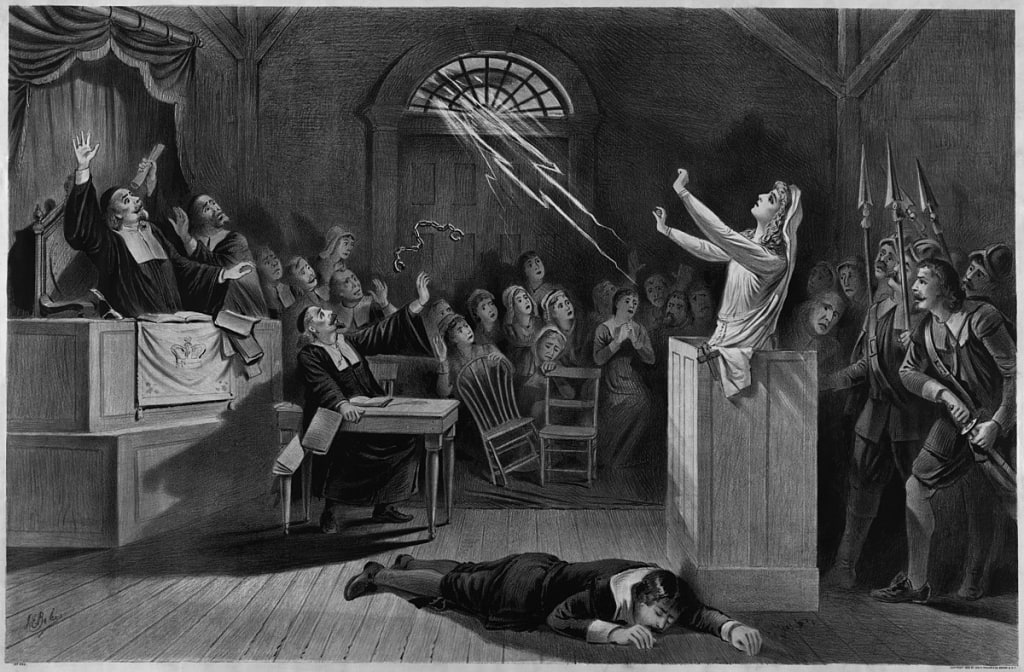
The Salem witch trials of 1692 stand as one of the most infamous and haunting chapters in American history. Rooted in a potent mix of fear, superstition, and societal tensions, these trials gripped the small Puritan town of Salem, Massachusetts, leading to the deaths of 20 people and the imprisonment of many more. The events have since become synonymous with mass hysteria and injustice, leaving a lasting imprint on American cultural and historical consciousness.
The Seeds of Fear
The Salem witch trials began in an atmosphere of widespread anxiety. By the late 17th century, the Puritan settlers of Massachusetts Bay Colony lived under constant pressure. Challenges like a harsh climate, disease, and conflicts with Indigenous tribes created a sense of vulnerability. The deeply religious community interpreted these difficulties as evidence of divine punishment or Satanic interference, further fueling their fears.
Additionally, Salem Village (modern-day Danvers) was rife with personal and political discord. Disputes over land ownership, church leadership, and the distribution of wealth created a fertile ground for suspicion and resentment. In this tense environment, accusations of witchcraft quickly took root.
The Spark
The trials were set in motion in early 1692 when a group of young girls in Salem Village began displaying strange behaviors. They convulsed, screamed, and made bizarre utterances, symptoms that baffled local physicians. When no physical cause could be determined, the girls' afflictions were attributed to witchcraft. Pressured by community leaders, the girls named several local women as witches, including Tituba, an enslaved woman of Caribbean origin; Sarah Good, a beggar; and Sarah Osborne, an elderly, infirm woman.
The accusations spread like wildfire. As fear escalated, more women—and some men—were implicated, often on flimsy evidence or as a result of longstanding grudges.
The Trials
The legal proceedings in Salem were deeply flawed. The Puritan judicial system combined religious fervor with a rudimentary legal framework. Evidence such as "spectral evidence"—testimony that a spirit or apparition of the accused had harmed the accuser—was accepted in court, despite its subjective and unverifiable nature.
Under the oversight of Judge Samuel Sewall and other officials, the trials became a frenzy. Accused individuals were interrogated harshly, often coerced into confessing to save their lives. Those who refused to confess were usually sentenced to death. The trials condemned 19 people to hang, while one man, Giles Corey, was pressed to death with heavy stones for refusing to enter a plea.
The Role of Hysteria
The Salem witch trials are often cited as a prime example of mass hysteria. Fear and suspicion fed on themselves, creating a snowball effect. Once accusations began, the climate of paranoia made it almost impossible to defend oneself. Community members turned on one another, fearing that any dissent or defense of the accused might result in their own implication.
The power dynamics of the trials also reveal underlying societal tensions. Many of the accused were marginalized individuals—women without male protectors, the poor, or those with unconventional lifestyles. The trials became a way to enforce social norms and maintain existing hierarchies.
The End of the Trials
By the end of 1692, the trials had begun to lose momentum. Prominent figures in Massachusetts, including Governor William Phips, grew concerned about the legitimacy of the proceedings. Public opinion shifted as the absurdity and cruelty of the trials became evident. In October 1692, Phips intervened, prohibiting further arrests and disbanding the special court that had been established to handle the cases.
In the years that followed, many of those involved expressed regret. Judge Sewall publicly apologized, and financial compensation was offered to some of the victims’ families. Despite these efforts, the damage could never be undone.
The Legacy
The Salem witch trials remain a powerful cautionary tale about the dangers of extremism, scapegoating, and the breakdown of rational thought in the face of fear. They highlight how societal pressures, combined with ignorance and prejudice, can lead to devastating consequences.
Over time, the trials have inspired countless works of literature, drama, and scholarship. Arthur Miller’s play The Crucible, for example, draws on the events of Salem to comment on the McCarthy-era “witch hunts” of the 20th century, showing how history has repeated itself in various forms.
Today, the town of Salem embraces its dark history, attracting visitors to its museums and historic sites. While the events of 1692 may be distant, their lessons about justice, fairness, and the need for critical thinking remain timeless.
The Salem witch trials are a stark reminder of the horrors that can unfold when fear and suspicion are allowed to override reason.
About the Creator
Bindu Bhardwaj
I am blogger crafting engaging content on diverse topics. Informative, relatable, and thought-provoking posts that connect with readers. Explore and learn through my words.
Keep reading
More stories from Bindu Bhardwaj and writers in Horror and other communities.
The True Story Behind the Amityville Horror
The Amityville Horror is one of the most infamous haunted house stories in American history. What sets it apart from countless other ghost tales is its connection to true, horrifying events. The story combines a brutal crime, alleged supernatural activity, and a subsequent cultural phenomenon that captivated millions.
By Bindu Bhardwajabout a year ago in Horror
5 Most Haunted Objects in History: From Annabelle to Robert the Doll
I have a confession to make: I am obsessed with European history, specifically castles. There’s something about a stone fortress that feels like a magnet for the paranormal. In my mind, every castle is haunted, usually by a lady in a white dress, a headless nobleman, or (the absolute worst) creepy ghost children.
By Areeba Umair5 days ago in Horror
Miss Persephone's Manual to a Seemingly Ordinary Life
Miss Persephone was found at the dining table, her blue eyes swollen, her tears arriving and retreating like the tides of the ocean. Earlier that day, her family had visited her in the retirement home where she had lived for eight years. It was her eightieth birthday.
By Imola Tótha day ago in Fiction



Comments (1)
I've always been interested in this. A very fascinating read!