
The History of Halloween
From Ancient Spirits to Modern Treats
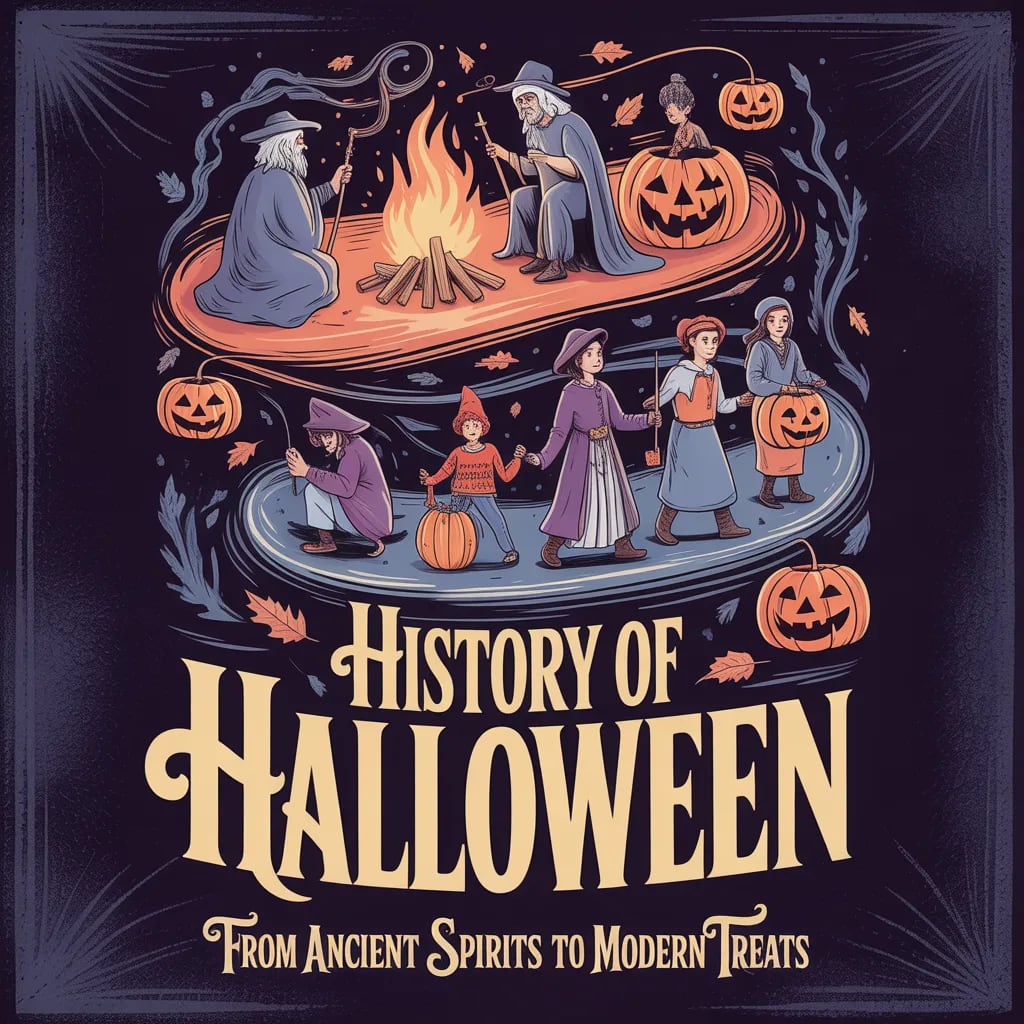
Long before pumpkins glowed with candlelight and children roamed the streets in costumes, there was a night of fire and fear, of spirits and change. The story of Halloween begins more than two thousand years ago, with a festival called Samhain—a Celtic word pronounced “sow-in,” meaning “summer’s end.”
The ancient Celts, who lived in what is now Ireland, the United Kingdom, and northern France, believed that the year was divided between light and dark. Samhain marked the end of the harvest season and the start of the cold, deadly winter. On the night of October 31st, they believed the boundary between the living and the dead grew thin. Spirits could cross over, walking the earth once more.
Fearing these wandering souls, the Celts built huge bonfires to honor the gods and to protect themselves from evil. They wore costumes made of animal skins and masks carved from gourds to disguise themselves from the restless spirits. Some left food and treats outside their homes to please the wandering dead—a practice that would one day become trick-or-treating.
As centuries passed, the Romans conquered the Celtic lands and blended their own traditions with Samhain. One Roman festival, Feralia, also honored the dead. Another celebrated Pomona, the goddess of fruits and trees—her symbol was the apple. From her, we may have inherited the tradition of bobbing for apples, a playful echo of an ancient ritual.
Then came the spread of Christianity across Europe. The Church sought to replace pagan festivals with holy celebrations. In the 8th century, Pope Gregory III declared November 1st as All Saints’ Day—a day to honor saints and martyrs. The night before it, October 31st, became All Hallows’ Eve, which over time was shortened to Halloween.
Even as the new religion grew, old beliefs lingered. People still lit candles to guide souls to heaven, dressed in costumes to ward off evil, and told ghostly tales around the fire. In many ways, the world of the living and the dead still danced together on that one magical night.
When immigrants from Ireland and Scotland sailed to America in the 19th century, they carried these Halloween traditions with them. The Irish brought stories of spirits and mischief-makers, including one called Stingy Jack—a man who tricked the Devil and was doomed to wander the earth with only a hollowed-out turnip lit by a coal. In America, turnips were scarce, but pumpkins were plentiful, and so the jack-o’-lantern was born.
At first, Halloween in America was a night of tricks more than treats. Young people pulled pranks, tipped over outhouses, and frightened their neighbors with ghostly games. But by the early 20th century, communities began to change its meaning. Schools and towns organized parties to make the holiday safer and more fun.
Children began to dress up in homemade costumes—ghosts, witches, pirates, and monsters—and go door-to-door asking, “Trick or treat?” The phrase carried a playful threat: give us candy, or we might play a trick! It was all in good fun, and by the 1950s, Halloween had become a beloved family holiday filled with laughter, costumes, and sweets.
Over time, Halloween grew beyond its Celtic and Christian roots. In movies, books, and pop culture, it became a celebration of imagination—of mystery, magic, and make-believe. From Dracula and Frankenstein to The Addams Family and Hocus Pocus, Halloween became a stage for all things spooky and strange.
Yet, behind the laughter and the candy, the ancient heart of Halloween still beats. It’s a night when we face the darkness, when we tell stories about ghosts and the afterlife—not to fear them, but to remember that life and death are forever intertwined. The flickering candle inside a pumpkin is more than decoration; it’s a symbol of light in the darkness, hope in the face of fear.
Today, Halloween is celebrated around the world. In Mexico, families honor their ancestors during Día de los Muertos, or the Day of the Dead, filling altars with marigolds and photos of loved ones. In Japan, the Obon Festival celebrates the return of ancestral spirits through lanterns and dance. Even though these traditions differ, they all share a single truth: remembering the dead keeps their spirits alive in our hearts.
From ancient Samhain fires to glowing suburban porches, Halloween has traveled through time and across cultures. It has changed shapes—like a ghost slipping through walls—but its soul remains the same: a night to honor the unseen, to tell stories, and to celebrate the magic between worlds.
As the moon rises on October 31st, the veil once again grows thin. Somewhere, a candle flickers in a carved pumpkin. A child laughs behind a mask. Shadows dance in the cold air. And beneath all the costumes and candy, the spirit of Halloween—the oldest of nights—still whispers through the dark.🎃🎃


Comments
There are no comments for this story
Be the first to respond and start the conversation.