
The Hex House: Tulsa’s True Crime Horror Story
In the 1940s, Tulsa, Oklahoma, was booming — oil money flowed, and neighborhoods bustled with optimism. But beneath this veneer of normalcy, in a modest house on South 14th Street, an unimaginable secret festered. Behind its closed doors, two young women lived in a nightmare that the press would later dub "The Hex House".

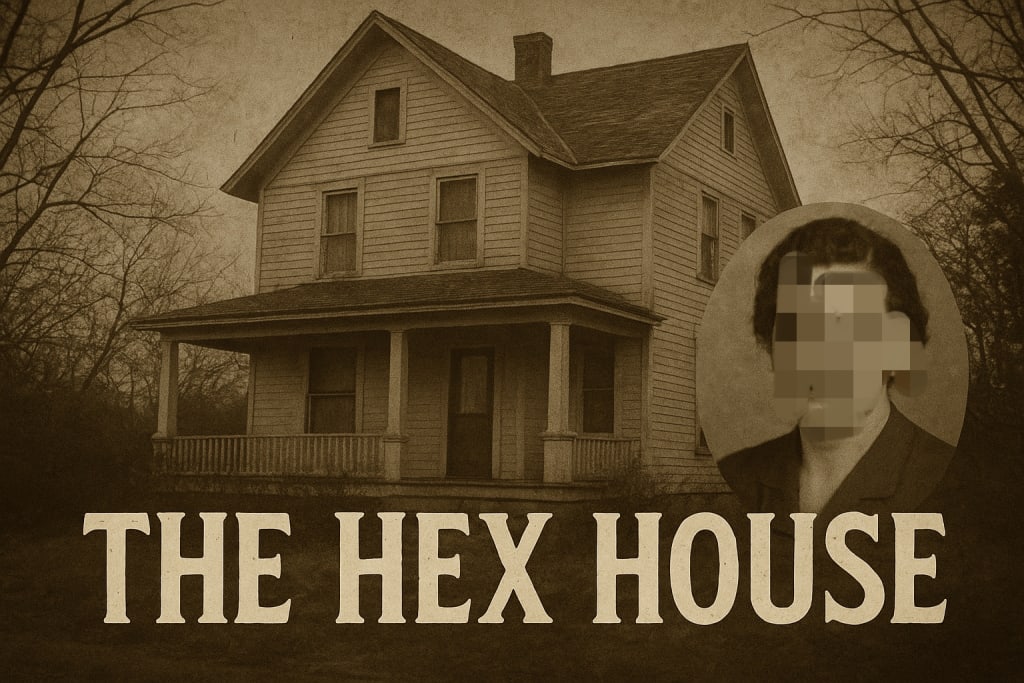
At the center of this chilling tale was Carol Ann Smith, a 50-something woman who blended into the community so well that neighbors saw nothing amiss. Outwardly, she appeared genteel and respectable. Inwardly, she wielded a disturbing control over those who crossed her path — a control that would blur the lines between reality, fear, and psychological captivity.
The Victims
The victims, Virginia Evans and Willa Carson, were not abducted strangers but young women drawn into Smith’s orbit willingly at first. They were promised stability, guidance, and a place to live. What they didn’t know was that they were stepping into a carefully laid psychological trap.
Smith convinced them they were cursed — that dark forces would destroy them if they disobeyed her. She claimed to be their protector, their only shield against supernatural harm. Over time, the two women were stripped of their independence, their finances, and even their will to resist.
Life Inside the Hex House
From the outside, Smith’s home looked unremarkable — neat, quiet, and respectable. Inside, it was a place of quiet horror. Evans and Carson lived in the dim, unheated basement, sleeping on orange crates instead of beds. Their meals were meager, their movements restricted. They were forbidden to speak to anyone without Smith’s permission, and any act of independence was met with intimidation.
This was not brute-force captivity. Smith’s weapon of choice was psychological manipulation. She fed the women a steady diet of superstition and fear, creating an invisible cage far stronger than any lock and key. She convinced them that to defy her would mean ruin — spiritual, financial, even physical.
The Financial Web
The control wasn’t purely about power — it was also about money. Smith coerced Evans and Carson into turning over their wages and savings. She opened bank accounts in their names, drained them, and used the funds for her own comfort. The victims were essentially working full-time to sustain the very woman holding them captive.
By the time authorities intervened, Smith had stripped them of nearly everything — their money, their confidence, and their ability to make decisions for themselves.
The Discovery
The case unraveled in 1944, almost by accident. An anonymous tip reached police, claiming something was “very wrong” inside the house. When officers arrived, they found the basement’s air damp and stale, its dim light casting long shadows on cracked walls. Evans and Carson were pale, malnourished, and almost childlike in their obedience to Smith.
The women initially defended her — a testament to the depth of the manipulation. It took days before the truth emerged, piece by piece, in hesitant, trembling statements.
The Trial and the Legend
Smith was charged not with kidnapping — the law couldn’t quite define her crime — but with fraud and coercion. The trial revealed a disturbing portrait: a master manipulator who had ensnared two young women without chains, relying instead on fear and false promises.
The press seized on the story, dubbing it The Hex House for its eerie mix of occult overtones and psychological enslavement. Headlines painted Smith as a witch-like figure, and her home became a local legend — a place whispered about by children and avoided by neighbors.
Smith was eventually convicted and served time, but she never admitted wrongdoing. To her, the women had been willing participants in a strange but harmless arrangement.
Aftermath and Haunting Legacy
Evans and Carson disappeared from public view after the trial, trying to rebuild lives that had been systematically dismantled. The house itself stood for years, a silent witness to what had happened within its walls, until it was finally demolished.
Yet the story refused to die. Decades later, “Hex House” remained a phrase that could silence a conversation in Tulsa. Some claimed the ground where it stood carried a lingering sense of dread, as though the fear that had once saturated its walls had seeped into the soil.
Today, the name lives on in Tulsa’s Halloween attractions, where the Hex House is reimagined as a haunted maze. But the truth is far more disturbing than any ghost story — because it really happened.
Why it still terrifies: The Hex House wasn’t about supernatural curses or chains in the dark. It was about the terrifying ease with which one person can dominate another’s mind. Carol Ann Smith proved that captivity can exist without bars, and that the most dangerous prison is the one built inside a victim’s own thoughts.
About the Creator
E. hasan
An aspiring engineer who once wanted to be a writer .


Comments
There are no comments for this story
Be the first to respond and start the conversation.