
The Girl in Ward 19
She wasn’t a ghost. She was society’s reflection.

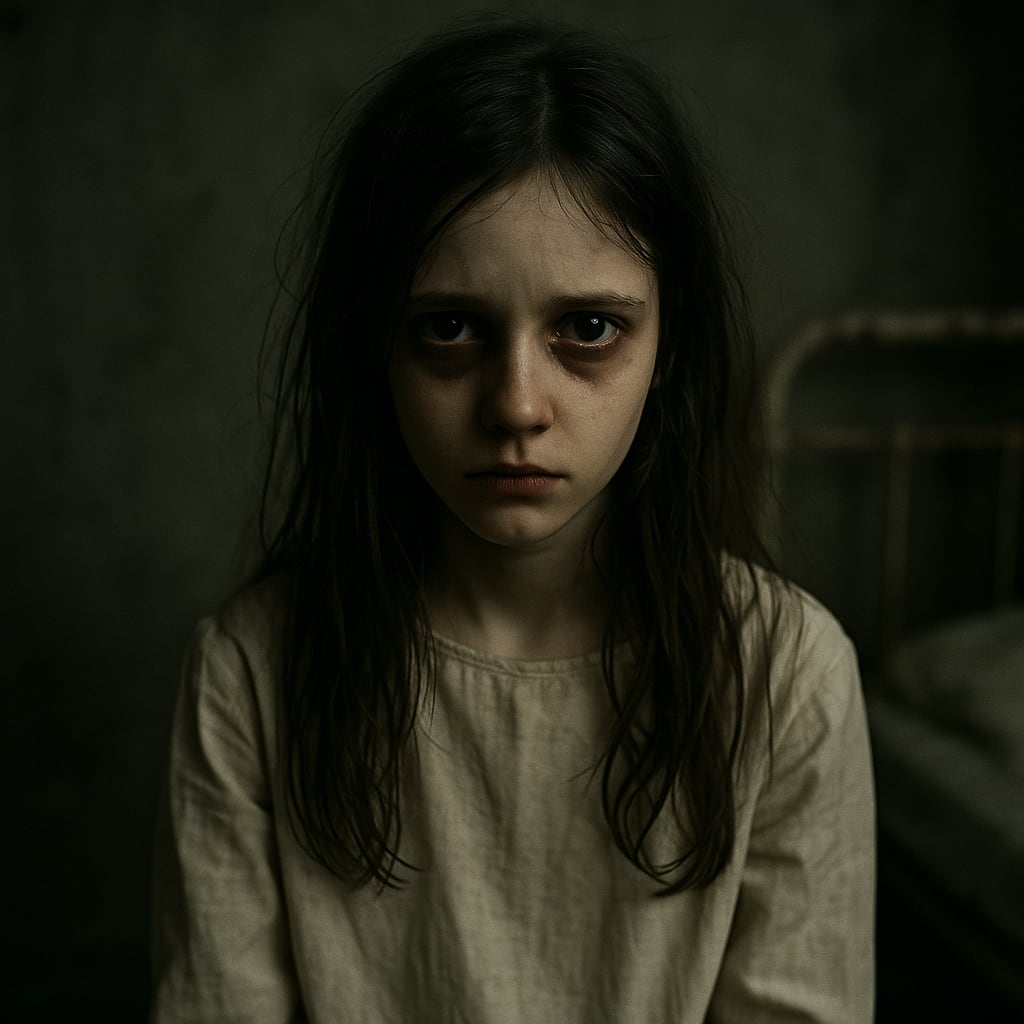
There are hospitals that heal, and there are hospitals that remember. St. Elora’s Asylum, built in the 1800s on the edge of a forgotten town in Murree’s chilling highlands, belonged to the latter. Now decrepit, its walls still breathed the whispers of those who had screamed, wept, and begged behind them.
In Ward 19, a room supposedly sealed since 1994, the name Saba remained etched into the rusting iron bed frame. No one talked about her — not the nurses, not the warden, and certainly not the townsfolk. But legends say she still sings when the moon turns blood-red and the clock hits 3:13 a.m.
Saba wasn’t always a ghost. She was a girl like any other, delicate in smile, fierce in conviction, and terribly unlucky in the accident of birth. Born into a village ruled by prideful men and silence-drenched women, Saba’s spirit was seen as rebellion, her laughter — a threat. They called her “possessed” when she spoke freely, “disobedient” when she refused the village elder's proposal at age 15, and “mad” when she ran away to teach in the city.
But Saba wasn’t mad. She was educated, aware — and alive in a way her world found unacceptable.
I. The House of Saints and Sinners
It began in 1991.
After being lured back home with a letter feigning her mother’s illness — a lie woven by her uncle who wanted her inheritance — Saba found herself drugged and thrown into St. Elora’s by men who signed papers on behalf of the state. Her diagnosis? “Hysterical psychosis with delusions of emancipation.”
Doctors with credentials bought with bribes experimented on her mind with unapproved treatments: shocks, sedatives, hypnosis. Her screams were recorded as “episodes.” Her resistance — “paranoia.”
Each day, the hospital staff took turns playing saints and sinners. The wardens touched her without consent. Nurses mocked her poetry. And yet, Saba, despite the drugs, never gave them the pleasure of total collapse. She remembered every touch, every needle, every agreement made in her name.
Her only solace was Sister Maria, a gentle nun who came weekly to offer hymns and bread. Maria called her “The Light in Chains.” For two years, they whispered prayers of hope in the laundry room, dreaming of escape.
But hope is a dangerous thing in the realm of madmen.
II. The Unseen Court
In October 1993, an unknown benefactor donated a black grand piano to the asylum. No one knew why. Rumor had it that the donor had once loved a woman whose voice could command angels. That woman was Saba.
She would sing for herself sometimes, under her breath, in the cracks of silence between the screams of others. Songs of freedom, of faraway forests, of moonlit oceans. It was her only escape. That piano sat in the hallway facing her room.
And then came the voices.
Late at night, nurses began hearing Saba’s lullabies when she hadn’t left her bed. The piano played on its own. Rats scattered from her door. Patients in nearby wards began chanting her name. Even the walls perspired water with traces of blood.
They brought in a cleric to exorcise her. He slapped her for every verse she refused to forget. They fasted her for seven days, praying hunger would cleanse her soul.
But Saba, pale and broken, stared into the cleric’s eyes and whispered:
“You abuse me in the name of God, but the devil you fear… is just your mirror.”
By morning, the cleric had fled the city. He was found three days later in a mosque, muttering Saba’s name while digging his nails into his own throat.
III. Benevolence in Blood
On the night of March 13, 1994, something changed.
A nurse named Afrah — young, new, unaware of history — entered Ward 19 for rounds. Saba stood upright at the window, her long hair hanging like a shroud, eyes locked on the moon, singing a haunting melody in a dialect that hadn’t been spoken in decades.
“Do you need anything?” Afrah asked softly.
Saba turned.
“No. But you do. A heart.”
“What?”
“Take mine. It's already been used.”
Before Afrah could respond, the power went out.
For thirteen minutes, the entire asylum sank into unnatural darkness. Patients screamed. Bells rang. The piano played violently in the hallway — not a melody but a courtroom verdict. The old walls of St. Elora’s moaned as if alive.
When the lights flickered back, Saba was gone.
No doors opened. No windows broken.
Just a single line carved into her bedframe:
“This is not madness. This is memory.”
They searched for months. Authorities called it “patient disappearance,” and closed the case. But people whispered that she had become the asylum — its air, its screams, its conscience. Ward 19 was sealed.
Yet stories continued.
Afrah never spoke again. The chief doctor developed sudden hypertension and died on the asylum stairs. One nurse who had slapped Saba was found hanging by her own IV tube. All their files were burned in a mysterious fire.
But some say the asylum didn’t collapse because of decay — it collapsed from the weight of unspoken truths.
IV. Now
In 2025, a young journalist named Nazia discovered Ward 19’s records while researching psychiatric abuse in pre-modern institutions. A girl of conscience, curiosity, and scars, she saw echoes of herself in Saba’s story.
She traveled to Murree.
She found the ruins of St. Elora’s. Ivy grew from blood-red bricks. But the iron bed in Ward 19 remained. So did the piano, though its keys were ash.
As she clicked a photo, the air turned cold. Her phone died. She felt something — a hand, or a memory — grip her wrist.
And then, a voice:
“You write to be heard. I sang to be forgotten.”
Nazia froze. Her heart thundered.
“But the world must remember,” the voice continued. “Not me. What they did. Write it. Sing it.”
She ran from the building, but not from the truth. She wrote her article. It went viral. Donations poured in for mental health. New institutions opened with ethical boards. Forgotten patients were given names, not numbers.
Yet, Nazia still hears music sometimes.
Especially when the moon turns red.
Epilogue: The Mirror’s Verdict
Saba wasn’t a ghost.
She was society’s reflection — every girl silenced, every woman gaslit, every human caged for daring to be free.
Her horror was not monsters under the bed — but the monsters behind desks, under turbans, beneath holy titles and state coats.
Her strength lay not in vengeance, but in benevolence with a bitter laugh.
Today, people say Ward 19 is cursed.
But the truth is simpler:
It is not cursed.
It is just honest.
Moral:
The real asylum is not a building, but a world that chains the pure, praises the cruel, and calls truth insanity.
Thanks for reading! ❤️
About the Creator
Muhammad Abdullah
Crafting stories that ignite minds, stir souls, and challenge the ordinary. From timeless morals to chilling horror—every word has a purpose. Follow for tales that stay with you long after the last line.
Keep reading
More stories from Muhammad Abdullah and writers in Horror and other communities.
The Agreement of the Dead
I was not always dead. No, death came much later—like a belated apology, or a kindly word after the firing squad. My name, though unimportant now, once sat proudly on university plaques and inked letters of recommendation. Now, I am only remembered in whispers. And worse still: in documents signed in bloodless ink by breathless men.
By Muhammad Abdullah9 months ago in Horror
"Scream 7" (2026): Running out of Fresh Screams
This is the seventh time we’ve had a Ghostface crisis. Scream 7 is the latest edition of the Scream franchise. Sydney Prescott and her family are under attack by another anonymous killer dressed in a Ghostface costume. While having issues with her daughter, Tatum, they run from the bloody murders, trying to determine who is behind it all.
By Marielle Sabbag7 days ago in Horror
A More Human Vocal
When we launched Vocal nearly a decade ago, the world was a very different place. LLMs did not exist, and stories were created one at a time by people sitting down to write, revise, and share something personal. Many of our assumptions about publishing, trust, and participation were built for a world where effort and output were inseparable.
By Justin @ Vocal4 days ago in Resources



Comments
There are no comments for this story
Be the first to respond and start the conversation.