
THE GHOST IN THE CODE - PART 2
THE GHOST IN THE CODE - PART 2

THE GHOST IN THE CODE - PART 2
The buzz inside Pages & Prose was a symphony Elena thought she’d never hear again. It wasn’t just the murmur of conversations or the ring of the old-fashioned cash register; it was the sound of a heart restarting. For weeks, the shop thrived. The story of the tech-wizard who returned a library to save a bookstore was a potent local legend, fueled by a beautifully human-interest piece that, notably, never mentioned VeriTech by name. Noah had become a permanent fixture, his sleek laptop now sharing a desk with her leather-bound ledger.
But a ghost from the digital world couldn't be so easily banished.
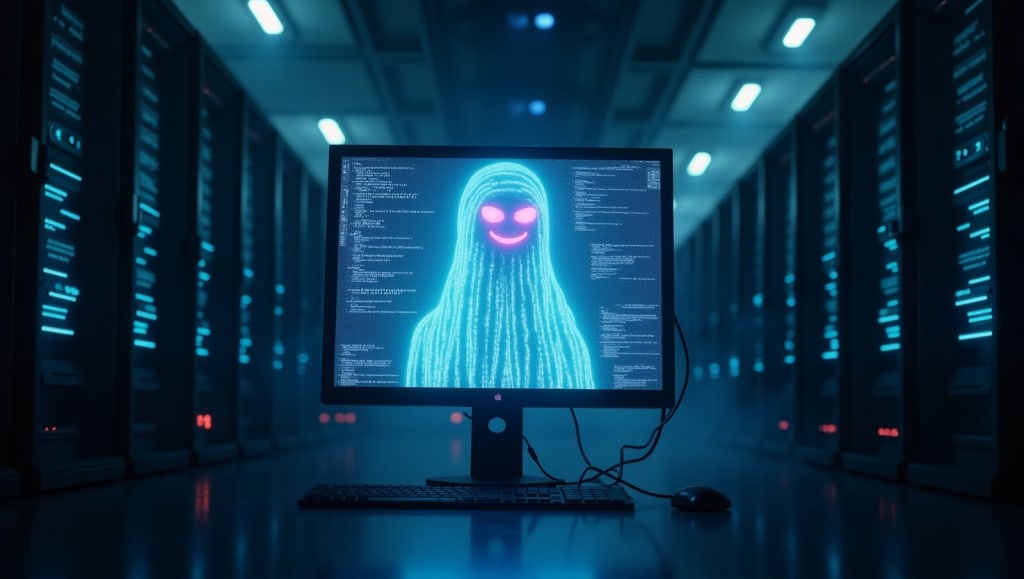
It arrived not with a bang, but as a silent, chilling email to Noah’s personal account. The subject line was stark: VERITECH - BREACH OF CONTRACT & INTELLECTUAL PROPERTY THEFT.
The body was a masterpiece of corporate venom. It detailed his unauthorized use of company servers for "Operation Ghost Revival," citing massive computational costs and the theft of proprietary data-modeling techniques. The ultimatum was simple: Return to VeriTech, sign a stricter NDA, and develop a new, more invasive predictive model for two years, or face a lawsuit that would financially obliterate him and anyone "complicit in the conspiracy," a phrase that hung in the air like a threat aimed directly at Elena and her bookstore.
The color drained from Noah’s face. He showed Elena the email, his hand trembling. The vibrant life of the shop seemed to mute around them, the laughter now sounding distant, the bookshelves feeling like walls closing in.
“They can’t do this,” Elena whispered, but the fear in her eyes betrayed her words. She saw the weight of it crush him—the guilt of his past actions returning to sabotage their fragile future.
“They can,” Noah said, his voice hollow. “They own every line of code I wrote there. They own the *electricity* I used to run the simulation. I was arrogant. I thought I could outsmart them, but I just gave them a leash to drag me back. Or…” He couldn’t finish the sentence. Or destroy us.
That night, the bookstore felt different. The warm glow of the lamps seemed to fight a losing battle against the oppressive darkness outside. They sat amidst the stacks, a bottle of wine between them, not speaking. The ghost wasn’t in the code anymore; it was in the silence between them.
“You should go back,” Elena said finally, the words tasting like ash. “It’s the only way.”
Noah looked at her, truly looked at her. He saw the sacrifice she was offering, the willingness to let him go to protect the dream he’d helped rebuild. And in that moment, the algorithm in his mind, the one that always sought the path of least resistance, the most logical outcome, finally, completely, shut down.
“No,” he said, the word simple and solid.
“Noah, be rational. They’ll ruin you.”
“I was rational my whole life,” he said, leaning forward, a new fire in his eyes. “I quantified, I predicted, I optimized. And it led me to the most statistically improbable, illogical, beautiful thing I’ve ever known. This.” He gestured to the shop, to her. “Fighting for this isn’t irrational. It’s the first truly human decision I’ve ever made.”
He stood up, pacing before the History section. “They think they own my mind because they own my old code. But they don’t own my choices. They don’t own my why” He stopped, a slow, determined smile spreading across his face. It was the look he used to get when he was on the verge of a breakthrough, but this was different. This was warmer. “They want a lawsuit? Fine. But we won’t fight them on their terms. We won’t fight about data.”
The next morning, Noah didn’t go to a lawyer. He went to a carpenter. Then to a graphic designer. Elena watched, a bewildered hope budding in her chest as he orchestrated his counter-attack, not with code, but with wood and ink and community.
A week later, a VeriTech lawyer, a woman in a sharp suit that screamed expense, arrived at Pages & Prose to serve formal papers. She stopped short on the sidewalk. The entire front window, once displaying carefully arranged first editions, was now a breathtaking mural. Painted in elegant, old-fashioned script was the entire text of the First Amendment, focusing on the right to assembly and petition. At the bottom, it read: **"Our stories are not your data. Our community is not your product.
Inside, the shop was packed. But no one was browsing. They were talking, debating, sharing stories. In the center of the room, where the Poetry shelf had been, was a beautiful, hand-crafted wooden kiosk. At its top was a tablet, but it wasn’t running a complex algorithm. It ran a simple, open-source poll.
What should our neighborhood protect?” the screen asked.
Options flashed: Local Businesses? Privacy? Authentic Connection? History
People voted. The results grew in real-time, a beautiful, chaotic, human graph of desire and fear.
The lawyer stared, her legal documents feeling absurd and irrelevant. This wasn’t a battlefield she understood.
Noah approached her, not as a coder, but as the co-owner of a community hub. “You can sue me,” he said calmly, his voice carrying through the quiet room. Everyone was listening. “You can try to own the past. But this?” He pointed to the kiosk, to the people. “This is the present. And you can’t litigate against a community remembering what it values. Tell your bosses their lawsuit is a prediction. And like all predictions about human hearts, it’s probably wrong.”
The story exploded. Not as a tech scandal, but as a human one. “The Bookstore That Fought Big Tech With the First Amendment.” News vans parked next to the poet’s stool. The kiosk, dubbed the “Town Pulse” by locals, became a permanent fixture, a place for people to voice hopes and concerns, utterly useless for data mining, priceless for connection.
VeriTech, faced with a PR nightmare that no algorithm could spin, quietly dropped the lawsuit. They couldn’t fight a symbol.
Months later, on a crisp autumn evening, Noah and Elena closed the shop. The last customer left, the bell chiming softly. They stood together in the quiet gloom, the only light coming from the “Town Pulse” kiosk, its screen glowing with a simple, rotating message: You are here. You are known. You belong.
Elena leaned her head against Noah’s shoulder. “You saved it again,” she murmured. “Not with a big, flashy hack. But with this.”
“We saved it,” he corrected, wrapping an arm around her. “I just applied a new language. One you taught me. The language of stories, of place, of people.”
He turned her to face him. “The algorithm was a ghost, Elena. A echo of a self I thought I was supposed to be. You…” He cupped her face, his thumb tracing her cheek. “You made me real. You are my root truth. My only necessary code.”
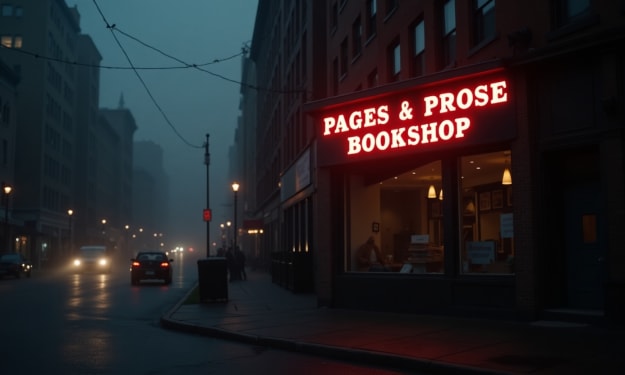
This time, their kiss wasn’t a shocking jolt or a desperate collision. It was a slow, deep, and perfectly synchronized read-write function between two hearts that had finally found their permanent, unhackable connection. Outside, the neon sign of Pages & Prose burned bright against the Brooklyn night, a steadfast beacon in the digital storm, proof that the most powerful networks are not made of fiber optics, but of fragile, beautiful, human pages, endlessly being written by hand.


Comments
There are no comments for this story
Be the first to respond and start the conversation.