


The wind howled across the frozen slope of Kholat Syakhl—the Mansi people's "Dead Mountain"—as the last rays of twilight disappeared behind the jagged peaks of the northern Ural Mountains. It was 5:00 PM on February 1, 1959. Inside a hastily erected tent, nine young Soviet hikers huddled together, documenting their journey in journals and photographs, unaware they were making their final entries.
Igor Dyatlov, a 23-year-old radio engineering student and the group's leader, had organized this expedition as part of a training exercise for an ambitious trek planned for later that year. The group consisted of eight men and two women, all experienced skiers and hikers from the Ural Polytechnic Institute in Sverdlovsk (now Yekaterinburg). One member, Yuri Yudin, had turned back days earlier due to health issues—a decision that saved his life.
The remaining nine—Igor Dyatlov, Zinaida Kolmogorova, Lyudmila Dubinina, Alexander Kolevatov, Yuri Doroshenko, Nikolai Thibeaux-Brignolle, Rustem Slobodin, Yuri Krivonischenko, and Alexander Zolotaryov—continued their journey through the harsh winter landscape.
Their last known photographs showed smiling faces and camaraderie. Their diaries detailed normal hiking challenges. Nothing suggested the terror that was to come.
When the group failed to return by February 20, search parties were dispatched. On February 26, 1959, at 3:13 PM, rescuers found their tent on the slope of Kholat Syakhl. What they discovered defied explanation.
The tent had been cut open from the inside. Nine sets of footprints led away from the shelter—some barefoot, some wearing only socks, others with a single shoe. The hikers had fled into sub-zero temperatures without proper clothing. Something had terrified them so profoundly that they chose certain death from exposure rather than remaining in their tent.
The first two bodies—Doroshenko and Krivonischenko—were found under a cedar tree 1.5 kilometers from the tent. They were barefoot and dressed only in underwear. Wood from the tree had been broken up to 5 meters high, and the men's hands were cut and scraped from attempting to climb it. The remains of a small fire lay nearby.
Three more bodies—Dyatlov, Kolmogorova, and Slobodin—were found at intervals of 300, 480, and 630 meters between the tree and the tent. Their postures suggested they had been attempting to return to the tent when they succumbed to hypothermia.
It wasn't until May 4, 1959, when the snow began to melt, that the remaining four hikers were found in a ravine 75 meters from the cedar tree. Their injuries were horrific.
According to the official autopsy dated May 9, 1959, Thibeaux-Brignolle had suffered massive skull trauma. Dubinina and Zolotaryov had multiple broken ribs. Most disturbing of all, Dubinina's eyes and tongue were missing.
The Soviet investigator, Lev Ivanov, wrote in his report dated May 28, 1959: "The cause of death of all hikers was hypothermia, however, the brutal injuries of several victims cannot be explained by natural forces."
The case was classified and abruptly closed by Soviet authorities on May 28, 1959. The official conclusion stated: "The cause of death was an unknown compelling force which the hikers were unable to overcome."
For decades, the incident remained shrouded in secrecy, fueling theories ranging from avalanches to government experiments, military weapons testing, infrasound-induced panic, or encounters with the paranormal. Some locals pointed to the Mansi legends of vengeful spirits that guarded the mountain.
In the early morning hours of January 25, 1959—just days before the incident—observers from Ivdel and adjacent areas reported strange orange spheres in the night sky over the mountains. The sightings were documented in the archives of the Central Committee of the Communist Party of the Soviet Union's report #2866, filed February 17, 1959.
When the case files were partially released in the 1990s, researchers discovered that radiation levels on some of the victims' clothing were abnormally high. Military personnel had been involved in the search operations, and some photographs were missing from the hikers' cameras.
Records revealed that lead investigator Ivanov had confided to his son before his death in 1990: "I have been ordered to close the case and classify the findings. The hikers died because they had witnessed something they were not supposed to see."
Yuri Yudin, the sole survivor who had turned back early, visited the memorial to his friends every year until his death in 2013. In his last interview, he said: "I've spent my life trying to understand what happened that night. Sometimes, it's better not to know."
At 7:05 PM on February 1, 2019—exactly 60 years after the estimated time of the incident—a monument was unveiled at the Mikhajlov Cemetery in Yekaterinburg where most of the hikers are buried. The plaque reads simply: "In memory of those who left and never returned."
In 2019, Russian authorities reopened the investigation. Their conclusion, announced on July 11, 2020: an avalanche had likely forced the hikers from their tent, and hypothermia did the rest. But this explanation fails to account for the radiation, the crushed skulls, the missing eyes and tongue, or why experienced mountaineers would cut their way out of a tent rather than using the entrance.
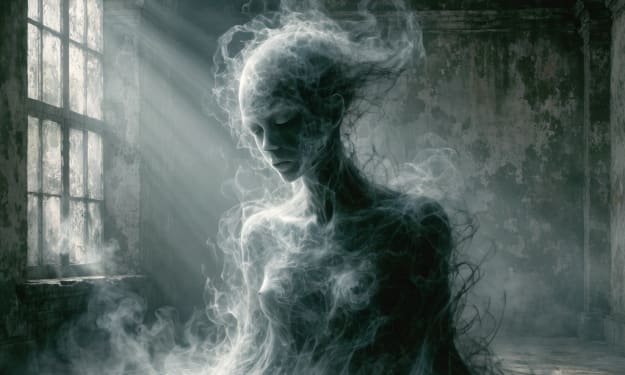
The shadows of nine hikers still move across the snow of Kholat Syakhl. Their story remains one of the most chilling unsolved mysteries of the 20th century—a reminder that even in our modern world, some questions may be better left unanswered.



Comments (2)
Great, actually I was unknown to this. Thanks for sharing
Wow! What a scary incident !