
The Devil at Kuldhara Based on the real abandoned village of Kuldhara, Rajasthan, India.
Some villages are abandoned. Others are claimed.

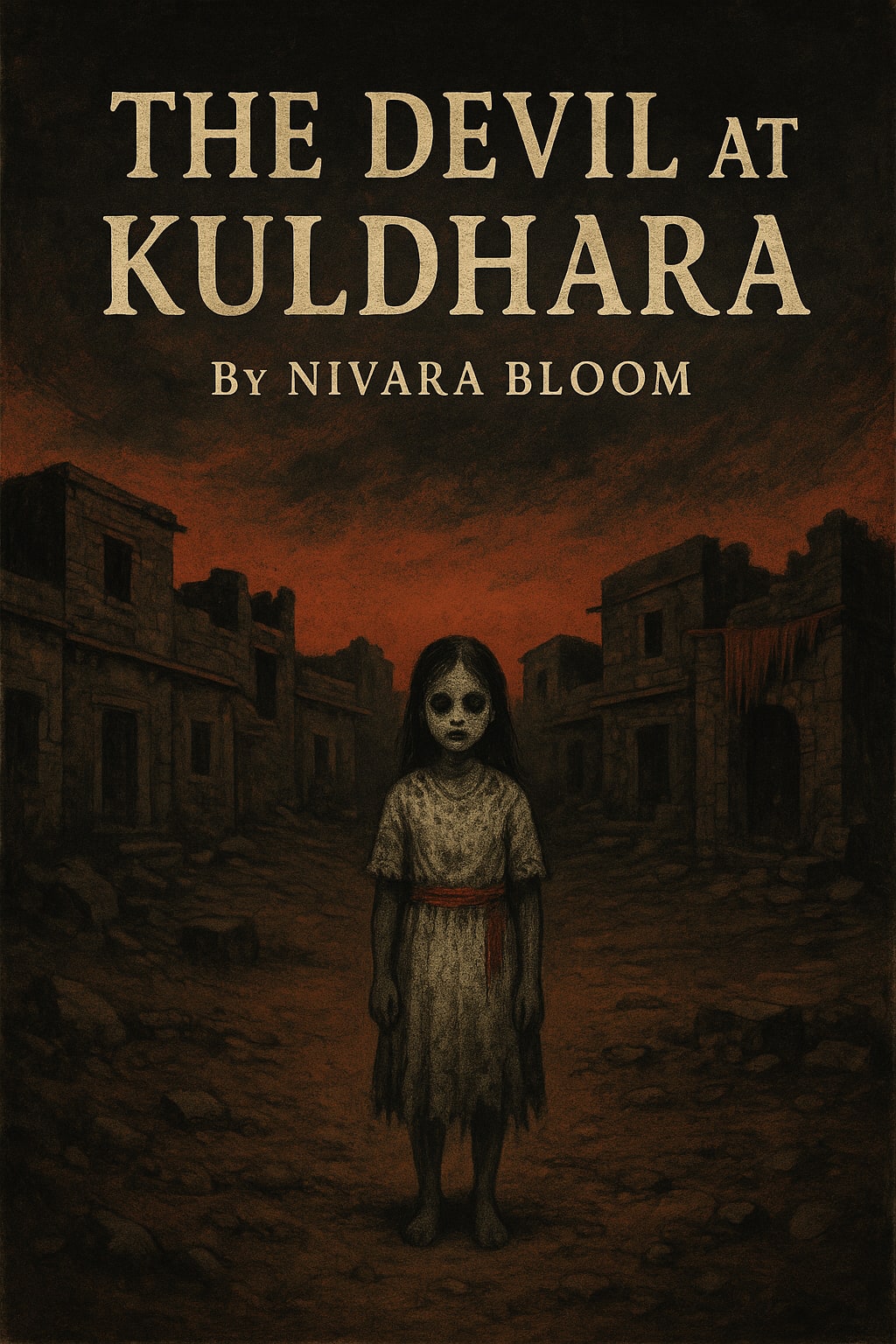
The Devil at Kuldhara
Based on the real abandoned village of Kuldhara, Rajasthan, India.
They say no one has lived in Kuldhara for over 200 years. Not since the villagers vanished overnight — every door left ajar, every pot left boiling, and not a single trace of struggle. Just silence.
But that's not the terrifying part.
The terrifying part is why no one dares return.
Anjali hadn’t believed in ghost stories. A PhD candidate from Delhi, she specialized in archaeology and oral histories. Legends were tools, she’d say — myths created to explain politics, trauma, and power. So when her advisor suggested she document the story of Kuldhara, she agreed with an eager smile and a rational mind.
“Camp inside the village for three nights,” he told her. “Local guides won’t stay after dark. Use that.”
She brought a tent, cameras, a small drone, and her notebook. The village was just as abandoned as the photos had shown — sandstone ruins stretching beneath the desert sky, wind howling through broken arches like voices lost to time.
The first night, she pitched her tent near the remains of the village square. By day, the sun made everything golden and warm. But after sunset, the air turned sharp. Cold. Still.
At midnight, she heard it.
Footsteps.
Soft. Bare. Walking slowly along the sand outside her tent. Her breath caught. She turned off her flashlight and listened.
Crunch... Crunch...
Then a voice — high and childlike — whispered, "Paani... please... give me paani..."
She flung open the tent flap.
No one was there.
She laughed it off. Auditory hallucinations, maybe. The desert played tricks. It was fine. It was explainable.
But she didn’t sleep that night.
Day Two: She explored further. Drone footage showed strange symbols drawn in the sand — circles with slashes through them. Old Rajasthani script, half-erased. Her notebook filled with notes about a 19th-century tax lord named Salim Singh who had tried to forcibly marry a girl from the village. The villagers had refused — and cursed the land as they fled.
“Folklore,” she wrote. “No records confirm the girl ever existed.”
That night, her drone crashed mid-flight. The video feed froze on a single image before it cut to static: a little girl standing on a rooftop — barefoot, staring directly into the camera, her eyes pale and clouded.
Anjali rewound the footage.
The girl was gone.
Night Two was colder. The wind screamed. And the smell changed — no longer dry sand and camel dung, but something else.
Rotten milk. Burnt cloth.
She lay frozen in her sleeping bag, gripping her flashlight like a weapon.
Then came the knocking.
Not on her tent — but on stone. Rhythmic, steady.
Knock. Knock. Knock.
She followed it.
The sound led her to an old well at the edge of the village. It had long since dried up. But inside it — dozens of handprints lined the inner wall, small and smeared as if children had tried to claw their way out.
A whisper floated up.
"She never left."
Anjali ran.
Day Three, she tried to leave.
Her car wouldn’t start.
Battery drained. GPS dead. Phone showing static.
The sun blazed hot again, but the village was different. The ruins looked… newer. As if they were no longer ruins. A few houses had roofs now. A red cloth fluttered on a doorframe.
There were footprints in the sand — fresh.
She turned in circles.
Was she still alone?
That night, she didn’t sleep. She recorded herself talking aloud — hoping to capture proof, to ground herself.
Midway through the video, her voice dropped out.
In its place, another voice whispered from behind the camera:
"Why did you come back?"
The recording cut to black.
Sometime before dawn, she heard the sound of anklets — the soft chhan-chhan of tiny bells approaching.
She stepped outside, holding her flashlight tight.
There — standing just beyond the circle of light — was the girl.
Dressed in white. Face bruised. Lips cracked.
Eyes white as moonstone.
Anjali whispered, “Who are you?”
The girl pointed behind her.
And from the shadows, a dozen more figures stepped forward — children, women, old men — all burned, bruised, broken. All silent.
Then came him.
A tall man, back arched, face shadowed under a turban. His eyes glowed red, and where his hands touched the stone walls, they cracked.
Salim Singh.
The legend.
Real.
He grinned.
“You opened the door,” he said. “You let us speak again.”
Anjali screamed and ran.
But the village had changed. The streets twisted. Every path led back to the same square.
And in the center of it, the well bubbled.
Not with water — but blood.
They found her three days later.
Wandering barefoot on the highway miles from the village. Her feet were blistered. Her lips sunburned and cracked.
She didn’t speak for weeks.
When she finally opened her mouth, the only words she said were:
“They weren’t gone. They were waiting.”
Her footage was never released.
But locals say if you visit Kuldhara now, you’ll find a new handprint on the wall of the well.
Smaller than the rest.
Fresh.
Kuldhara remains cursed.
They say no one who stays past midnight leaves untouched.
And sometimes, late at night, if the wind is just right, you can hear anklets in the sand.
And a child’s voice, whispering:
“Paani... please... give me paani...”
About the Creator
Dr nivara bloom
Dr. Nivara Bloom writes from the heart, blending emotion, mystery, and meaning into every story.
Keep reading
More stories from Dr nivara bloom and writers in Horror and other communities.
A Mother's Lullaby Never Dies horror story.
Cradle Songs for the Forgotten A Mother's Lullaby Never Dies By [Dr. Nivara Bloom] The wind sang tonight. Not the kind of melody that calms you. No. This wind carried something old. Something broken. Something that hummed lullabies only forgotten children remembered.
By Dr nivara bloom8 months ago in Horror
THE SILENCE BENEATH ASHWOOD HOUSE
No one in Graymoor spoke of Ashwood House without lowering their voice. It stood at the far edge of town, where the road cracked and dissolved into weeds, where the fog came early and left late, clinging to the earth like a warning. The house had been abandoned for thirty years, yet every window remained intact, every door closed—as if someone still cared enough to keep the world out.
By Ahmed aldeabella6 days ago in Horror
The steps to losing a child
Step One: Lose a child. Not what anyone wants to happen and nothing you can do to change it, but you can go through steps to becoming happy again. You can go through steps to loving again. You can go through steps to become a new you because after losing a child you will never be the same person you once were.
By Tabitha Hinkley3 days ago in Fiction


Comments
There are no comments for this story
Be the first to respond and start the conversation.