
The Devereaux Deaths
The sea has always taken its due from the Devereaux line.

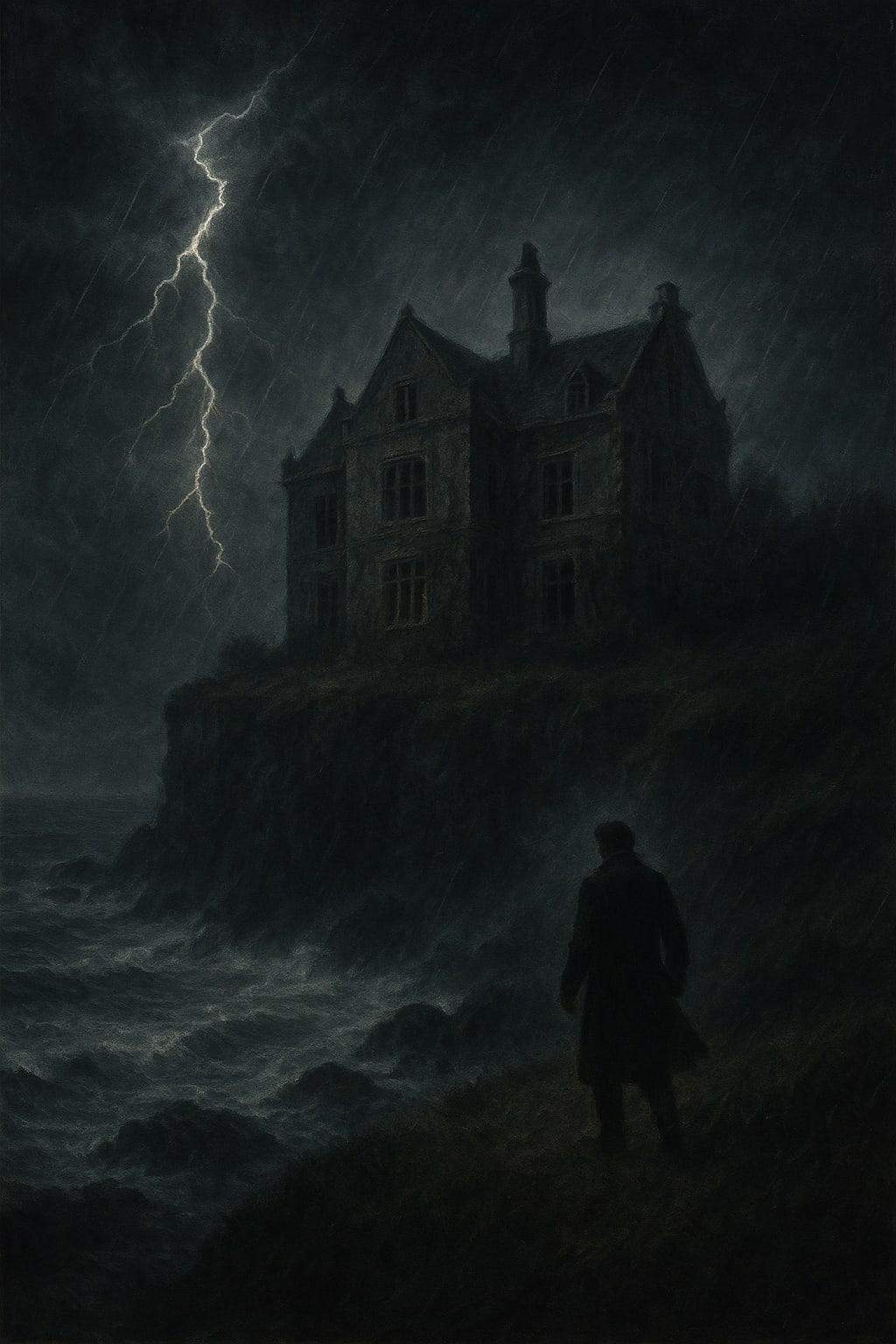
They say it began in 1694, when Captain Jonathan Devereaux, lord of the windswept estate in Cornwall, returned from the Indies with a fortune carved in blood and betrayal. He had stolen from friend and foe alike, selling cargo that was not his and leaving shipmates to rot in foreign waters. But his greatest sin was darker still: a betrayal of his own brother, whom he left stranded on a reef to drown, while Jonathan sailed home alone with the gold.
On the night of his return, the Cornish coast rose in storm. Fishermen swore the sea itself howled his name. By morning, Jonathan Devereaux’s body was found smashed upon the rocks below his manor cliffs, the salt water lapping gently at his pale lips. Some say they heard a voice in the gale that night — a woman’s voice, chanting: “Blood to water, son to sea. Forever shall it be.”
From that night forward, no Devereaux heir would live to see old age.
The curse wove itself into their lineage like ivy through stone.
In 1741, Jonathan’s grandson Thomas, a proud young man of twenty-two, was to inherit the manor. On the eve of his inheritance, he was found facedown in the estuary mud, lungs brimming with brine. He had never learned to swim.
In 1803, another heir, William Devereaux, laughed off the family superstition. He took his hunting party along the moors near the sea cliffs, boasting he would prove the curse false. The storm came sudden and merciless, and before the eyes of his men, William’s horse reared and cast him into the waves. His body was never found — only his hat, lodged in a jag of black stone where the tide foamed white.
By 1862, the locals spoke of the manor only in whispers. Curtains were kept drawn at night; children were warned never to wander near the Devereaux grounds. That year, Edward Devereaux — who had grown frail and pale, haunted by whispers in the walls — locked every window and shutter in the manor. Still, one storming midnight, the servants awoke to the sound of water pouring down the grand staircase. They found Edward sprawled at the landing, hair soaked, mouth filled with seawater. The doors remained locked from within.
No Devereaux burial passed without the hiss of waves in the distance, as though the tide itself came to collect.
The last heir was Henry Devereaux, in 1921.
He was a scholar, a thin, nervous man who lived alone in the crumbling estate, spending his days among salt-stained books and brittle family records. He did not drink, did not ride, did not venture to sea. He believed knowledge could unmake the curse.
Henry poured over maps, ship logs, faded diaries — until he came across the account of Jonathan’s betrayal in 1694, written in his own hand. But in the margins, in ink not his own, appeared words that chilled Henry’s marrow: “Blood to water, son to sea.”
The handwriting, neat and cruel, seemed fresher than the rest.
The servants begged him to leave the manor, to abandon Cornwall altogether. But Henry refused. On storm nights he would climb to the highest room in the house, lantern in hand, staring out to sea as though daring it to claim him. “It cannot take me if I do not give myself,” he whispered once, though no one dared ask what he meant.
On the final night, the storm was worse than any before. Lightning fractured the sky; waves rose higher than the cliffs. The servants, huddled in the kitchen, swore they heard the sound of footsteps overhead, pacing, pacing, pacing. Then silence.
When dawn broke, Henry was gone. His bed was unslept in, his lantern extinguished on the window ledge. But on the sea-facing cliffs, in the sodden grass, lay his slippers. No footprints led away.
The body was never recovered.
The Devereaux manor stands empty now, its windows gaping like sockets, its staircases swollen with damp. The villagers avoid its shadow, though they sometimes speak of it in hushed tones at the tavern when the nights run long. Some say they hear the sound of dripping water when they pass the gates. Others claim a woman’s voice rides the wind during storms, reciting her vow: “Blood to water, son to sea.”
The family line has ended. Yet the sea waits, patient and eternal. And on nights when the tide gnaws too hungrily at the cliffs, some swear they glimpse pale figures in the foam — men with the faces of long-dead Devereaux heirs, forever drowning, forever pulled beneath.
The curse, they whisper, is not broken. It only sleeps, waiting for another bloodline to cross its path.
About the Creator
E. hasan
An aspiring engineer who once wanted to be a writer .
📢 Raise Your Voice Thread: 03/05/2026
Our “Raise Your Voice Threads” are hosted most alternating Thursdays at 12PM ET to offer creators more avenues to uncover exceptional stories on Vocal. As we are continuously searching for fresh creators and inspiring stories, this thread provides an opportunity to exchange and discuss the stories that have moved and motivated us on Vocal.
By Raise Your Voice by Vocal6 days ago in Resources




Comments
There are no comments for this story
Be the first to respond and start the conversation.