
The Day the Light Went Missing
A tale of shadows, silence, and a sky that lost its way without the sun to guide it.

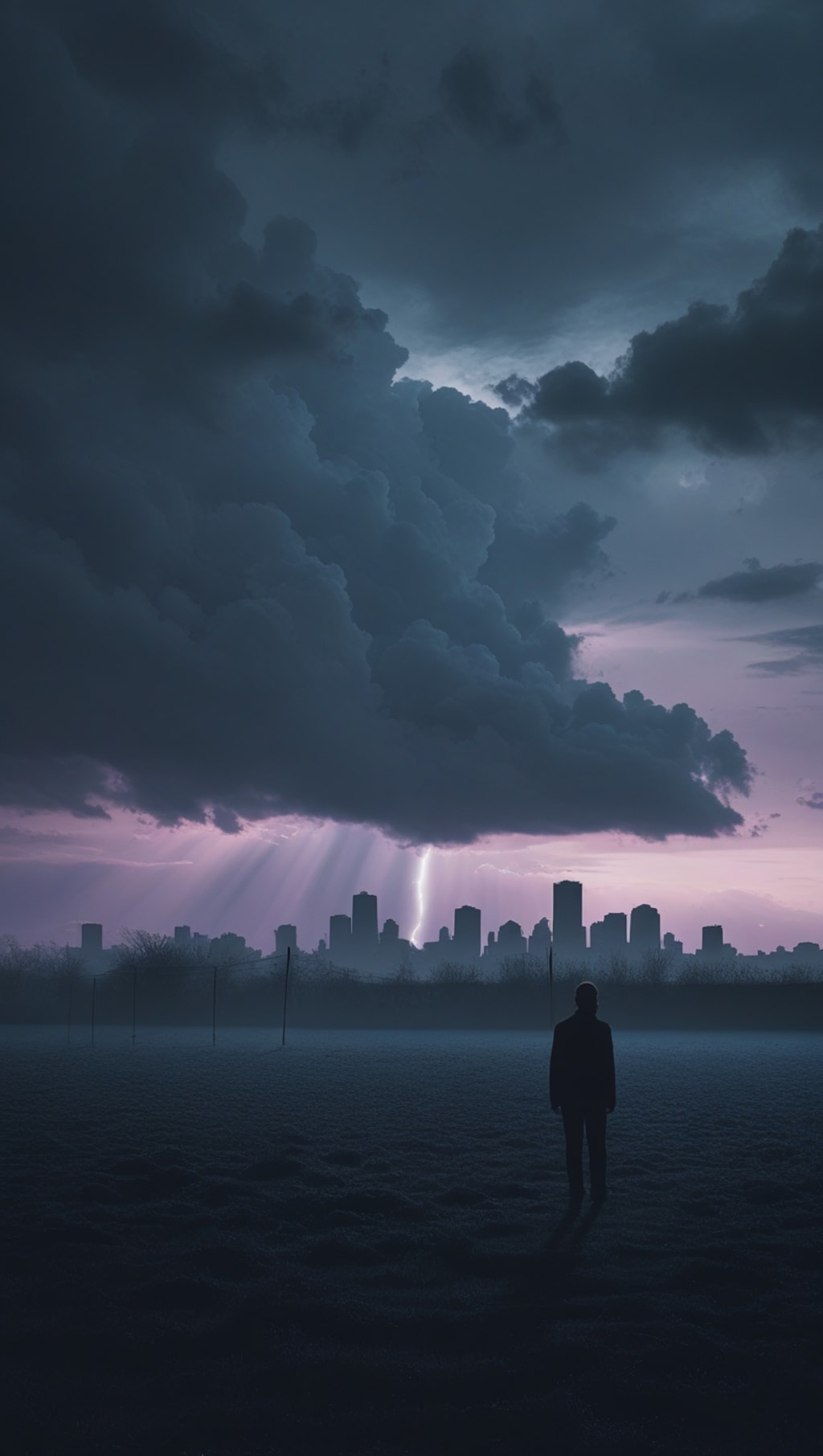
There came a morning when the sky woke, but the sun did not.
No brilliant beams reached out across the horizon. No golden warmth pressed against the cheeks of mountains or rooftops. The sky, usually a canvas painted in soft orange and pink, opened its eyes to gray, unsure of where its light had gone.
That was the day the world grew quieter. Not silent—just subdued. As if even the birds forgot their songs, and the trees swayed not with joy but with solemn purpose. It was not stormy, nor cold, nor frightening. Just... absent. The kind of emptiness that doesn't howl or scream, but lingers like a forgotten memory.
It was the day the sky forgot the sun.
The Disappearance
At first, no one noticed. People rushed out with coffee cups and tired eyes, caught in the chaos of their routines. But as hours passed, they looked up with knitted brows. Something was wrong, they said. Not wrong like danger—wrong like absence. Like missing someone you didn’t know you needed.
Children pointed at the sky, confused. "Where’s the sun gone?" they asked. Their parents glanced up and shrugged. "Just cloudy," they replied. But even that explanation felt thin. It wasn’t cloudy. It was something else. The sky wasn’t covered—it was forgotten.
And so the whispers began. Maybe it was a sign. Maybe it was punishment. Maybe the sun simply tired of shining for a world that rarely looked up to thank it.
Life in the Dimness
The light, even when absent, had left behind a memory. People moved more slowly under the muted dome of gray. Some didn’t notice the change at all. Others couldn’t stop noticing. Without sunlight, shadows took on new weight—not ominous, but deep. A park bench without a shadow looked exposed. A tree without golden light seemed skeletal.
It was strange how light defined shape, how warmth defined mood, how the sun gave the sky its rhythm. Without it, time felt flat. Mornings blended into evenings, and no one could quite say when the day had ended or begun. Clocks ticked, yes, but the heart of the world—the sun—had gone missing.
Still, life went on. It always does.
Cafés remained open. Trains still ran. Emails were still sent, groceries still bought. But laughter was rarer, and eyes were often turned downward. The absence of light didn’t cause panic. It caused reflection.
A Sky in Mourning
For centuries, poets wrote of the sky as a lover of the sun, forever chasing it from dawn to dusk. Perhaps that was true. Because now, with the sun gone, the sky seemed lost. As if it had forgotten not just the sun—but itself.
Clouds no longer played tag in bright blues. The stars, veiled behind layers of gauze, blinked weakly at night. The moon tried to comfort the sky, showing up fuller and brighter than before, but it was a borrowed light. The moon was a mirror. The sun was the flame.
And the sky, in its vastness, missed the fire.
The People Who Looked Up
Not everyone forgot to wonder.
There were a few—quiet souls—who began to make it their daily ritual to look up and simply sit with the absence. Some wrote poetry about the stillness. Others painted skies that weren’t blue. One child drew a yellow circle and taped it to his bedroom ceiling. “So the sky won’t forget what the sun looked like,” he said.
Elders spoke of past eclipses, temporary darkness, nights longer than days. But this was different. This wasn’t a celestial event. This felt personal.
Lessons in the Dim Light
In the absence of the sun, other lights began to matter more.
People lit candles for no reason. Street lamps stayed on longer. A neighbor hung string lights in their window and left them glowing all night. And slowly, hearts that had been hidden in shadows began to shine—quiet acts of kindness, shared meals, warmth passed from person to person.
Without the dominating brilliance of the sun, smaller lights had room to glow. Perhaps that was the lesson. In the sun’s absence, humanity was invited to shine.
The Return
No one could say exactly when it happened.
It wasn’t dramatic. No trumpet of light. No sudden flare. Just a gentle shift. One morning, the sky opened its eyes, and there, beyond the gray, a warm amber pulse stretched across the horizon. Not bright yet—just a promise.
A golden thread tugged at the clouds, and a familiar warmth kissed the tips of rooftops and tree branches. Birds began to sing, tentative at first. A mother smiled at her child, who pointed upward, whispering, “The sun came back.”
And the sky, weary from its long forgetting, welcomed its old friend without fanfare—but with unmistakable relief.
Afterlight
The world changed in small ways after that.
People noticed sunrises again. They sat by windows and bathed in the warmth they used to ignore. The boy who taped a sun to his ceiling took it down, but not before drawing one for every room in his house. Just in case.
The sky never forgot again. And neither did we.
We learned that sometimes, we don’t see what we depend on until it’s gone. That light isn’t just brightness—it’s meaning. It’s rhythm. It’s life.
And when the light goes missing, the soul learns how to wait—and how to welcome it back with wonder.
Because the sky forgetting the sun isn’t just about weather.
It’s about us. And what we do with the shadows.
About the Creator
Keep reading
More stories from Habibullah khan and writers in Horror and other communities.
The Rail Reaper
There are places in the world where time seems to stand still. Forgotten towns, derelict train yards, overgrown tracks winding into the mist — haunted not by ghosts, but by something older, darker, and far more deliberate. In The Rail Reaper: Death Rides the Tracks, these liminal spaces become the hunting ground of a myth reborn in iron and fire. The Rail Reaper is not just a killer. He’s a reckoning.
By Habibullah khan 10 months ago in Horror
The Vanishing Lighthouse Keepers
The Flannan Isles Lighthouse stands on the largest of a group of remote islands in the Outer Hebrides of Scotland, built in 1899 to warn ships away from dangerous rocks that had claimed countless vessels over the centuries, and it was staffed by teams of three lighthouse keepers who rotated in shifts to maintain the light and keep detailed logs of weather conditions and everything that occurred during their watch, following strict protocols established by the Northern Lighthouse Board that governed every aspect of their duties and responsibilities. On December 26, 1900, the relief vessel Hesperus arrived at the island to bring supplies and rotate the keepers, but when Captain James Harvey approached the landing area, he immediately sensed something was wrong because there was no flag flying on the flagpole as there should have been, no storage boxes waiting on the platform for the supplies being delivered, and no keepers waiting at the landing to help secure the boat and unload the cargo as protocol required, and when he sounded the ship's horn repeatedly and fired a flare to signal their arrival, there was no response from the lighthouse despite the fact that someone should have been on duty and watching for the relief vessel.
By The Curious Writerabout 20 hours ago in Horror
The First Rainbow Baby
Pitter-patter, pitter-patter. The rain fell in rhythmic splatters, slowly slowing, but still constant. Mira rolled onto her side pulling the blanket tight against her ears, but still she could hear chitter-chatter and scurrying feet of the creatures that refused to sleep in the lower decks.
By A. J. Schoenfelda day ago in Fiction


Comments
There are no comments for this story
Be the first to respond and start the conversation.