
The Cursed Five-Storey Mansion: Unmasking Penang's Shih Chung School Hauntings
How a tycoon’s dream palace became a WWII house of horrors – and why its ghosts still walk today


Shih Chung Branch School's destroyed hulk rests like a shattered monument along Northam Road, George Town, Penang—a faded silhouette against steel skyscrapers, where colonial bricks are smothered by vines and shadows cling with an unnatural stubbornness. To locals who park their cars to eat dim sum at Fu Er Dai, it's a run-down eyesore. To ghost hunters and historians, it's Malaysia's most haunted site, where 130 years of glory, revolution, and unimaginable tragedy have made their indelible mark on recollections even time can't wipe away.
A Palace Rises and Falls (1880s–1915)
We start in splendor. Hokkien tycoon Cheah Tek Soon constructed Penang's first five-storey building—a sumptuous fusion of European columns and Chinese craftsmanhip known as Goh Chan Lau (Five-Storey Bungalow) in the 1880s. It was Penang's mercantile elite, entertaining in its gardens with grand parties over the straits. But fortune shifted in 1908 when Cheah's family sold it to fund Dr. Sun Yat Sen's Chinese Revolution—a symbolic transaction, considering that the buyer, Tye Kee Yoon, was the Manchu dynasty's vice-consul. Why would a loyalist fund his enemies? The mystery persists.
Tye's ownership plunged the mansion into chaos. Between 1910–1915, it experienced five consecutive failed hotels: Bellevue Boarding House, Raffles-by-the-Sea, Hotel Norman, and others. Each rename was evocative of desperation—perhaps haunted by poor feng shui or financial mistakes. People joked it was "a building money forgot."
War's Descent into Darkness (1941–1945)
The building was occupied as Pi Joo Girls' School (1915–1920) and later as a government English school. But in 1938, as Shih Chung Branch School, it experienced its darkest hour. Japanese forces invaded Penang in 1941, and soldiers commandeered the building as their administrative HQ. Rumors of atrocities included: the basement was utilized as a torture chamber where prisoners were subjected to interrogation, execution, and burial on site. Former students recalled a spooky coffin hidden in a locked third-floor room—a gruesome souvenir some blamed on war atrocities.
"During Japanese occupation, the basement was allegedly used as a prison. but there's little to establish whether it is," admits a relative of the headmaster of the school. But the lack of evidence triggers imagination; trauma lingers in collective memory.
Ghosts in the Ruins: Evidence from the Edge
After reopening as a school in 1950, Shih Chung lived under a shadow until its closure in 1994. Degradation and ghost stories have become interwoven ever since:
Ghostly Phenomena: Visitors go and hear marching boots, tormented cries, and sobbing sounds from abandoned classrooms—sounds linked with war tragedy.
Physical Phenomena: Explorers report experiencing sudden dizziness, nausea, or "icy fear" near the remains—sensations vanishing after departure. One blogger documented having been "grasped by unseen hands.".
Visual Hauntings: Shadow figures dressed in Imperial Japanese uniforms wander through ravaged corridors. A Hong Kong ghost-hunting TV team allegedly captured EVPs (electronic voice phenomena) here.
Cultural Hauntings: Older Penangites avoid the site, speaking of "restless souls." As one Facebook user wrote, "Everything is News Until Disproven" and went on to add, "My grandparents swore the Japanese never left the basement".
Table: The Many Lives of Shih Chung Branch School
Era Role Crucial Events
1880s–1908 - Cheah Family Mansion - Architectural gem; social hotspot
1908–1915 - Hotel Roulette - 5 failed businesses; "cursed" reputation
1915–1941 - Educational Haven - Girls' school, then Shih Chung Branch
1941–1945 - Japanese Military HQ - Torture rumors; presumed executions
1950–1994 - Post-War School - Coffin sightings; declining student population
1994–Present - Abandoned Ruin - Ghost tours; unsuccessful redevelopment
Why the Hauntings Continue
The skeptics blame the decline of the building: mold spores, creaky floors, and bat infestations may be confusing. But the prevalence of disasters—especially WWII—raises more serious ones. Paranormal researchers point to unresolved trauma, proposing violent deaths "imprint" on settings. Forays to redevelop the property—such as a 2007 columbarium plan (spurned after public outcry)—only further maintain its ghostly ambiance.
Walled off beside a parking lot nowadays, Shih Chung is Penang's ghostly conscience. Its roof is in shambles, trees grow through floors, and graffiti stains walls once adorned with children's lessons. As heritage blogger Penang Hidden Gems says: "Empires fall, sometimes to rise again". Currently, though, only whispers are heard from the rubble—a reminder of history's unfulfilled agenda.
At the heart of George Town, the history and hurt echo through Shih Chung's broken windows. It remains less of a building than a warning: some memories won't rest.
About the Creator
Kyrol Mojikal
"Believe in the magic within you, for you are extraordinary."
Keep reading
More stories from Kyrol Mojikal and writers in Horror and other communities.
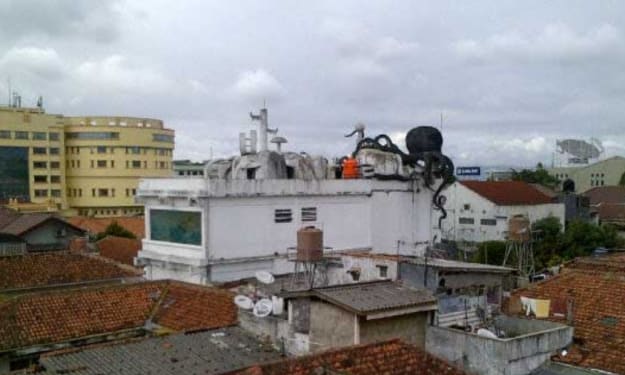
Haunted Octopus House Bandung: The True Story Behind Indonesia's "Devil's Church"
Menacingly looming over Jalan Cipedes Selatan No. 6 in Bandung, West Java, the Octopus House (Rumah Gurita) is Indonesia's one of the most strikingly visual and perpetually haunted places. The building's past and ghostly reputation have been tormenting local nightmares for decades, merging architectural peculiarity with supernatural lore.
By Kyrol Mojikal8 months ago in Horror
The Gluttony of Blackwood Manor
The Gluttony of Blackwood Manor The fog that clung to the Blackwood estate was not weather; it was breath. It sat heavy on the lungs, tasting of copper and wet ash, wrapping the Victorian spires in a shroud that never lifted, even at noon.
By The Glitch Archive5 days ago in Horror
Why Didn't Anyone Tell Us
Men, move along. This is not for you. This is for the women. I was forty-five when I began menopause. It is pretty young for that to be going on in a woman’s life, but I had undiagnosed PCOS, my entire life. Thank you to all the gynecologists I had seen my entire life. That in itself should encourage women to keep seeking second opinions, especially when you are not getting correct answers or any at all.
By Alexandra Grant6 days ago in Humans


Comments
There are no comments for this story
Be the first to respond and start the conversation.