
The Broken Life of La Llorona
The different versions of her life and what happened after them
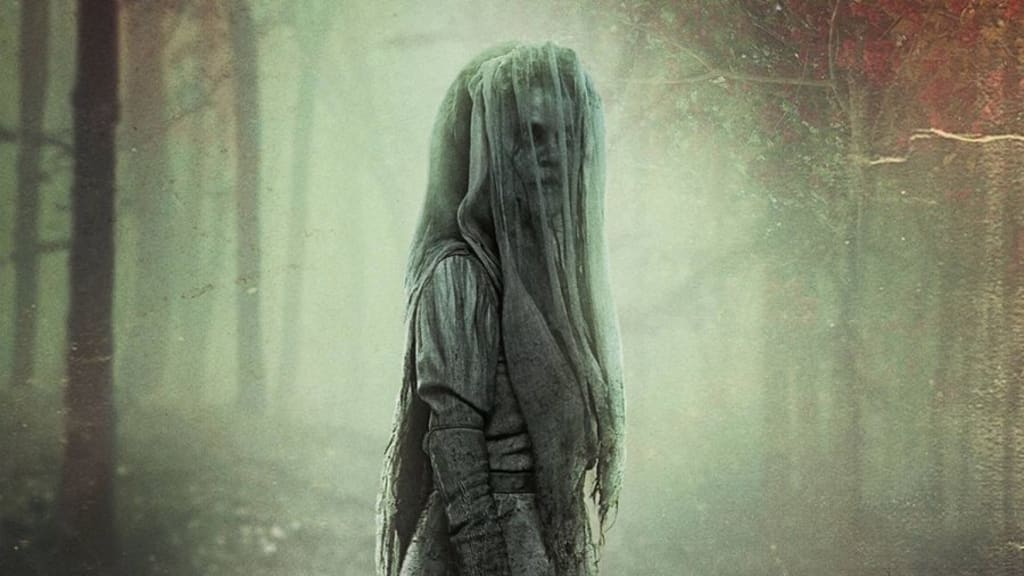
If you enjoy ghost stories, then you’re probably familiar with the idea that behind nearly every malevolent spirit or demonic entity lies a tragic story. It's a tale that explains how the spirit became bound to the Earth, cursed to haunt the living for all eternity and La Llorona is noexception to this rule.
She is a spirit that infamous for abducting and ruthlessly murdering children who misbehave or stray too far from their parents after nightfall. Dressed in a flowing white gown, she wanders the rivers and streams, wailing into the darkness, searching for children to drag into the water with their screams.
She is merciless and unyielding. If you are unfortunate enough to hear her cries in the night, you've been marked as her next victim, and she will stop at nothing to claim your soul. But who is La Llorona, really? Why does she target children, and where did her tale originate?
Before she became an evil spirit bent on harming your children, La Llorona was a woman named Maria, who was beautiful but also vain. She was born into a poor family, which could even be called humble peasants, but she was always convinced that she would escape this life by marrying a rich man. Throughout her youth and into adulthood, she had many suitors trying to win her heart, but Maria paid no attention to them until she met Armando.
He was a wealthy, handsome rancher with a wild side that couldn't be tamed, and every woman wanted him. But Maria knew exactly how to stand out among the competition—by being the one who didn't chase after him. His frustration at being ignored by such a stunning woman drove him crazy, and he did everything in his power to get her attention, from serenading her with beautiful ballads to buying her lavish gifts.
Eventually, when Maria felt she had him right where she wanted him, she finally gave in. She went on a date with Armando, and soon after, they were married. For a long time, life was perfect for Maria. She and Armando had two beautiful children, lived in a lovely home, and wanted for nothing.
But as the saying goes, all good things must come to an end. Over time, Armando started paying less and less attention to his wife, and would sometimes disappear for months, off doing who knows what. On the rare occasions he was home, he barely noticed her, focusing only on the children. Rumors soon spread that he was planning to marry another woman of higher social standing.
There are several versions of what happens next, but fair warning—none of them are pretty. In one version, Maria is walking along the river with her children when she spots Armando with another woman on the opposite bank. In another, he visits his children with his new wealthy wife, ignoring Maria entirely during the visit.
Either way, Maria is consumed with rage toward the man she once loved. To get back at him, she takes away what he cherishes most in the world—his children. In the most well-known version, Maria throws her children into the river, watching as the current sweeps them away.
But soon, she realizes the horrific mistake she’s made and desperately tries to save them. She runs along the riverbank, reaching out for their little arms in a futile attempt to rescue them, but they’re pulled under and carried away right before her eyes.
Refusing to believe they’re gone, she continues to run, searching for them until, completely drained of energy, she collapses, dead on the ground.
There exists an alternative narrative that is even more harrowing, if one can imagine it. In this version, rather than casting them aside in a moment of exasperation, she submerges them in water until they perish. In this account, Maria ultimately succumbs to despair and takes her own life, frequently by drowning in the river shortly thereafter.
Regardless of the circumstances, Maria's remains are discovered the following morning by villagers from a nearby settlement, who then dress her in white and inter her before noon. However, the tale does not conclude there, for that very night, the same villagers hear a woman lamenting by the river, crying out, "My children, my children, where are my children?" Upon investigation, they encounter a woman clad in a white dress, identical to the one in which Maria was buried.
One might wonder how this is possible; if Maria was interred, how could she be roaming in search of her children? According to the legend, when Maria reached the gates of heaven, she was denied entry because she was not accompanied by her two children. Consequently, she is condemned to wander the earth for eternity in her quest to find them.
And it seems that the file opened for her by the angels at the Ministry of Social Affairs apparently did not worry her Since the participants of the program came to the auditions by entices children away from their guardians, and when she manages to isolate them, she drags them to the river, where they struggle and scream before meeting their demise.
Their souls are then condemned to inhabit the same spirit realm as hers, alongside all the other children she has claimed in her relentless quest to substitute her own. This is the reason why, to this day, Hispanic parents recount the tale of La Llorona to their children—not merely to instill fear, but as a cautionary tale.
If you return home too late, La Llorona may seize you. If you stray from my side at any moment, La Llorona may capture you. If you neglect to eat your vegetables... you understand the implication. However, perspectives on La Llorona's targets can vary; at times, she pursues unfaithful husbands, while at other times, she targets abusive parents. It may seem somewhat hypocritical, yet we can overlook this inconsistency, as those abusive parents are deserving of whatever fate befalls them.
The records concerning the origins of this particular story are regrettably limited in scope. It is known that our narrative traces back to Mexico, with a history extending approximately 500 years to the era of the conquistadors; however, that is the extent of the information available. Despite this limitation, I have acquired considerable knowledge about the tale, including the fact that La Llorona is classified among a group of spirits known as white ladies.
This classification does not refer to the commonly misconceived notion. Although the specifics of their stories vary, white ladies are typically depicted as female apparitions dressed in white, frequently associated with rural locales and local folklore. These legends often revolve around themes of accidental death, murder, or suicide, frequently highlighting elements of loss, betrayal by a partner, or unreciprocated affection. Such narratives are prevalent across the globe.
For instance, in Malta, there exists a legend of a woman who, facing an impending arranged marriage, tragically took her own life by leaping from a balcony on her wedding day. She is referred to as the white lady, as she was adorned in her wedding gown at the time of her demise, and it is said that her spirit haunts the Verdala Palace. In the Philippines, tales of white ladies are particularly widespread, with the most renowned story centering on a woman who perished in a car accident on Balete Drive while attired in a white dress.
It is said that while driving along a road at night, one might encounter a striking woman seeking a ride. However, upon allowing her into your vehicle, you would be confronted with a visage marred by blood and bruises. If this sight does not compel you to flee from your car, attempting to transport her to her intended location will result in her vanishing into thin air before you arrive. Numerous tales of this nature originate from the Philippines, and those interested may find further information through an online search.
Returning to the tale of La Llorona, it is noteworthy that there exist other narratives that bear a resemblance to hers, though they are more aligned with Greek mythology than ghost stories.
One particular myth begins in a manner familiar to many others, with Zeus succumbing to desire. He becomes enamored with a Libyan queen named Lamia, with whom he has several children before Hera, the queen of the gods, discovers his infidelity.
In response, Hera either slays Lamia's offspring herself or transforms the unfaithful queen into a monster, forcing her to consume her own children. Upon regaining her senses and witnessing her transformation and actions, Lamia is so overcome with horror that she tears out her own eyes.
Consider this:
The last image that haunted her was that of her deceased children, leading Hera to place a curse upon her, ensuring that this vision would forever linger in her mind. The only reprieve she received came from Zeus, who bestowed upon her magical eyes that she could remove whenever she wished to rest.
However, during daylight hours, Lamia roamed from one city to another, consuming the children who strayed from their guardians. While this narrative may not be identical, it shares a strikingly similar structure and conclusion. This does not necessarily imply a direct connection, yet it is fascinating to observe how various cultures across the globe have developed comparable myths and archetypes.
This phenomenon speaks volumes about human nature and highlights the commonalities that exist among us, regardless of differing perspectives. Lastly, I have one more tale that may catch you off guard.
Even if you were unfamiliar with the story of La Llorona you might have encountered her name without realizing it, particularly if you watched the film "Coco." Near the film's conclusion, Imelda Rivera performs a well-known folk song about La Llorona during the sunrise festival while attempting to evade Ernesto.
Much like the legend itself, the authorship of this song remains unknown, although it gained prominence in 1941 through Andrés Henestrosa. The lyrics are extensive and quite repetitive, so I will refrain from detailing them, but there exists a widely accepted interpretation that draws a parallel between the song and the horror narrative.
The anguish experienced by the singer, stemming from being ensnared in the relationship, is often likened to the torment endured by the woman in the legend, who suffers from her husband's abandonment. Nevertheless, I propose an alternative interpretation.
I contend that the song narrates the La Llorona tale from the husband's viewpoint. It is possible that prior to his infidelity, he attempted to leave her on several occasions, but due to her frequent hysterics, he concluded that his most viable option for escape was to abandon her entirely and sever all ties. Consequently, when he returned to see his children, he refrained from acknowledging her presence. He understood that doing so would evoke such guilt that he might feel compelled to reconcile with her.
But you have to remember, that these are just theories that, like many stories, depend on the period and who tells it.
About the Creator
ADIR SEGAL
The realms of creation and the unknown have always interested me, and I tend to incorporate the fictional aspects and their findings into my works.
Keep reading
More stories from ADIR SEGAL and writers in Horror and other communities.
Harold's story
Thomas and Alfred, who take their cows to a mountain pasture named Grace. This annual tradition occurs during the hot summer months when the heat in the valley becomes unbearable. Typically, they remain in the pasture for approximately two months. Although the work is relatively simple, it often becomes exceedingly monotonous.
By ADIR SEGALabout a year ago in Horror
The Night Everyone in the Town Heard the Same Whisper
The town of Blackridge was the kind of place people forgot about. It was small, quiet, and surrounded by thick forests that seemed to stretch forever. The road leading into town curved through miles of tall pine trees before finally opening to a handful of streets, a small school, a diner, and an old town square with a clock tower that had stood there for nearly a century.
By imtiazalam4 days ago in Horror



Comments
There are no comments for this story
Be the first to respond and start the conversation.