
The Bride! Review: When Female Rage Refuses to Stay Silent
A film so electrifying it reinvigorated me—I went back to see it twice.

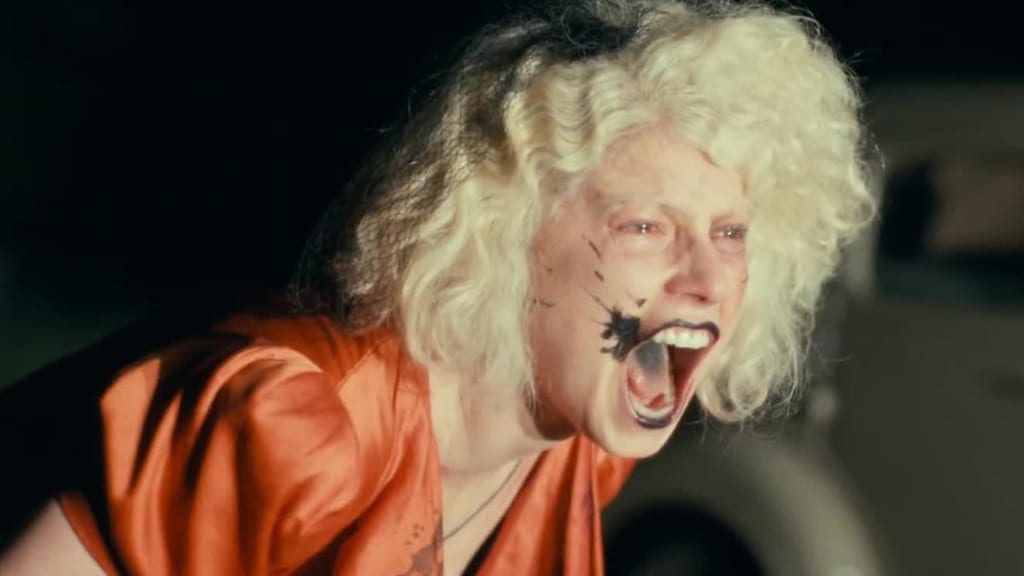
The Bride! is a wonderful examination of female rage: how meticulous, curated, and frankly undignified it is to control that anger when it is directed at systems of oppression—and how freeing its release can be. Not necessarily in criminal ways, but in acts that bring justice to that rage and some fitting resolution to violence that has long been ignored, barely scratching the surface of what women endure.
Women simply want to be heard and listened to—actively—when violence is committed against them. When we ask for help explicitly, when we say no, that no should be taken as no, not as an invitation to be coerced. Ultimately, we rise to no one but ourselves. Partnership and companionship should never be shackles; they should allow one to thrive in their fullest potential, not become a hindrance or a detriment to it.
Forgetting who she was before her accident might have been one of the best things that happened to the Bride—Ida, Pretty Penny—because she no longer had to perform in order to survive. She lived without inhibitions, and in doing so she sparked a 'Brain Attack!' revolution. Beautifully directed by Maggie Gyllenhaal, the film features stellar performances, particularly from Jessie Buckley as the Bride and Christian Bale as Frankie—the unlikely companion who, despite his monstrous appearance, becomes the one person who never attempts to shackle her freedom.
Resurrection, Myth, and the Birth of the Bride
The film begins with Mary Wollstonecraft Shelley trapped somewhere and yet almost all-knowing. She seems to possess a young woman named Ida and unearths Ida’s most repressed thoughts, including a scathing commentary on a certain crime boss in 1930s Chicago who had a fetish for cutting out people’s tongues, particularly if they were women. Silence is golden, as they say.
In reality, Ida’s story is already tangled in violence before the resurrection even begins. She had fallen down a flight of stairs, and rather than help her, Lupino’s men—gangsters she had been working around as an escort—buried her. They knew she had been badmouthing Lupino anyway. To them, it was convenient to dispose of her.
That is when Dr. Euphronius (Annette Bening) and Frankie arrive. Frankie had originally gone to Chicago to find the doctor because he wanted a bride created for him. Instead, they dig Ida up. What emerges from that grave is not quite the same woman who fell down those stairs.
In many ways 'The Bride' begins deprived, stripped down to the barest essence of existence, only to be reinvigorated for one specific reason: to be Frankie's companion. When she is revived, she is not quite the same person she once was. Instead, she has a clean slate—a chance to become her full, vibrant self. Not the woman she used to be, the one who was living and breathing yet already dead inside. The Bride ended up being "a disobedient geometry", as the noble Dr. Euphronius put it.
In many earlier adaptations of Frankenstein, the Bride herself was little more than an afterthought; an iconic image with very little narrative agency. With the notable exception of Penny Dreadful, most interpretations have treated her as a symbolic figure rather than a fully realized character. This film finally corrects that imbalance. It allows the Bride to exist not as a brief shock or a tragic footnote, but as a force with her own voice, her own rage, and her own autonomy. In doing so, it comes remarkably close to becoming the definitive “monster” film—not because of spectacle, but because it understands that the most compelling monsters are the ones society creates.
When a woman stands up for herself, she sets an example not just for the moment, but for generations of women who will come after her.
The Monster Society Creates
But what is The Bride, really, other than a twisted sister with no real charges against her apart from shooting cops and killing the people who intended to violate her first?
Why is self-defense a crime when it is directed against a person of authority? If no one is supposed to be above the law and justice, why then do people in power so often subvert those laws to their own benefit?
If that is the case, then any uprising or deviation from the status quo is not only warranted—it may well be justified. Greater power often sits in the hands of those who do not yet know how to wield it. And if it takes a symbol, one liberated form, one expression of justified rage to awaken that realization, then we take up that mantle.
We all become her.
The “angry woman” trope has been labelled insane for decades. Women were once locked away in asylums for it. Now the methods are different but the outcome is similar: discredit the woman, discredit her character, gaslight her into believing that whatever happened was somehow her fault all along.
Consent, Violence, and the Moment Everything Breaks
A woman dancing and gyrating to sensual music is not an invitation for assault. The film makes that point brutally clear.
After escaping Dr. Euphronius’s institution, Frankie and the Bride decide to have their own outing together. They go to several places, and the last stop of the night is a club. There, the Bride dances freely, sensually, joyfully—perhaps for the first time in her life without the weight of performance or survival hanging over her.
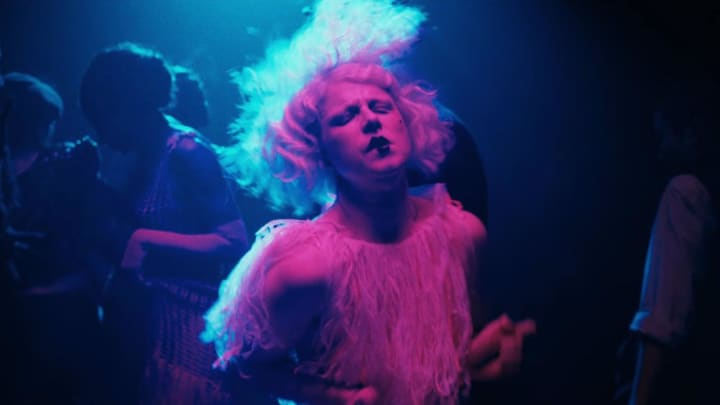
Her joy was short-lived when she was harassed while dancing. Outside the club, her freedom is immediately threatened. She is nearly assaulted. Frankie intervenes.
The men harassing her turn out to be some of Lupino’s gangsters, though they do not recognize Ida. Frankie kills them, and it is the beginning of the two of them becoming fugitives.
The crimes committed against Ida were never about her actions. They happen because men decide to commit violence against her. Both the Bride and her Frankenstein repeatedly attempt to drop situations and walk away, only to be followed, provoked, and harassed again.
And that brings us back to the central fear driving the film: the fear that some men simply cannot, or will not, listen to a no. After multiple chances, any punitive action taken against such a man—no matter how severe—feels inevitable. There is no such thing as implied consent. Consent must always be explicit.
The Man Who Refused to Control Her
Frankie, played by Christian Bale, despite his frightening appearance, might actually be the archetype of the ideal man.
He never provokes. He never tries to shackle the Bride, even though he originally sought out Dr. Euphronius in order to have a companion created. Perhaps it is because he already knows what it means to be hunted by angry mobs. Perhaps that experience makes him extra careful. He wants to play nice, to be nice, even when others show blatant disrespect.
Most importantly, he lets the Bride take the reins.
He steps in only when he knows she cannot physically fight for herself. He never tries to fight her battles for her. He is the physically stronger person, but she is the brains, and he loves her for it. He never resents her strength.
He apologizes when he is wrong. He supports her. He cheers for her. And when she says no—or even simply, “I would prefer not to”—he accepts it. No coercion. No pressure. She offers him the same respect in return.
This version of Frankie is quite frankly the type of man many lonely young men should aspire to become. Genuine kindness does not need to be broadcast. Truly decent people prove it through consistent, quiet actions.
Climax and Sisterhood
At the film’s climax, perhaps the most disturbing thing to witness is how trigger-happy men in positions of power can become when they perceive someone as a threat. They simply will not stop, even when there is one loud, truthful voice telling them to do so.
And yet the women in the film listen.
Every woman who encounters the Bride takes her words to heart and follows her example—uninhibited, supported by other twisted sisters who no longer bow to patriarchy simply to remain palatable, or worse, simply to survive. The film repeatedly emphasizes that talent must not be stolen from women—scientists, inventors, detectives, pioneers in whatever profession.
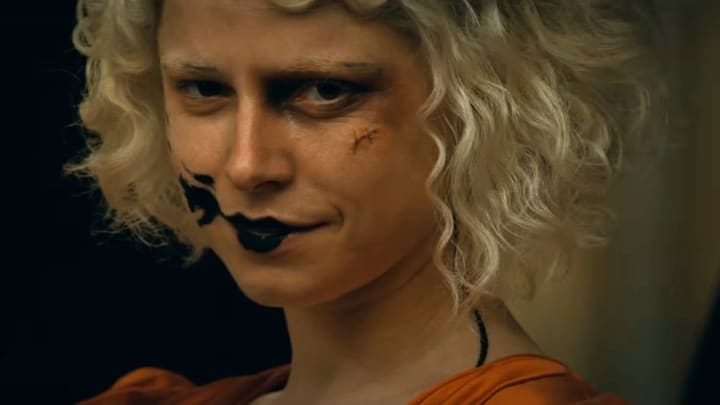
The Bride inspired a revolution. She was a monster only to those who threaten her. She takes up space. She becomes feral. She speaks truths and forces everyone to listen.
She bows to no one and takes no prisoners. She becomes, quite literally, hell’s wrath against the systems that attempt to eliminate her. And in that moment, the film stops being merely a horror story and becomes something closer to a manifesto.
As Mary Wollstonecraft Shelley declares in the film:
“Resistance to tyranny is obedience to God.”
Reviving the Genre
Technically, the film is phenomenal as well. The performances are exceptional, the lighting was appropriate, rather than the murky darkness audiences have come to expect. The casting is brilliant; you stop seeing actors like Christian Bale, Jessie Buckley, and Penélope Cruz and simply see the characters. Together they function like a perfectly tuned machine that revives and reinvigorates the sci-fi horror genre.
That genre, frankly, has been collapsing under the weight of dreadful Game of Thrones lighting and its habit of taking itself far too seriously. Instead of giving audiences genuine fright, many modern films merely offer a grim realization that the genre has become a Frankenstein monster of its own—stitched together pieces without the mechanisms that actually spark life into them.
Ultimately, The Bride becomes a beautiful and empowering horror story, a sci-fi film, and—perhaps most surprisingly—a love story.
Stay until the mid-credits scene, for something so deliciously unexpected. Five out of five stars.
The Bride! is still showing in cinemas.
About the Creator
Karina Thyra
Fangirl of sorts.
Twitter: @ArianaGsparks
Keep reading
More stories from Karina Thyra and writers in Horror and other communities.
THE GIRL IN THE MIRROR
Chapter 1: The First Glitch Maya stared at her reflection, tying her hair into a messy ponytail. It was 6:45 AM on a Monday—too early for a sixteen-year-old to function properly. Her uniform hung loosely on her thin frame, and dark circles under her eyes told the story of another sleepless night.
By A Psychologist 2 days ago in Horror


Comments
There are no comments for this story
Be the first to respond and start the conversation.