
The Blood Harvest Festival
The sign at the edge of Darlow Village was painted in cheerful red letters


The sign at the edge of Darlow Village was painted in cheerful red letters:
“Welcome to Darlow – Home of the Blood Harvest Festival!”
It looked like something from a country fair poster — smiling corn stalks, pumpkins, children holding lanterns. But the longer you stared, the more you noticed the details. The red wasn’t quite paint. It looked… darker. Almost brown. And the children’s lanterns glowed the color of fresh blood.
Noah Winters slowed his car, staring at the sign as fog rolled over the empty road. He’d been driving for hours, searching for this place — a village that didn’t appear on most maps. As a journalist chasing stories of strange folklore, he’d heard whispers of Darlow’s “Festival of Blood” — a harvest celebration said to ensure the land’s fertility, but always with one missing child.
Locals called it “The Offering.”
When he asked about it online, every thread was deleted within hours. One person had sent him an anonymous email:
“If you want the truth, come to Darlow before the harvest moon.”
Now here he was, just as the sun dipped beneath the hills and the full harvest moon rose — a perfect blood orange against the sky.
The village was small, maybe twenty houses clustered around a crooked church and a field of corn that swayed though there was no wind. Lanterns burned outside every door, and people were moving about — laughing, setting up stalls, stringing garlands of wheat and red ribbons.
It looked festive. Too festive.
Noah parked near the church. A woman in a straw hat approached, carrying a basket of apples. “Evening, stranger,” she said with a warm but cautious smile. “You’re just in time for the Blood Harvest.”
“I’m a journalist,” he said quickly. “I’m writing about local festivals. I heard yours is… unique.”
Her smile didn’t falter, but her eyes hardened. “We’re proud of our traditions. But not everything old should be written down, Mr. Winters.”
He blinked. “I didn’t tell you my name.”
She tilted her head. “Everyone in Darlow knows who’s coming.”
That night, the festival began.
Music drifted through the air — violins and drums, played slightly off-key, as though the musicians were following a rhythm only they could hear. The people danced in circles around bonfires, their shadows long and crooked. Children wore masks made of dried corn husks and painted in red dye. They sang in strange, whispering voices that echoed through the fields.
Noah filmed everything — the dances, the laughter, the eerie sense of performance. But every time he checked his camera, the footage was distorted. Faces blurred, firelight bled into darkness. He tried to adjust the lens, but the screen only showed a message:
“Recording not permitted during offering.”
He looked up sharply. The children were gone.
He scanned the crowd. Parents still smiled, hands joined in dance, but the little ones who’d been singing moments before had vanished.
Noah grabbed the woman in the straw hat. “Where are the children?”
She looked toward the cornfields. “They’ve gone to play their part. The land must drink before it can feed.”
“The land must what?”
But she only whispered, “You’ll see soon enough.”
At midnight, the villagers gathered at the edge of the field. The moon hung low and swollen, casting red light across the stalks. A man stepped forward — tall, dressed in a coat of stitched-together animal hides. His face was hidden behind a mask carved from a deer skull.
He raised his hands, and the music stopped.
“My brothers and sisters,” he said, his voice deep and resonant. “The harvest is upon us. The soil has grown weary, the sun has been cruel. Tonight, we repay the debt.”
The crowd murmured in unison, “The land remembers.”
A group of villagers carried something from behind the church — a wooden cart covered with a black cloth. Noah’s stomach turned as he heard muffled cries from beneath it. The cloth moved. There were children underneath.
He stepped forward. “Wait! What are you doing?!”
Hands grabbed him, pulling him back. The woman in the straw hat held his arm, her nails digging into his skin. “Don’t interfere. You’ll doom us all.”
The deer-masked man lifted the cloth. Four children knelt inside the cart, trembling. Each wore a garland of red leaves. Their faces were pale, their eyes distant, as if they were half-dreaming.
“Which one, Mother Earth?” the man asked, his head tilted toward the sky. The villagers fell silent.
Then the ground began to hum.
The soil beneath the cornfield shifted, pulsing like a heartbeat. The moonlight seemed to thicken, turning the air red. A low sound rose from the earth — a deep, rumbling sigh, like something ancient stirring in its sleep.
The corn stalks bent toward the children.
One of the kids, a small girl with blonde braids, whimpered. The man reached down, brushed her hair from her face, and whispered, “It will be gentle this year.”
He drew a sickle from his belt — its blade rusty and old. The crowd began to chant, their voices growing louder:
“The land remembers! The land forgives! The land feeds!”
Noah struggled against the villagers holding him, shouting, “Stop! She’s just a child!”
The man’s blade flashed in the moonlight.
But before it fell, the earth split open.
A sound like roaring thunder erupted as a massive shape rose from the ground — not flesh, not stone, but something between both. Roots twisted together into the form of a great, featureless face. Its mouth yawned open, black as a well, and the stench of decay poured out.
The villagers fell to their knees. “The Harvest Mother!” they cried.
The girl screamed as tendrils of root wrapped around her legs, pulling her toward the mouth. The other children clung to each other, sobbing. Noah tore free and rushed forward, slashing at the roots with his pocketknife, but they tightened like muscle.
“Let them go!” he shouted.
The deer-masked man turned toward him. “It demands one. Would you offer yourself instead?”
The villagers went silent. Every eye turned to Noah.
The creature’s mouth gaped wider, a wet, sucking sound echoing from within. The air pulsed with heat and rot. The girl was already halfway gone, her hands scraping against the soil.
Without thinking, Noah grabbed her arms. “Take me! Just let her go!”
For a heartbeat, everything stopped. The humming, the chanting, the wind.
Then the roots released the girl.
And wrapped around Noah.
He screamed as they pulled him down, deeper and deeper into the black maw. The last thing he saw was the deer-masked man bowing his head, whispering, “The land remembers.”
The soil closed over him like water.
When the sun rose, the villagers were cheerful again. The festival was declared a success. The harvest that year was plentiful — the corn taller than ever, the apples blood-red and sweet.
The girl with the blonde braids was found asleep near the church, unharmed but silent. She never spoke again.
Months later, when winter came, children playing in the fields began to hear faint whispers beneath the ground — a man’s voice, crying for help.
They said the earth was restless, that it trembled some nights, as if something beneath it was still alive, still struggling.
The villagers ignored it. They always did.
The next year, when the harvest moon rose again, the preparations began once more. The garlands, the music, the lanterns.
And in the soil at the edge of the field, a hand briefly broke through — pale, trembling — before being dragged back down.
The Blood Harvest Festival continued.
And Darlow remained fertile.
Forever.
About the Creator
Modhilraj
Modhilraj writes lifestyle-inspired horror where everyday routines slowly unravel into dread. His stories explore fear hidden in habits, homes, and quiet moments—because the most unsettling horrors live inside normal life.
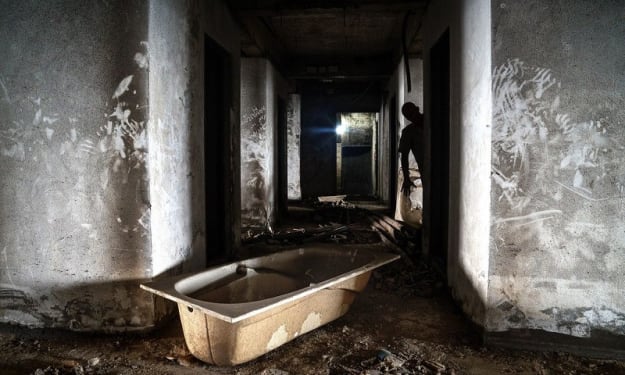
The Haunted Pen Factory at Kasem Bundit University: Bangkok’s Most Terrifying Abandoned Building
The Pen Factory of Kasem Bundit University: A Haunted History Located in the Kasem Bundit University campus, along Pattanakarn Road in Bangkok, Thailand, is one of the city’s most haunted yet abandoned structures: an old pen factory covering 80 acres of land. Presently, the ruins of this industrial giant are seen standing silently, decaying under the scorching sun. However, the silence is more than just peaceful. Rumors of ghosts, mishaps, and other haunted experiences are associated with this ruined industrial giant, making it an urban legend of the city of Bangkok.
By Kyrol Mojikalabout 8 hours ago in Horror



Comments
There are no comments for this story
Be the first to respond and start the conversation.