
The Bleeding Ceilings of Japan: The Haunted Legacy of Fushimi Castle
no, seriously, they're reusing these?

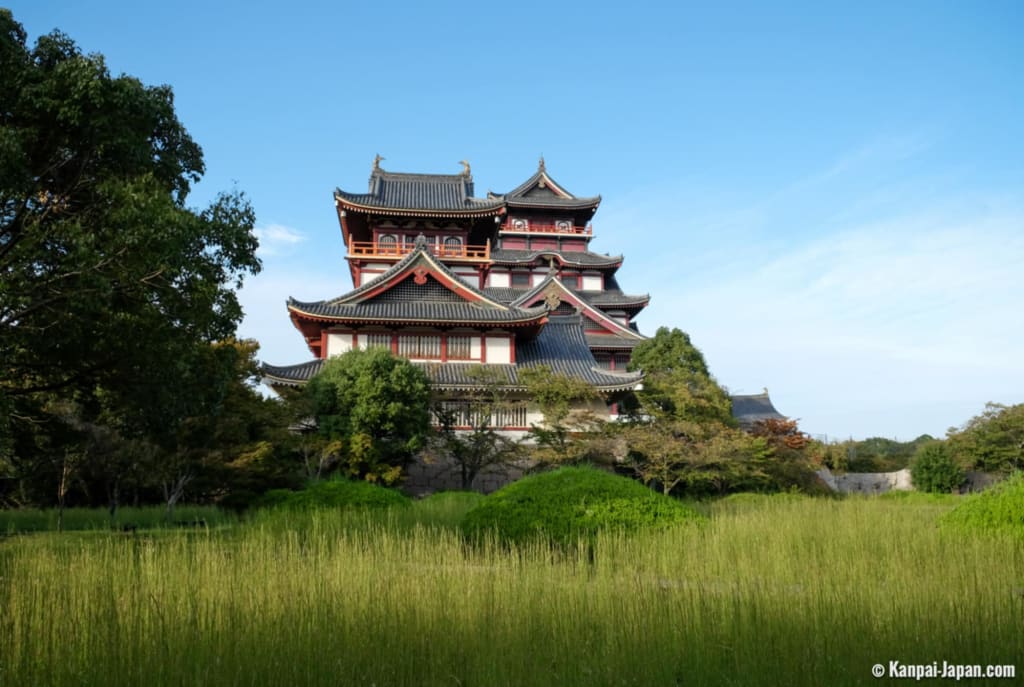
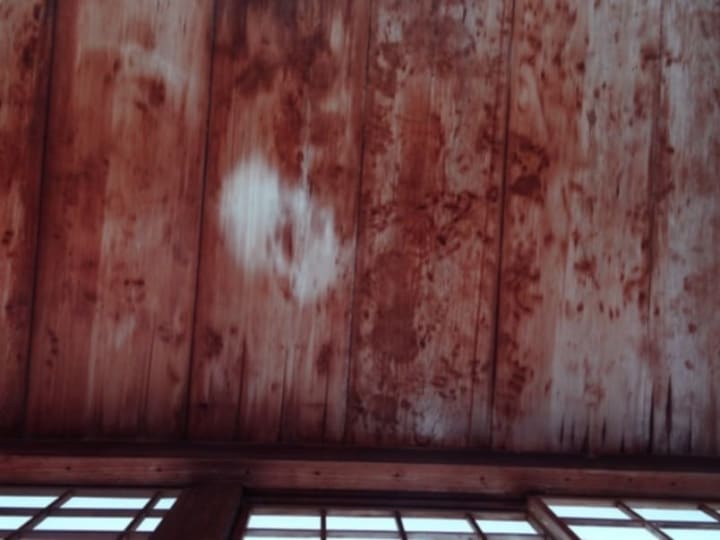
In the heart of Japan's rich and often violent history lies a tale soaked in blood, betrayal, and spectral whispers. This is the story of Fushimi Castle, a fortress that became a tomb, and whose bloodstained legacy continues to haunt the ceilings of five sacred temples to this day.
The year was 1600. Japan was in turmoil. The nation teetered on the edge of unification under Tokugawa Ieyasu, but remnants of resistance still clung to the hope of defying the inevitable. Among these strongholds stood Fushimi Castle, a key strategic fortress in Kyoto. Constructed under the command of the formidable warlord Toyotomi Hideyoshi, it was intended as both a show of power and a bulwark against rivals. But the grand architecture would soon become the stage for one of the most harrowing massacres in Japanese history.
A Death Trap in Disguise
Fushimi Castle, while splendid in appearance, was a precarious trap. In the sweltering summer of 1600, Torii Mototada, a loyal retainer of Tokugawa Ieyasu, was charged with defending the castle with only 2,000 soldiers. Their enemy: an overwhelming force of 40,000 samurai under Ishida Mitsunari, a rival warlord determined to crush Ieyasu’s support.
Mototada knew his fate was sealed. His orders were not to win, but to stall the enemy. He and his men held the castle for ten grueling days, repelling wave after wave of attackers. Arrows darkened the skies. Fire scorched the outer walls. Blood ran through the corridors. It was a siege of attrition, a storm of desperation.
On the final day, as the enemy breached the last gates, Mototada and his men gathered for what they knew would be their final act. Rather than surrender, 380 samurai committed seppuku—ritual suicide—on the wooden floors of the castle. The tatami mats and planks absorbed the blood of hundreds. It pooled and stained the wood so deeply that it would never wash away.
The Ghosts That Would Not Rest
When the siege ended and the castle finally fell to ruin, it became a haunted shell. Local lore spoke of cries echoing through the empty corridors. Pale figures with empty eyes were said to wander its grounds. The blood-soaked wood seemed to pulse in the moonlight.
Years later, when Tokugawa Ieyasu took full control and consolidated power, the remains of Fushimi Castle were dismantled. Yet, even in destruction, the castle's tragic essence could not be erased. In a decision that would immortalize its horrors, the bloodstained floorboards were salvaged and repurposed.
But they weren’t burned. They weren’t buried. They were installed as ceilings.
Ceilings of the Damned
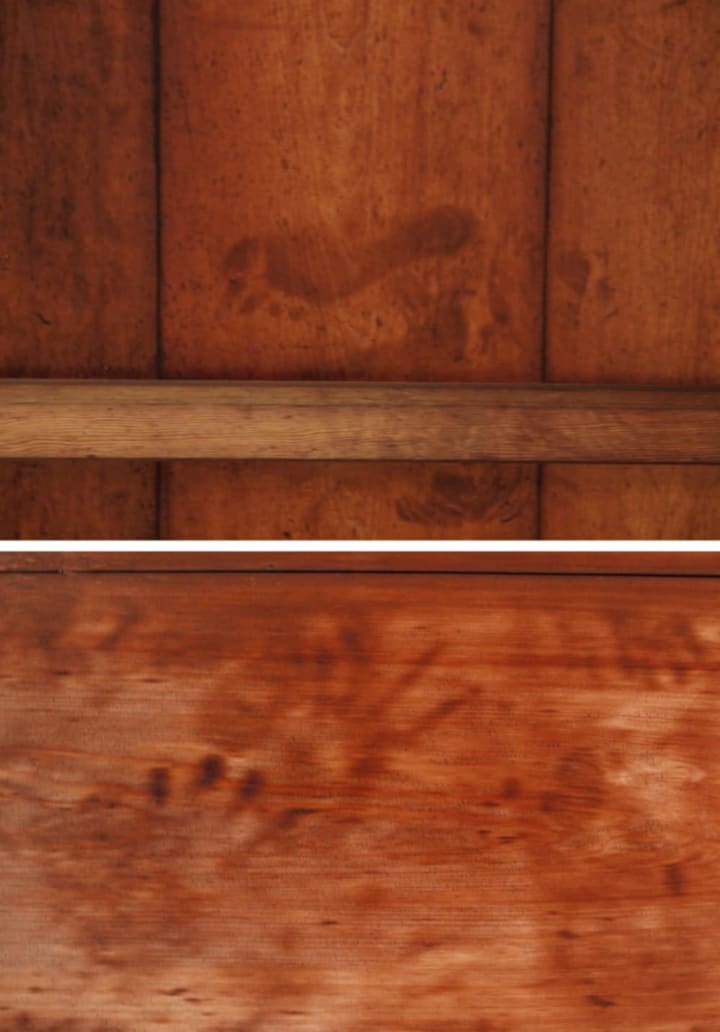
If you visit Kyoto today and wander into certain temples—Yogen-in, Genko-an, Shoden-ji, Hosen-in, and Myoshin-ji—you will find more than quiet sanctuaries of prayer. These five temples house ceilings that are soaked in history, sorrow, and blood.
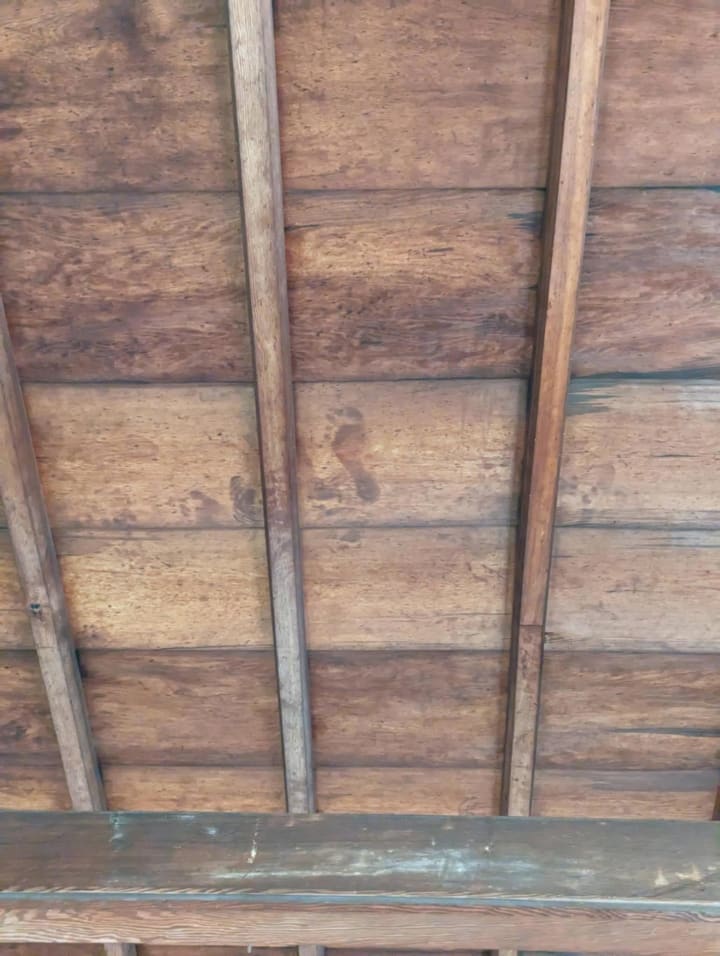
Look closely, and you will see the unmistakable footprints of agony. Streaks, smudges, and handprints—forever embedded in the wood. They are not the product of time or trickery. These are the last moments of 380 samurai warriors, immortalized in timber. You may find the outline of a hand, the smudge of a face, the arc of a final slash.
Monks who watch over these temples speak of an uneasy presence. At night, footsteps echo across the ceilings. The temperature dips suddenly, as if someone walks directly above. Some say the ceilings weep in the rainy season. Others claim to have seen ghostly figures crouched in prayer, forever stuck in the moment of their demise.
Cultural Reverence or Morbid Tribute?
The decision to reuse the bloodied wood as ceiling panels was more than practical recycling. It was deeply symbolic. In Buddhist tradition, honoring the dead—especially those who die in ritual sacrifice—is sacred. These temples became resting places, memorials to the sacrifice made for the Tokugawa rise.
Still, for many visitors, the atmosphere is less reverent and more chilling. A thousand eyes seem to follow. Silence feels loud. The air grows thick with memory. It’s as if the souls of those warriors are suspended just above, watching.
Even the architecture accommodates this ghostly presence. The ceilings are low, close enough that one might raise a hand and touch history—wet, red, and still warm in the imagination. The juxtaposition of sacred prayer halls with the death-stained boards overhead creates an eerie, unforgettable experience.
Echoes of a Bloody Past
What makes the story of Fushimi Castle so haunting is not just the brutality of its end but the way it lingers. In most cultures, battlefields are cleared, and the dead are buried. In Japan, the battlefield was carried into temples, literally enshrined.
Each ceiling tells a piece of the story. At Genko-an Temple, the "bloody ceiling" is dark and silent, the stain patterns looking disturbingly human. At Shoden-ji, visitors speak in hushed tones, afraid to awaken what may still be listening. Yogen-in Temple’s guides point out each mark with solemn respect, sharing the tale with a mixture of pride and caution. Hosen-in and Myoshin-ji continue the tradition, their ceilings holding the weight of silence and sorrow.
And still, the story grows. Tourists, bloggers, and paranormal enthusiasts flock to these sites, drawn by the mixture of history and horror. They snap photos. They whisper prayers. Some claim to feel faint or sick. Others leave gifts or offerings, unsure why.
Fushimi Castle may no longer stand, but its soul clings stubbornly to the rafters of Kyoto's temples. It bleeds into the modern day, both literally and metaphorically. And those ceilings—stained with honor, death, and unspeakable sacrifice—continue to speak in silence.
Next time you find yourself beneath the wooden ceilings of Kyoto, look up. You may find yourself staring into the face of the past.
Or perhaps, the past staring back at you.
This may sound cynical after reading this article, but I really want to go see those bloody floorboards....
About the Creator
E. hasan
An aspiring engineer who once wanted to be a writer .
Center Stage with Paul Stewart
*** I'm keen to republish the interviews I did for my series with Vocal creators. It's been a few years and I thought it might be nice to revisit these wonderful conversations. I'll be releasing them one at a time for a few weeks/months.
By Heather Hubler4 days ago in Interview




Comments
There are no comments for this story
Be the first to respond and start the conversation.