
The Best Black Horror Films You Can Watch Right Now
Black Lives Matter... especially in horror cinema

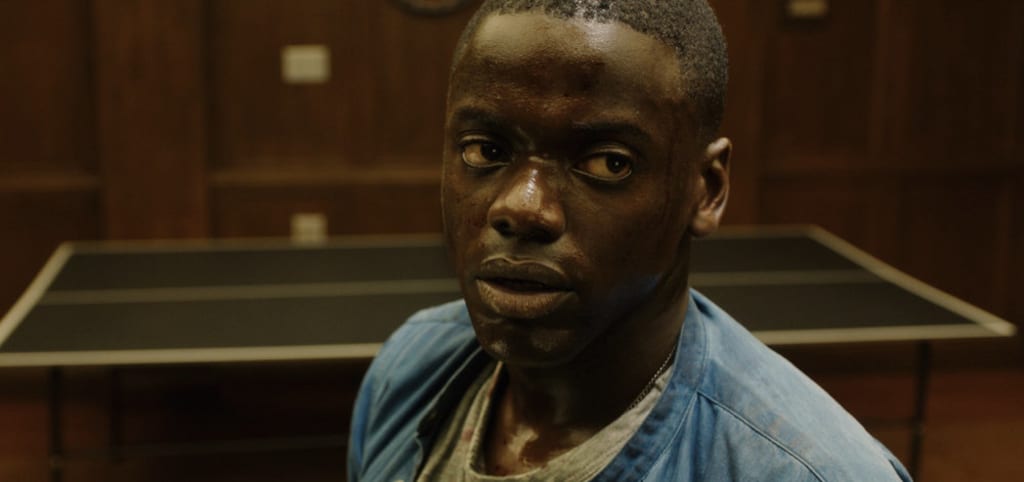
We are truly living in a new age of horror cinema. While the genre has always included diversity and featured non-male lead characters, the genre has really taken a turn when it comes to black cinema. If you would have told someone just a decade ago that a horror movie about systemic racism would win an Academy Award, people probably would have thought you were dreaming. But it happened and diversity within the horror community has been at an all time high.
With this article we will focus on the best black horror films you can watch right now, as praised by critics and audiences. From horror-comedies to true horror pieces, this list is as diverse as the genre itself and features work from independent creators as well as horror legends. The films also feature similar thematic elements regarding gentrification, racial inequality, police corruption, drug abuse, and systemic racism.
'Blade' (1998)
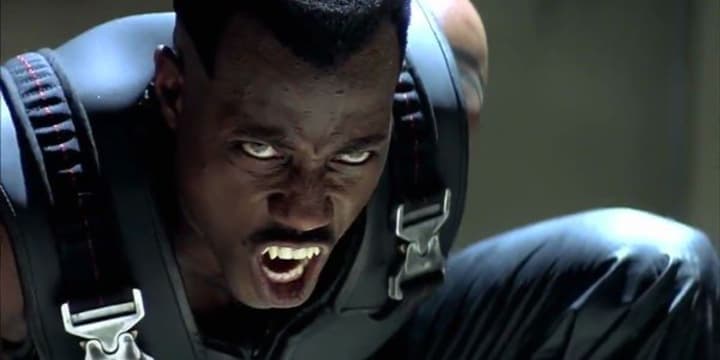
First of all, who doesn't love vampires?
Released in 1998, Blade was one of the first horror-themed superhero adaptations to become a commercial success. Following the title character, who is a human with vampire characteristics, Blade soared to commercial success and even earned two sequels. It also set the tone for future superhero adaptations and served as a predecessor for the Marvel Studios film, Black Panther.
'Bones' (2001)

I will admit that I find Bones to be more of a funny movie than a scary movie, but it is a solid choice for any horror night. Starring Snoop Dogg, this 2001 horror movie followed Jimmy Bones, a murdered gangster who rises from the grave to avenge his death.
Bones followed the tune of the 1970s "blaxploitation" genre and was originally scrapped by audiences. However, due to Snoop Dogg's fame and the fact that it starred the legendary Pam Grier, Bones has risen to become a cult favorite among horror fans.
'Blacula' (1972)
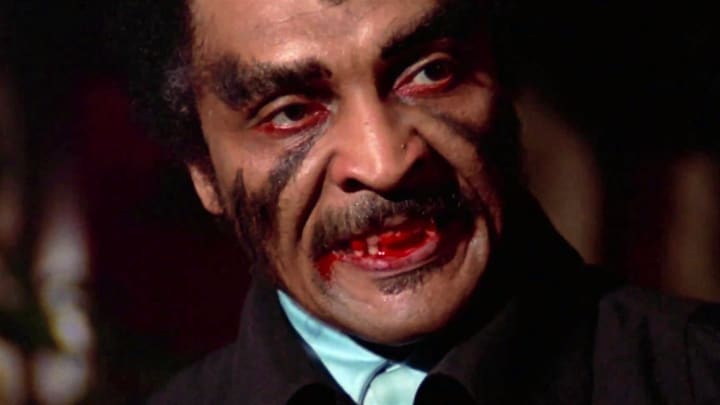
Speaking of 1970s blaxploitation, we can't have a black horror cinema article without including Blacula. The movie follows William Marshall as he plays an African prince, Mamuwalde, who is turned into a vampire and locked away by Count Dracula until 1972. The reason why? Dracula wouldn't help Mamuwalde suppress the slave trade back in 1780.
Blacula did fairly well as far as commercial success and is another that has become a horror favorite. It even sparked a strain of black horror movies including its sequel, Scream Blacula Scream, in 1973.
'Tales From the Hood' (1995)
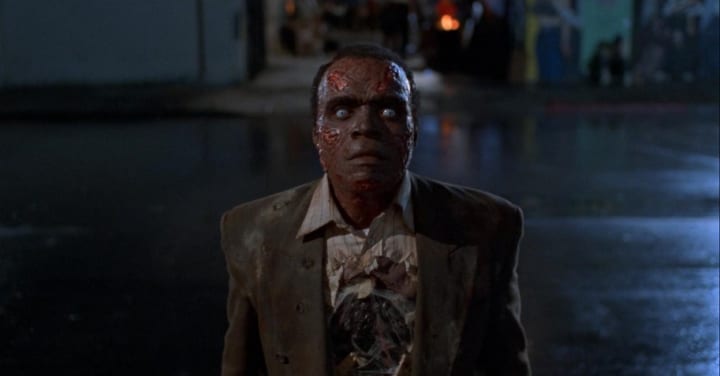
If you love anthology movies such as Creepshow and V/H/S, you would love Tales From the Hood. This horror-comedy anthology was executive produced by Spike Lee and featured six segments centered around systemic racism. Themes of the segments included police brutality and corruption, domestic violence, drug use, racism, and gang violence. 1995 sure sounds like 2020 in a lot of ways, eh?
The fanbase for the film is fairly deep and the concept was revived for a sequel, Tales From the Hood 2, which was released in 2018 after premiering at the Fantasia International Film Festival.
'The First Purge' (2018)
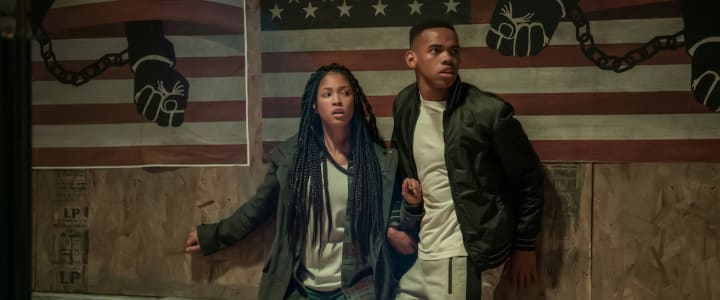
The Purge franchise has been a massive success for Blumhouse Productions and Universal Pictures. What started as a story about a futuristic United States of America where citizens were allowed to "purge" their anger once a year without punishment turned into quite the statement regarding systemic racism with The First Purge.
The 2018 installment centered around the inaugural event confined to Staten Island as an experiment. The story shows the initial financial "incentive" given to citizens by the New Founding Fathers to stay on the island. In fact, the incentive was really a means to attempt to eliminate undesirable citizens and economic groups from the new country model.
'Ganja & Hess' (1973)
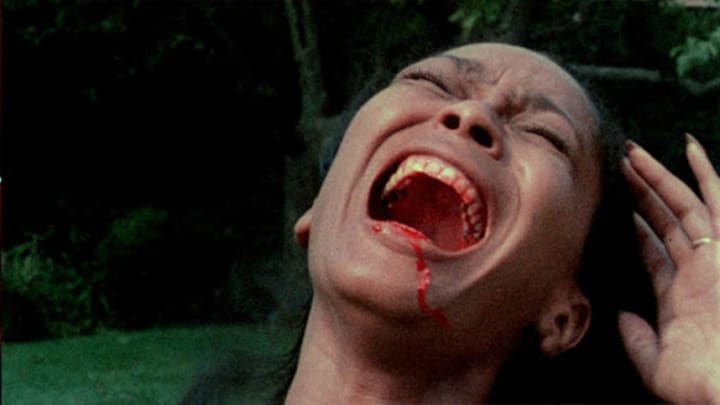
Before movies like Hereditary and Midsommar, we had Ganja & Hess. This horror films was released in the era of blaxploitation films and followed an anthropologist who becomes a vampire after his assistant stabs him with an ancient dagger. He then falls for his assistant's widow who learns his secret.
Ganja & Hess is more of an independent black horror movie and definitely leads you on a more surreal pathway. The themes of the film include sexuality, addiction, and identity in the heyday of an opioid crisis that plagued black communities in the United States. It was also remade by Spike Lee in 2014 with a new title, Da Sweet Blood of Jesus.
'Us' (2019)
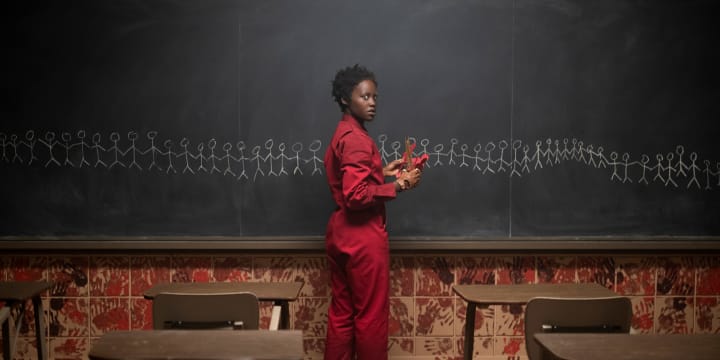
After the success of Jordan Peele's horror debut, Get Out, he delivered a strong sophomore effort with Us. The story follows a family on vacation when they're suddenly terrorized by mysterious doppelgangers.
A main criticism from horror enthusiasts was that Peele's horror debut wasn't scary enough, so he really amped up the tension with Us to deliver a terrifying metaphor for xenophobic classism. Thematically, the film as a whole was a representation of American privilege. The film performed very well and received nominations by the NAACP Image Awards, Screen Actors Guild, People's Choice, and the Saturn Awards. It even won the Bram Stoker Award for superior achievement in horror writing.
'The People Under the Stairs' (1991)
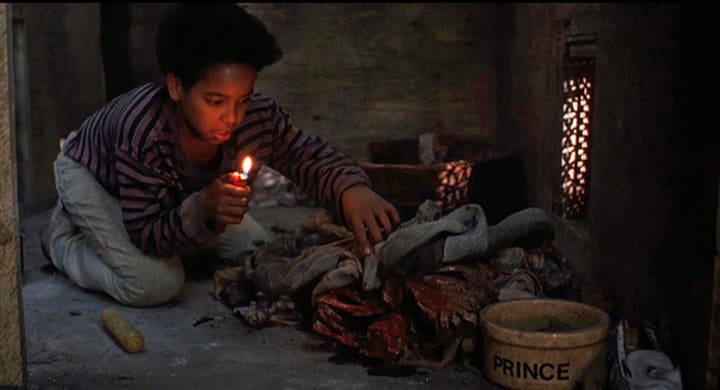
Wes Craven is easily one of the masters of the horror genre and he showcased it again in 1991 with The People Under the Stairs. This horror-comedy follows a boy and two robbers as they become trapped in a strange couple's house after breaking in to steal a coin collection. Craven based the story off a real-life event where two Los Angeles robbers discovered two children who had been locked away by the parents.
The film is more satirical and was a surprise smash with moviegoers. It also served as a not so subtle knock at social issues such as gentrification, capitalism, and classism. The New York Times even referred to the film as "an affirmative-action horror film."
'Candyman' (1992)
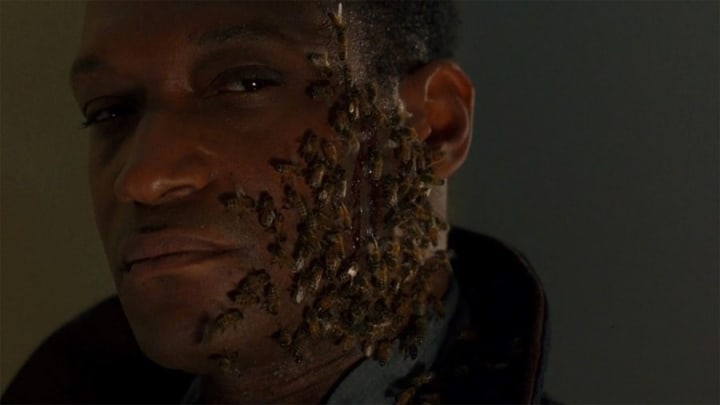
Candyman is not only one of the best modern horror films to date, but it is a solid piece of black cinema history. This time, horror legend Clive Barker brought to life the story of a Chicago grad student completing a thesis about urban legends. While studying, she stumbles upon the Candyman legend that states the ghost of a son of a slave appears if you summon him by saying his name in the mirror five times.
Straight talk, I saw Candyman as a child and it really shook me to the bone. The fear factor of the story was rooted in more than just a man covered in bees with a hook hand, though. The story behind the legend surrounded a black man who was lynched for falling in love with a white woman. Tony Todd's performance as the tragic title character is a full representation of what vengeance and pain can look like. Plus, we are getting a fourth Candyman installment written by Jordan Peele (hopefully still) in 2020.
'Get Out' (2017)
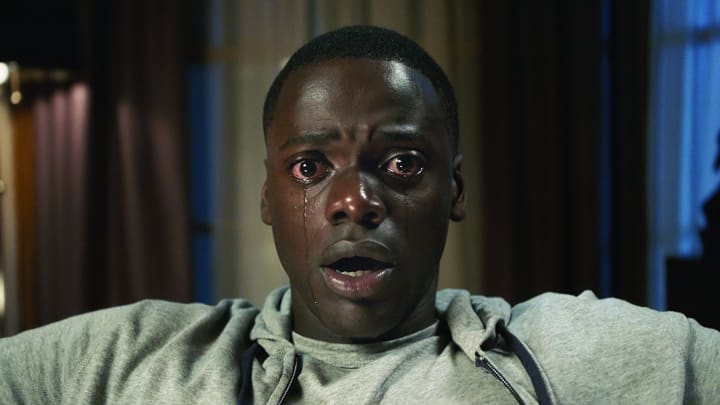
Since its release, Get Out has been considered as one of the best horror films to be released in the past decade, and it really earned its stripes. Serving as the horror debut of comedian/director Jordan Peele, it follows a young black photographer as he goes with his white girlfriend to meet her parents. The meeting was uncomfortably familiar to today's societal standard as Allison Williams' character and her family consistently try to explain and prove how racist they're not.
Peele's debut was a hit for its thematic elements and satirical commentary on American privilege and systemic racism. It also showed a bigger picture of how racist white, American liberals can still be despite feeling as if they're fixing the problem when, in fact, they're making it worse. Along with this message, the movie focused on the lack of attention to missing black persons along with destroying the trope of all but one white person being bad. Plot twist, they were all pretty bad in the same way.
The main takeaway from Get Out was to recognize that racism isn't just about separation and blatant segregation. It was to raise awareness that the real problem is thinking one race is different period and, as a result, is less than another. Peele's message seemed to shine through as it received four Academy Award nominations and one win, which is almost unheard of for a horror movie. With the win, Peele became the first black winner for Best Original Screenplay. The film also took home award statues from the American Film Institute, Critics' Choice Awards, Gotham Independent Film Awards, NAACP Image Awards, and the Independent Spirit Awards.
Honorable Mentions
- Killjoy (2000)
- Def by Temptation (1990)
- Eve's Bayou (1997)
- Vampire in Brooklyn (1995)
- Snoop Dogg's Hood of Horror (2007)
- Sugar Hill (1974)
About the Creator
Jenika Enoch
I love movies, music, food, and art. I'm a certified graphic designer and create my own art sometimes. Things that fuel me include equality, respect, culture, and anything weird.
Keep reading
More stories from Jenika Enoch and writers in Horror and other communities.
The 10 Scariest 'Are You Afraid Of The Dark?' Tales
Nickelodeon was a much different channel back in the 90s. Millennials like me who grew up in the decade no doubt remember the abundance of awesome television game shows, comedy shows, and shows aimed at teens. One such inclusion that caused us younger kids to sleep with the lights on was Are You Afraid of the Dark?
By Jenika Enoch7 years ago in Horror
The Character Who Isn’t on Payroll
Posted to r/nosleep I work at Disneyland. I won’t say my department, but I’m close enough to characters that I see schedules, handoffs, rotations—the boring, logistical side of “magic.” Which is why this has been driving me insane.
By V-Ink Storiesabout 3 hours ago in Horror


Comments
There are no comments for this story
Be the first to respond and start the conversation.