

The clash came on sudden, like a summer storm. It was short and fierce - horses neighing wildly, sabers clanging, shot and smoke. When it was over, mostly blue-clad dead littered the field. The few fallen gray speckled amongst them like grains of salt dissolving in water. The remnants of the small Union detachment fled; the two companies of partisan rangers did not pursue, turning their attention to the stores in the liberated rail depot and the personal treasures of the fallen. A detail set about bayoneting the grievously wounded, this on the orders of the commanding officer, Captain Reginald Carney.
The captain dismounted from his charcoal gray roan and strode across the small battlefield, surveying the carnage with clinical detachment. His pale blue eyes honed in on a dead Union lieutenant, lying on his back, a hole in his face causing his left eye to swell grotesquely. About a yard away a Federal was struggling to crawl from under a horse, at the same time reaching for the dead man’s haversack. He had managed to undo the clasp, and had just reached in, pulled something out, when Carney was on him.
Carney’s boot came down hard on the soldier’s wrist, and he rolled his weight forward until he heard bones snap. The man shrieked, a small black book falling from his splayed fingers. Carney picked it up and opened it. Inscribed on the inside cover in tight, neat writing:
“Property of Lieutenant Morgan Coyle, Company F, 7th West Virginia Cavalry. Whether found by friend or foe, please return safely to my mother for a cash reward. Ask for Eleanor Coyle on the family farm in Softwood Hollow, West Virginia. God bless you and yours.”
Carney flipped through the pages. Accounts of battles, the minutiae of movements, wistful musings. A fairly run-of-the-mill journal. “Did you know this man?” Carney’s voice was flat, emotionless. He pressed harder with his boot on the wounded man’s wrist.
“He’s my older brother Morgan. We grew up together.”
“He didn’t name no number. How much is the reward?”
“I don’t-” Carney ground his boot, eliciting another agonized cry.
“How much?”
“We’ve got at least twenty-thousand dollars in gold and silver coin and Federal greenbacks, please, my arm, PLEASE-”
Carney let up a bit. “Where’s the farm? Where’s Softwood Hollow?”
“It’s north of Anstead in Fayette County, Anstead’s on the New River. Softwood Hollow is north of there, south of Gauley River. I could show you the way.”
“Oh you surely will, hoss.” Carney smiled gently. “Have no doubt.” He turned then, whistling to an aid. A handsome blonde officer appeared at his side. Carney produced a sheet of rough paper and a pencil, speaking as he wrote, the paper pressed against his saddle.
“Lieutenant Murphy, you’ll take this communication directly to Colonel Mosby. Direct. Don’t bother with the Lieutenant Colonel or Major Richards, understood?” He kept scribbling without waiting for a response. “Mosby promised me a week of leave after Lynchburg. I’m taking it now. Once you receive approval from Mosby, ride back here, pack five days provisions and saddle up two extra horses, plus your mount. Make sure they’re fed well. You’re coming with me and our friend here-” Carney looked down at the wounded Federal. “Sorry, hoss, didn’t catch your name?”
“C-Corporal John Coyle, sir.”
“Right.” Carney turned back to Murphy, handed him the note. “Ride now, Lieutenant. Make haste.” Murphy galloped off. Carney smiled gently, as though musing over some private joke, pale blue eyes thoughtful as he watched his men put down the last of the vanquished.
●
Three days later found Captain Carney, Lieutenant Murphy, and a bound Corporal Coyle riding on the riverbank of the Gauley, outside a small town called Jodie. A fourth horse trailed Murphy’s mount, tethered. Coyle’s hands were tied securely to the pommel of his saddle, the grinding of the rope against his broken wrist, along with his smashed thigh making him groan softly and continuously. Murphy would turn back occasionally, a troubled look on his face as he surveyed Coyle in his pain. Carney, though not oblivious to the man’s suffering, was unaffected.
The two rangers wore civilian attire; West Virginia in 1864 was hostile territory, staunchly pro-Union. Fear of Coyle being recognized as they neared their destination forced them to avoid settlements, and so most of their journey was completed in wilderness, their horses clopping over rugged hills and through thick forests. Boredom gnawed at the two Virginians; occasionally they resorted to mundane chatter. At one point, Carney asked Murphy about his first name.
“Laocoon, yeah, Captain. Kind’a different, I know,”
Carney guffawed. “Laocoon. Laocoon Murphy. I always figured with Murphy you was Irish, but that first name don’t sound Irish. What’s it, Dutch?”
“I think it’s Greek, sir.
They had skirted around Jodie, which consisted of nothing more than a few ramshackle cabins hugging the bank of the river. Now they neared a small tributary flowing north into the Gauley.
“This where we turn South, hoss?” Carney asked his captive.
Coyle raised his head. “Yessir, this is Rich Creek. Take us through Agnew, then on down Bridge Fork to the farm. ‘Bout another three miles.”
“Good. My ass is getting sore.”
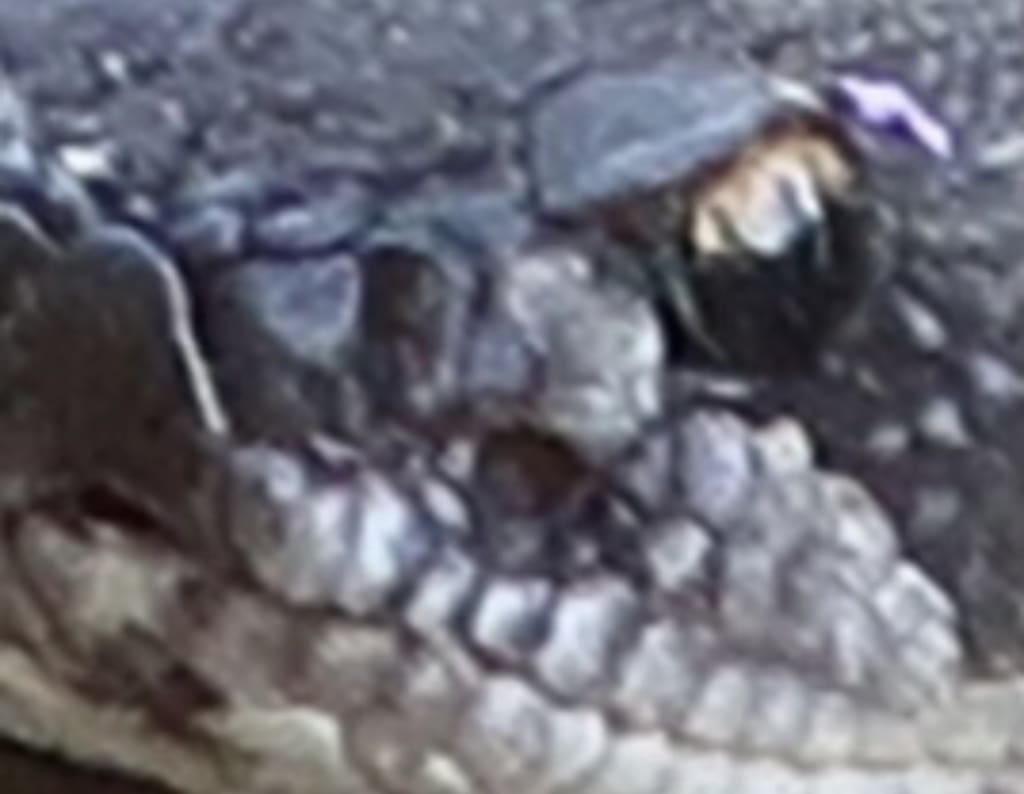
They rode on, the landscape skirting by, when suddenly an almost insectile rattling cut through the late afternoon silence. Carney’s horse reared up, front legs thrashing at the air, eyes rolled back in its sockets. In the path, defensively poised to strike was a three foot rattlesnake. Carney fought to stay on his panicked horse, as Murphy drew up alongside him, a look of loathing and fear turning his handsome face into an ugly grimace. He aimed his long-barreled Colt, dropped a bead on the serpent, and with a squeeze of his trigger sent the snake hurtling back off the path in a red spray. Carney, no longer in danger of falling, was still trying to calm his roan.
“You oughtn’t have done that.” It was Coyle, the first voluntary thing he had said in two days. Murphy spun on him.
“Why the hell not? Damned thing could’ve bit one of the horses!”
Coyle eyed him thoughtfully. For the first time, he seemed unaware of the constant pain from his wounds. “Rattlesnake’s don’t like to bite ‘cept as a last resort. He probably would have just crawled off on his own in a few seconds, if you hadn’t done for him there.”
Murphy was nonplussed. “Well so the hell what? One less snake on God’s earth is fine by me.” For the first time, Coyle smiled.
“Rattlesnakes on earth are part of God’s plan. They kill rodents, you see.”
Carney had managed to soothe his horse sufficiently. Noticing Coyle’s smile, he himself scowled. “Dead rattler is gonna be the least of your worries, hoss, your people don’t produce. Both of you shut up now. Let’s get on with it. Still got a long road back.”
As the sun dropped behind the darkening West Virginia mountains, Carney and his party pushed on, following the creek. The dead rattler twitched in the road behind them.
●
Eleanor Coyle, a large and looming woman, answered the pounding at the door, flanked by three of her sons, long and raw-boned men all of them. Her youngest, Jude, was the biggest, with a waist like a tree trunk. He held aloft a flame lantern. The two older boys held shotguns.
Carney still sat atop his horse, next to Coyle on his. Carney held the barrel of his revolver pressed against the hollow of John Coyle’s neck. Murphy stood in front of the door, his own revolver clenched in his hand, pointed up at the night sky. Eleanor’s eyes lit to John’s face, reading his anguish. Murphy, eyeing the shotguns, took a step back, his left hand dropping to the haft of his cavalry saber. Carney called out, his voice piercing in the dark.
“Pleased to make your acquaintance, Missus Coyle. This here your boy?”
Her voice husky but cold. “You know damned well he is.”
“Yeah, well, he’s hurt, but not too bad. Yet. Y’all put down them shotguns now, let’s us talk a spell. I brought something for you.” The shotguns lowered.
John Coyle piped up. “Mom, he’s got Morgan’s journal. They killed him three days ago.”
A look of momentary anguish rolled over Eleanor’s face like a wave. She fought to stifle it. “You men killed my boy?”
Carney replied in an almost soothing voice, belying the menace underneath. “He died on the battlefield. He died with honor. I got his journal here, promising a reward. I know you don’t want two dead sons. John here tells me you got twenty thousand in coin and paper. My man and I will take that as fair compensation for delivering you your living son and your fallen son’s memoirs, then we’ll be on our way, leave you folks in peace.”
Without hesitation, Eleanor responded. “Boys, take these men to the root cellar. Give ‘em their money.”
The Coyle boys escorted the rangers to a wooden door laid at a forty-five degree angle into a large dirt hillock by the side of the house. Jude pulled the door open, his lantern revealing five shallow stone steps descending into the darkness. He led Murphy down into the cellar, who hollered back up to Carney, still on horseback: “It’s here, Captain! Just like they said!”
“Start bringing it up, Lieutenant.” Carney’s gun was pointed at John Coyle, but his eyes were on the cellar, gleaming hungrily in the lamplight. He felt the punch of the bullet in his shoulder before he heard the report echoing from the dark hills beyond the house, and was knocked sprawling off his horse. In an instant, strong arms enveloped him, pinioning his own down against his body, blood seeping from the ragged hole in his shoulder. Murphy was coming up the steps behind Jude, carrying two bags of coin, when Jude kicked backwards suddenly with the strength of a mustang, sending Murphy tumbling down the steps to land on the cellar floor in a heap. Eleanor had appeared from the house, her eyes glaring like burning coal.
“Toss him down with his friend, boys,” she said, indicating the bleeding, stunned Carney with a shift of her head. “Toss him down with his friend and his reward.” John had slipped down off his horse, and with his hands still bound pulled his brother’s black book from Carney’s saddlebag as the Coyle boys carried Carney to the hole in the ground, flung him in, and locked the door behind.
“Close it up now,” Eleanor said, “and give them boys some company.” Down in the dark, Murphy had gained his feet. He stumbled over Carney and almost fell.
“Help me up, Murphy. Feel my hand? There. Help me up.” As Murphy pulled Carney to his feet, a small wooden door above them slid open. John Coyle’s face appeared above in the orange glow of lamp-light. He leered down at them.
“Hey Captain, I never did tell you what kind of farm this here is. Course you never asked.” He chuckled. “This here is a rattlesnake farm. We breed ‘em, Timber Rattlers, and deliver ‘em to the farms in the valley where they won’t go on their own. I think I might have told you, they’re good for killing rodents. You know? Alright then.”
His face disappeared, and at once the light shining through the hatch in the cellar roof was blotted out as his brothers emptied two large sacks of squirming rattlesnakes. They fell like a hard rain over the two rangers, hitting the ground with fat plopping sounds. Then the hatch slid closed, leaving them standing in the dark amidst the slithering, rattling, reptiles.
“Stand perfectly still, don’t move,” Reginald Carney muttered in the dark.
“The hell with that! Stomp on ‘em!” Laocoon Murphy cried. He began stomping, a cacophony of rattles and hisses filling the air.
In the end, neither way made much difference.
About the Creator
Keep reading
More stories from Mason Stone and writers in Horror and other communities.
The Screams Beneath the Floorboards
Old houses make noise. They creak, groan, and sigh as if remembering things they were never meant to keep. That’s what I told myself when I first heard it—a faint sound beneath my feet, barely louder than the wind slipping through cracked windows.
By David John3 days ago in Horror


Comments
There are no comments for this story
Be the first to respond and start the conversation.