
Shadows in the Sacred: The Haunted Legacy of Laos’ Ban Pak Ou Caves
Where Ancient Spirits Cling to Buddha’s Sanctuary — A Journey Through Ghostly Whispers and Timeless Devotion

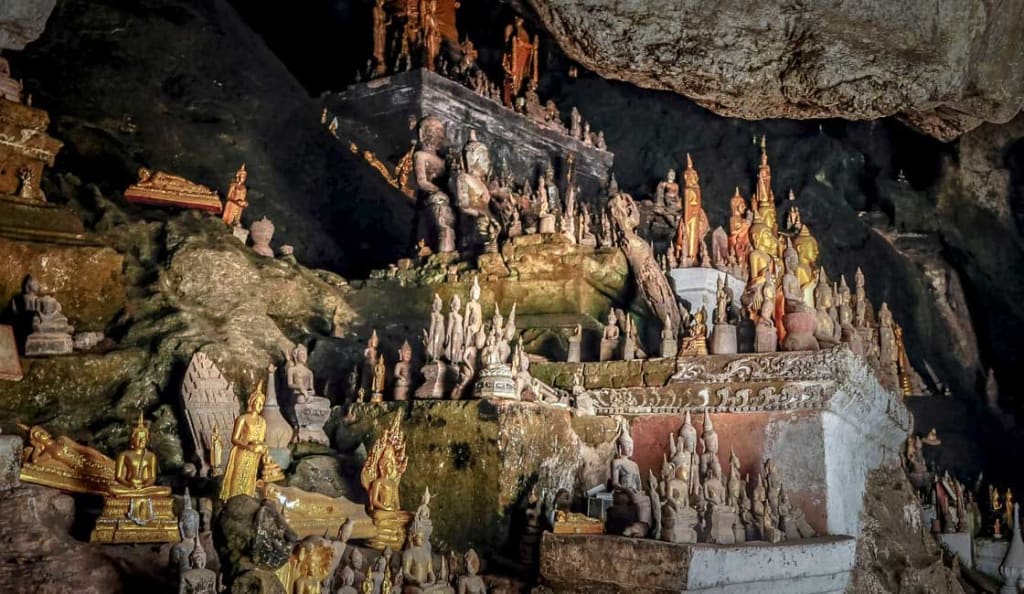
The Spooky Past of Ban Pak Ou Caves, Laos
Situated where the Mekong and Nam Ou rivers meet, 25 kilometers north of Luang Prabang, are the Ban Pak Ou Caves, a labyrinth of religious wonder and spooky legend. These caves' limestones—divided into Tham Ting (lower cave) and Tham Theung (upper cave)—are famous not only for the thousands of Buddha images but also for being two of the spookiest locations in Laos. Let us visit their diverse history and the ghostly stories surrounding them.
A Sacred Past: From Animism to Buddhism
The past of the caves dates back many thousands of years, with geologically confirmed immersion in an earlier sea before the tectonic uplifts to bring them to above-sea-level elevation. Long before the advent of Buddhism, these caves were the temple of indigenous animist tribesmen, where Phi (nature deities) were worshiped as being inhabited by the Spirit of the River. Buddhism by the 14th century had found its roots, and the caves were a pilgrimage site. King Setthathirath, 16th-century king, according to tradition, declared them officially significant and founded annual royal pilgrimages to cleanse Buddha statues for blessings at Lao New Year.
Pilgrims dumped over 4,000 Buddha statues—wood, bronze, ceramic, and even animal horns—into the caves for centuries. They ranged from small enough to fit in the palm of your hand to life-size statues, many now worn, decapitated, or covered in cobwebs. Today, locals perpetuate the tradition by leaving offerings, but the spiritual nature of the caves is now accompanied by a repulsive reputation.
Ghosts of Pak Ou: Between Faith and Fear
Whereas Pak Ou's spiritual past cannot be doubted, its spooky status is due to more sinister stories. Locals think the caves are haunted by the ghosts of dead people who were denied respectful burials, their ghostly souls locked up in the dark. Travelers are apt to experience weird feelings—random coldness, whispers in empty hallways, and presence felt watching them—especially in the evening.
Tham Theung, the best cave, is the center of most of the supernatural activity. Its complete darkness, only accessed by the beam of a flashlight, lends the creepy atmosphere. Tourists credit shadows of statues becoming "ghosts of ghosts" as rays of light from flashlights sweep along the walls and making a "Halloween-like" appearance. A travel writer described how candle-lit Buddha faces seemed to come alive, their faces changing in the soft lighting. Others refer to the sobering statistic of a hermit in the area surrounding the altar of the lower cave who defends the land but whose hostile stare intimidates most into discomfort.
Historical tragedies also feed the eerie myths. Refugees, it is said, hid in the caves during the Siamese invasions of the 19th century, starving or slain. Their ghosts haunt the chambers, their suffering materializing in the sounds of whispers heard by visitors. Even the statues themselves, damaged or discarded, are said to hold the residual energy of centuries of use and abandonment.
The Caves Now: A Mixture of Spirituality and Tourism
Despite their eerie fame, Pak Ou is a prosperous shrine. Pilgrims still wash statues in ritual rituals during Lao New Year, the tradition dating back centuries. But tourism altered the site. Tourists are transported to the caves by Luang Prabang boats, often taking a side trip along the way to the local "Whisky Village" to buy shots of pungent Lao-Lao rice whisky. Trinkets are hawked by street vendors up stairways, and children sometimes insist on tips to pose for a photo—a far cry from the serious history of the caves.
Conservation against the deterioration of the caves is jeopardized. Thieves have pilfered the statues covered in gold leaf, and cobwebs cover old icons abandoned along the way, but the unrestrained natural beauty of the location endures. To many, the true fascination is in its double nature: a religious location wherein worship and fear are inextricably linked.
Conclusion: Where History Meets the Unseen
Ban Pak Ou Caves are a representation of Laos' cultural and spiritual composition. Their history—stretching from ancient animist rituals to Buddhist pilgrimages—is written on every weathered statue and crevice of limestone. Yet, shadows and whispers linger in the back of the mind, reminding us there are some stories that outlast time, hiding in the shadows of human imagination. Whether they originate in religion or curiosity, they carry an aura of magic. and maybe a shiver down the spine.
For the thrill-seekers who are willing to drop in, take this advice: bring a light, be aware of local sensitivities, and have one ear plugged into the whispers of yesterday.
About the Creator
Kyrol Mojikal
"Believe in the magic within you, for you are extraordinary."
Keep reading
More stories from Kyrol Mojikal and writers in Horror and other communities.
Between Sacred Stones and Silent Screams: The Haunted Soul of Wat Sisaket
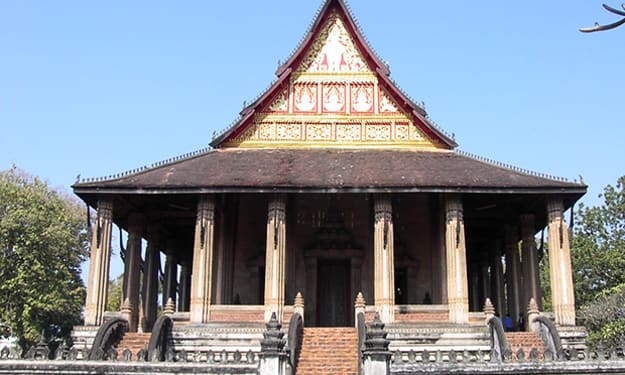
The Ghostly Past of Wat Sisaket: Lao's Spiritual Mystery Deep in the center of Vientiane, Wat Sisaket is a legacy to Laos' violent past and spiritual heritage. Built in 1818 on the orders of King Anouvong (Sethathirath V), this temple is the oldest surviving Buddhist structure in the capital, having escaped destruction by a hair's breadth during the Siamese invasion of 1827. Its unusual Siamese-influenced design—featuring a five-tiered roof and a cloistered courtyard—likely spared it the same fate as neighboring temples, which were reduced to rubble. It is today revered not only for its history but also for its notoriety as one of the most haunted locations in Laos, where the specters of the past whisper along its dimly lit passages.
By Kyrol Mojikal9 months ago in Horror
Something Is Living Under My Bed
I used to believe monsters only existed in a child’s imagination. Sharp teeth, glowing eyes, clawed hands reaching from the dark—things parents dismiss with a laugh before turning off the lights. I believed that too, once. Until the night I realized the fear under my bed wasn’t imaginary.
By David John5 days ago in Horror
Miss Persephone's Manual to a Seemingly Ordinary Life
Miss Persephone was found at the dining table, her blue eyes swollen, her tears arriving and retreating like the tides of the ocean. Earlier that day, her family had visited her in the retirement home where she had lived for eight years. It was her eightieth birthday.
By Imola Tóth4 days ago in Fiction


Comments
There are no comments for this story
Be the first to respond and start the conversation.