
Secret of Old Pond
Two silent sisters, the schoolteacher Ms. Henrietta, and a quiet town's dark secret.


She used to bite me, one of the sisters.
Now they sit opposite one another, as they do every Tuesday, watching lumps of brown sugar dissolve into black coffees. There's a kind of silence between them that is heavy and secretive, their own unspoken language. Separate islands sharing the same understandings.
I work as a proof-reader for the local publishing company. It’s a small press in our small village, population of only about 200. My old friend Bill from back at school works as a proof-reader at the same place as me. We have worked there for thirty years, and I come to the Smiths Café to complete my projects.
Watching from a table across the room, I find the sisters sat on their two peeling armchairs, just looking out of the window or at one another, barely uttering a word.
The faces of some people stay the same for decades, never changing much from infancy to sixty, but the grey-haired sisters Alice and Christine look like entirely different people from when we played hopscotch on the playground, or called out for Ms. Henrietta when Alice had fallen over and grazed her knee.
*
My teacher from when I was five to fifteen, Ms. Henrietta, walked with a cane in her later years. The last time I saw her, I was almost getting to the age of needing one myself. She became headteacher after I finished school, and sometimes hosted community fundraisers. She was always known for sucking on mints, the big blue and white striped ones, unwrapping them gently and popping one into her mouth at the end of a lesson.
For decades, our town council put much of its money into the upkeep of the town’s Old Pond and school, until the mayor decided he needed more for his own pocket, and discrepancies began showing up in different accounts.
Since the mayor was replaced with someone else, there's more of a feeling of community in the town, but the Old Pond isn't quite what it used to be. It used to be where everyone would play and have picnics, take row boats out, a vast and welcoming space. These days, it is somewhat dingy and unforgivably overgrown. Children are advised to stay away. There have been some attempts to tidy it up, but to no sustainable outcome.

The last time I saw Ms. Henrietta was after her last fundraiser for the school’s upkeep two years ago, and we caught up in Smiths Café, open until 10pm. We reminisced about some of the things that kids had said to her. She told me that, one morning about ten years ago, after a particularly rushed journey to work in which she forgot to brush her hair, a young boy asked her, ‘Ms. Henrietta, did you want to be a scarecrow when you grew up?’ Then came her wicked laugh, and I saw the same sense of humour and charm from my childhood. There was something quite comical about her, the way that her face would suddenly turn at any interruption to her class, and the way she would get excited by writing up mathematic equations on the board. It was all so evident, any emotion she felt.
There’s a special but slightly uneasy feeling to continuing a relationship with a teacher as you both get older, knowing that you have some kind of an adult friendship, but that they will always have an unspoken hold over you. You can never fully relax. There's too much respect there. At one point during our conversation, this frail old woman suddenly stood up from where we were sat, and I immediately thought I was in trouble. Then she politely, in her softly-spoken way, invited me to her home. It wasn't the first time. I had been several times before.
But it was on this occasion that she told me what she knew about the sisters.
*
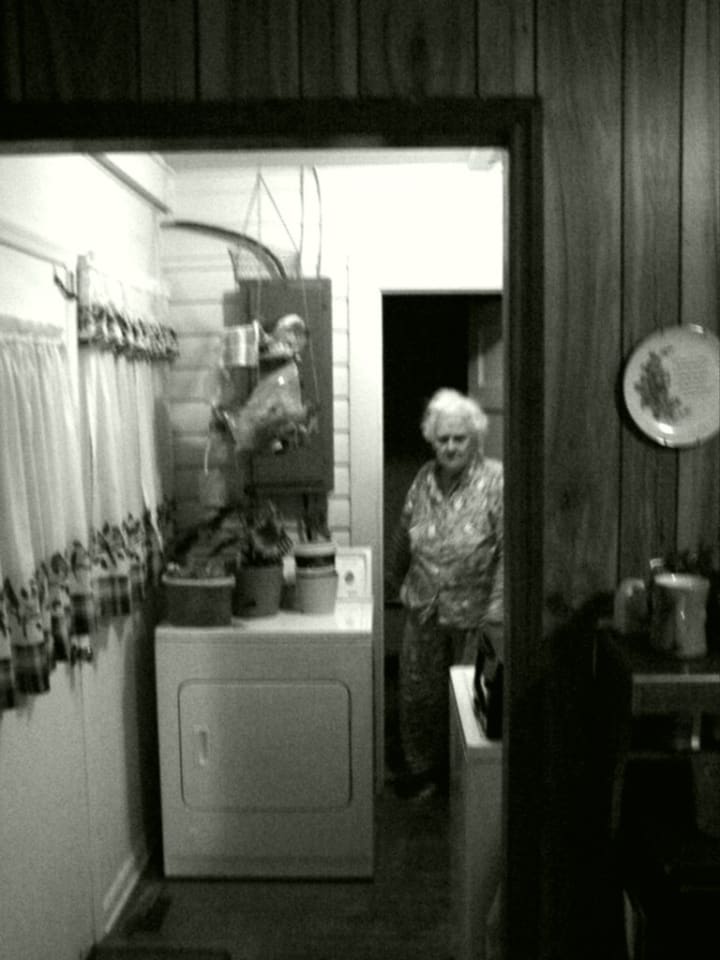
There was an uneasy quiet when arriving at Ms. Henrietta’s cottage. The water at night was lit by the moon's commanding glow.
I had known for years that she lived beside the town’s pond, but what I didn’t know is that the sisters did too. Christine and Alice had been there for at least thirty years. From one house to the other, the vast pond separated the cottages, the only other neighbours being the birds and the deer from the woods.
With Ms. Henrietta sat across from me in her chair, we continued our conversation over chamomile tea and mints, as we would perhaps once or twice a year, and she'd lead me into a story or two from her varied life. I would tell her about the family I had, my husband and our children. I would tell her about the proofreading, how my friend Bill was doing, and she would talk about her late husband.
This night was different, however. I hadn’t even mentioned the sisters to her, but she brought the subject up as if it was something that had been lingering in the air. She said she would tell me, and only me, before she got too old to remember every detail.
*
No-one ever skates on, or swims in Old Pond's milky, deceiving depths. The only man that tried to skate on its frozen surface on a particularly cold February evening had been, it was understood, not entirely of our world. A very strange man. A loner, yes, and someone that no-one could quite figure out in 1938, and certainly not today.
Records show he had frozen to death in the pond when his skates cracked the ice in half.
Ms. Henrietta used her hand to brush away any talk of the man who drowned in Old Pond, dismissing it firmly. She assured me that she was not one for ‘adding to old wives’ tales’, but that one evening two years ago, after a dull day of questions by members of the council about the mayor's payments and budgets (‘an embarrassingly bureaucratic affair’, she told me, gulping down a mint whole), she parked her car by the Old Pond and made her way up to the house. Everything was silent.
Then the noise came.
At first it was a low sort of squeal. A mating fox, she thought, or maybe a bird she simply hadn’t heard before. But across the path home, just outside of the entrance to her house, was a long, dark figure. It appeared to move.
‘What was it?’ I asked.
‘Well, that’s just it. I wasn’t sure. My eyes haven’t been tested since '76,’ she responded, and I looked at my watch. It was getting late, and I wasn’t sure where her story was going.
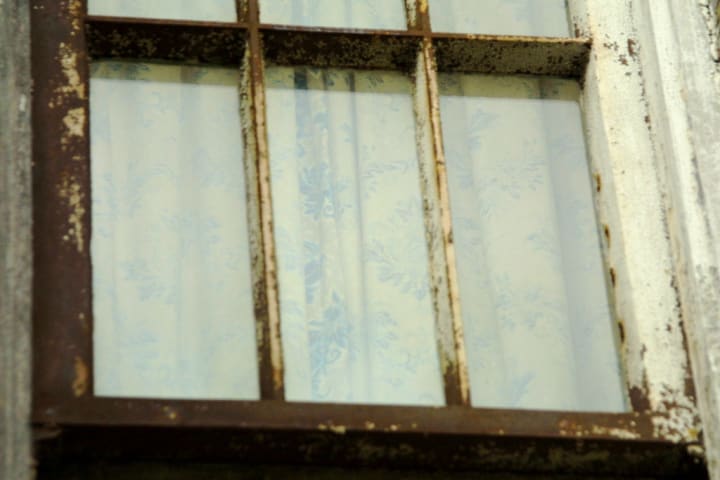
She told me that she made it to her front door, took her keys from her handbag, and stepped in to rest from the long day.
Then the sound came again, but louder this time, with a rustling of leaves. Startled, she stepped into the living room, and looked out of her front room window. No dark figure. Nothing on the Old Pond. Just the willow tree outside the cottage, serene in its grand stature, and the weeds on the front lawn at eye-level.
She made her way into the kitchen again and took a mint from the jar. She began to boil the kettle. ‘I thought I was losing the plot.’ She laughed, and I began to laugh too, mostly out of politeness.
I had begun to feel slightly more at ease now that the story seemed to be heading in a more comfortable direction, but I wasn't sure how the sisters came into this. Had they not just been fairly unusual girls when Ms. Henrietta had taught them? Were they not just eccentrics, even to this day?
‘It must have been around eight or nine. I turned to face the living room window, standing in the kitchen with my tea in my hands, and what I saw will stay with me for the rest of my life. You must never repeat it.'

I agreed, whispering now, as though we were children sharing secrets in the night.
'I saw Christine, you know, the one who used to fall over all the time, although of course now much older and paler… I saw her in a very strange dress by the pond.’
'How do you mean strange?'
'She was wearing old-timey clothes, you know. A sort of 19th century, long white gown. I've only ever seen it in the movies. I watched as she approached the pond and got into the water, like she was going for a swim.'
‘No one has ever swum in the pond, have they?’ I asked, more than just surprised, but confused by even the possibility. There was a moment of silence in which she composed herself.
‘Well, that’s just it. She wasn’t swimming. She floated on the surface for a little while, and then started to pick some of the weeds from towards the east side, the marshy parts. And she slowly drifted back to the side where their house is. There was no real expression on her face. Her eyes... Well, by this point I turned my lamp off. Then she disappeared...
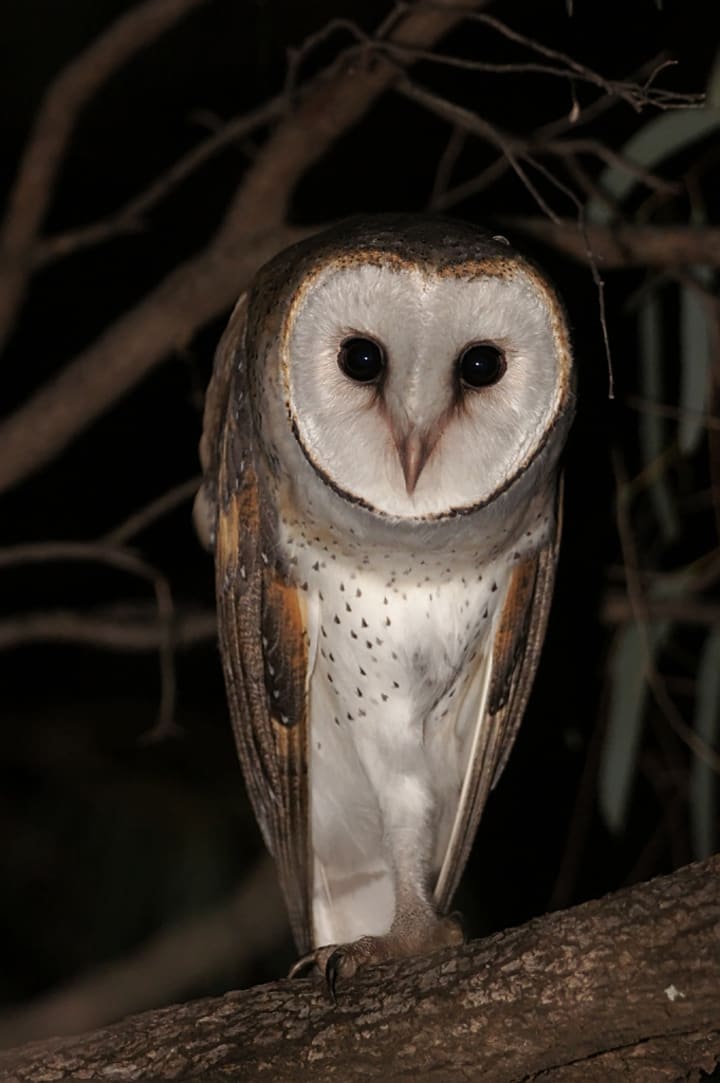
It wasn't until later that evening that I heard the sound again. This time it sounded like an owl, perhaps the sort of barn owl I have heard at night before. I remember the sound from when I first moved here and would be woken up by their wooshing about. I then got out of my chair, got my coat in and ran out. As I left the front door, I looked across the Old Pond to see Alice and Christine both sat out on their porch in those long, white dresses. It was so far in the distance that they almost looked inhuman, just two white shapes. I'd never seen them sat out like that before, so I called out to them, thinking perhaps there could have been some sort of trouble. The noise got louder and more frequent. A howling, almost. They stood up and it looked like they had something that they were holding, a bird possibly. But the noise stopped as I got to the other side of the pond. ’
Ms. Henrietta's hands were shaking, and she described her story with such conviction that for a moment it felt like I was back in a history lesson, learning about a moment in hstory, perhaps a war, something distant and removed.
I had not seen Ms. Henrietta this upset since my friend Bill found a dying owl on a school trip when we were nine or ten. He decided, in only the way that a child could have, with both innocently foolish and earnest intentions, to pick the bird up with his bare, grubby hands, and throw it into the air. I suppose we’d all hoped it would resume its joyful nature, to fly up to a nearby tree and be reunited with a high branch, but without much life or hope left in its wings, the owl simply flopped pathetically back down to the ground like a circus clown tumbling off a chair. I recall specifically that Ms. Henrietta had started to cry from the shock of seeing this poor bird losing its life. She always cared so much for little things.
I felt sick for my old teacher, and sick for myself. I wanted to leave her home, but I also wanted to hear the rest of the story. I was paralysed in the moment, looking intently at her with the hope that she would tell me this was some way of trying to spook me, the fire crackling behind her shoulders.
‘When I arrived at the sisters' house, they had gone inside. I couldn't see them. The doors were shut and the windows were closed. But there was a bird. There was a barn owl on the rooftop. It had a pale, inquisitive face, and it looked directly and deeply at me. If I was seeing a barn owl, I knew it must be getting late. The wind was getting faster and heavier, and the wood of the porch croaked...
It had been the beginning of a storm that lasted several days. I don't know if you remember the name of the storm, two years ago? I certainly can't. Perhaps the most brutal of storms don't receive a name.'
She sipped her tea. Mine had gone cold.
I assured her that I would never tell anyone the story, and after retrieving my coat and embracing her, we said our goodbyes and I returned home.
*
A few days later, Ms. Henrietta passed away in her sleep. I made no mention of her story to anyone.
I watch the sisters sometimes now, almost quite frightened of them, knowing what I know. Any time my mind wanders from my work, my vision finds them playing Scrabble with their bony fingers, peering forward on their armchairs. They quietly order the same black coffee every Tuesday morning and walk back to their house by the Old Pond.
Bill called me yesterday evening to tell me that he was sure he had come across a tall grey-haired woman, who he thought was Christine, sucking on a mint in the woods by the old school.
About the Creator
Joseph
Based in Gloucestershire, UK. I write poetry and short stories.
Killing him slowly
There’s an intruder in my house again. He stumbles through the door, wet carrier bags in hand. He’s bought me offerings. I show my appreciation, letting him caress my beautiful body. He wants to touch me. I rub myself against his legs. He sighs, dropping the bags. He can’t resist touching me. Running his hand slowly down my spine, I arch my back towards his caress, let out a low purr. It’s what we both need.
By N J Delmas7 days ago in Horror
Dead and Wearing Green
She was wearing that green dress when I first saw her, five years ago to the day. Flowing meadow fabric draped over long legs, thick auburn hair flowing down her back. That smile. Of course, she is still beautiful now. But now she is no longer alive.
By Karen Cave7 days ago in Fiction




Comments
There are no comments for this story
Be the first to respond and start the conversation.