
R.I.N.A. Siege 2031
Women survivors from the Last Frontier

This is a collection of stories from survivors who happen to be women located in Alaska during the Russia/China siege of 2031.
Every American can tell you exactly where they were when they learned the massive fleets of our enemies were lingering not far off the west coast. It was a panicked mess of the ages.
The people living in America’s Last Frontier had the worst of it as supply chains were cut off with winter on the horizon. The military bases in Alaska were not only centers of defense but also hubs of humanitarian efforts for the hundreds of thousands of civilians living across the notoriously extreme state.
While every major government, TESLA and other mega corporations made a show of their efforts at a renewed space race, ever the fan of submarines; Russia had developed a large fleet of submersible drones and had managed to map out the entire west coastline of the United states and Canada. They had maps of everything from refineries to major ports of trade and fishing harbors to Naval Bases. The new and improved satellites everyone had been launching helped them pinpoint some of the major chinks in the American armor. The firm belief that they are invincible.
Every satellite circling the planet, including the International Space Station, noticed the massive naval movements of Russian and Chinese fleets towards America’s west coast. It was all anyone could talk about. Politicians were on television blaming each other.
Asian people of all descents were harassed and assaulted in the streets. Russian immigrants and first generation citizens were systematically rounded up and held in camps until they could be cleared and confirmed American patriots.
For the rest of the US population, it was an ordinarily quiet Wednesday afternoon. People in the lower-48 had largely resumed life as normal, bored of the standoff. A single coordinated attack by Russian/Chinese forces destroyed a majority of harbors and ports along the west coast and crippled most naval assets.
Alaska was essentially cut off. No supply ships were allowed through the blockade. The multi day drive on the notorious Alcan Highway through Canada became the main route of transporting fuel and goods. Some emergency supplies and MRE’s could be delivered by air. The drivers braving these routes through the Alaska winter have harrowing tales of their own. Thanks to their bravery, many Alaskans survived the ordeal.
The geographically massive state of Alaska has a population less than half of the Portland, Oregon metro area. At the onset of the crisis, priorities were placed on the major population centers in the lower-48.

The United States of America will forever remember the attack of August 26, 2031.
Some Alaskans would be entirely on their own for the duration.
-- Angela --
“Angie is fine. I drove plow trucks when I was working for the Alaska Department of Transportation back in ‘31. Little Shelly and Ryan would have been just 4 and 2! Josh was a commercial fisherman and was at work almost all summer every summer.”
Josh was out finishing the silver salmon run when the Russian/Chinese forces showed up startling fishing crews all along the west coast. All vessels were ordered to return to harbor and Josh was home 10 days before the attack. Before the kids, they would spend the entire first day home in some state of loving-making, flirting and petting. Nowadays, they’re lucky if they can get a quickie in the mornings before the kids wake up.
He returned home with his usual piles of coolers of fresh seafood stored in dry ice and ready to be smoked, canned or frozen for the winter. That was a multi-day event. Nothing makes a person feel more productive than setting away nutritious foods for your family.
Summer was slow for plow drivers so Angie would pick up a few flagging jobs at the frantic-paced road construction sites. The window of above freezing temperatures is short for the road crews. Glennallen, Alaska is located in the middle of nowhere at the junction of the Glenn Highway and the Richardson with a population of around 500. The Copper River and its world famous salmon fisheries that run nearby draws thousands of Alaskans annually to dipnet and vie for their annual limit of salmon.

“The summer of 2031 ended with a fishing frenzy and plenty of fist fights. A trooper was chatting me up at one of my jobs. He was telling me people are getting spooked with the Rinas. Combat fishing is the worst he’d ever seen. Elbow to elbow down there and tents set almost on top of each other. When you’re flagging, you have a lot of time to stand there and think. I just couldn’t get this warning of sorts out of my head.”
Between Angie and Josh, they were living comfortably in their three bedroom log cabin. Like many Alaskans, they relied on an outhouse. The water flow from the well pump was a little low, especially in the winter, so it went into a holding tank before going into the house. They have indoor water for showers and cooking. It is common for Alaskans to pay for a regular water delivery service, or to haul their own in giant water tanks. They had been actively making the switch to off-grid living and had a few solar panels in place. Not nearly enough to run a household.
The family of four had two snow machines, ten cords of firewood for backup, a Toyo heater, 4x4 diesel truck and an old Subaru. They also have their firearms, fishing & camping gear. They have months worth of non-perishable foods stored away and plans for hunting caribou and moose this coming season. A lot of other people were in much tougher places going into winter 2031-32.
“Even if you’re doing okay. When you live up here, you always have to kind of be thinking about “what if” scenarios. The things that tend to get you in a situation are always the ones you never saw coming. And then when you have kids, the preparations feel overwhelming because you’re sure it’s not enough and your baby is going to starve or freeze.”
Most residents in the area heard about the explosions on August 26 from text messages. Internet and cell service kept cutting out, only text messages got through. Friends and family were reaching out trying to make sense of what was happening. They said the refinery blew up and took out at least the marina with it.
Later, reports would indicate the harbor, located across the bay from the refinery, was a separate and simultaneous target.
Angie couldn’t blame her husband for jumping to go check on his son from a previous marriage. It’s exactly what any parent should do. She respected that about him. And yet, she still couldn’t help herself from making a snide comment about his ex. Angie has always felt jealousy towards Monica. The frequent negative remarks were a regular source of conflict between her and Josh.
He didn’t wait until morning. Josh loaded up a bag of gear, some food and blankets. He made sure to give his kids hugs and instructions to “mind your mother” before sweeping Angie up in one of his famously overdramatic dipping kisses. She lowered her gaze before apologizing for earlier. He assured her for the umpteenth time that she’s his ex for a reason. There’s nothing to worry about.
“I never had much interest in watching TV so I was never in the loop on the hottest movies and shows. I watched more TV in those few days Josh was gone than I ever have. The news only talked about LA and Seattle. One cutesy reporter did a feel good story from Depoe Bay, Oregon “The World’s Smallest Harbor.” It was spared the carnage. They didn’t mention Alaska a single time!”
The days seemed to blur together and the kids were really getting on Angie’s nerves. Work had stopped. She felt trapped at home with worry over the whole circumstance. America was just attacked, her husband had been gone for days with his ex and their kids were into everything.
“I remember that I heard the truck before I saw it. And up the dirt driveway with little spruce trees on either side, comes Josh, towing a camping trailer. I see Ian, Josh’s 14-year-old sitting in the middle and Monica next to him. I felt relief and disbelief. She’s not staying here! Is the first thing I thought.”
Given the emergency situation and the fact that Ian is his son, too, Josh won out. Monica and Ian would winter over in the camper trailer. Monica didn’t exactly want to be there, either, so he expected Angie to be welcoming.
The next couple weeks went by and Josh and Ian struggled to progress winterizing the camper because of a lack of supplies. There was a panicked run of all goods in the days following the attack. They were able to chat with neighbors and meet new ones. The guys’ hodgepodge last minute efforts included framing in around the trailer with a layer of whatever insulation they could get and a rough roof, insulation-foaming the bottom and seams and completely removing the kitchen and camper “bathroom” and installing a small wood stove one of the mushers up the road let them borrow. It wasn’t going to be pretty. Hopefully it would keep Monica and Ian not-dead.
Angie and Monica had one short conversation where they both made sure the other understood how much they didn’t want to be in the situation. It was better to be together with everything happening in the world. The women would do their part to remain civil.
“I was really proud of myself! That’s not to say I didn’t suspiciously watch her around Josh, but I kept interactions between us strictly on topic and if I’m going to be honest here. She was excellent at braiding Shelly’s hair and patient with her constant questions.”
When it came down to it, Josh just couldn’t come up with enough materials to finish siding and insulating the rough structure and it was becoming a point of urgency as the first dusting of snow had fallen. Angie was rinsing some kidney beans when she had the epiphany! The old shop at the transportation hub! She had made the observation years ago that there was no heat inside, yet they insulated it and only used it to store equipment. They could salvage all kinds of materials off the building and not hurt anyone.
They had taken to walking for almost all of their transportation even when something was a few miles away. They used their Subaru only when absolutely necessary because gas was getting scarcer. Josh and Angie made a tow-sled out of chunks of metal siding and piled on the insulation and other supplies they were able to find. With pink faces and a chipper demeanor the two proudly creeped the mile or so home with their score dragging behind to complete the winterizing project. It was done with less than two days to spare before the first measurable snowfall of the season.
“It hadn’t hit me until that moment that I’m the usual plow driver! We talked about it over dinner and we all agreed I would save the fuel in the plow trucks for when things got worse. It’s not like I had a supervisor or anyone contacting me about this season and I had the keys. I guess that kind of made me the boss.”
Most people, when they’re making their emergency plans, are planning on food for their immediate family. Not extended guests. By New Years Day, 2032; The heating fuel had been exhausted with resupply nowhere to be found, so they were burning firewood. There was an obvious dent in the long-term food stores that just couldn’t be ignored. The caribou hunt had been successful, but Josh struck out on moose. There isn’t much meat on a Caribou.
With breakup (the muddy transition between winter and spring) still three or four months away, the adults decided to begin rationing their calories. After months of seeing essentially the same people, walking the same routes, eating the same foods, watching the same movies and reading the same books, the monotony began to wear on Angie and her mood grew dark.
“I know what I saw! I saw them look at each other…. Like that! You know… THE look. I screamed some truly terrible things at everyone. It wasn’t my proudest moment.”
It was snowing heavily. Angie gathered up Shelly and announced they were going to plow. It had been a couple weeks since she had last done it and they needed to get some fresh air. Shelly loved riding in the plow with her mom so they hopped on a sled (snow machine) and headed for the transportation hub.
Angie was fuming and lost in thought. Running the plow in these empty conditions was a mindless endeavor allowing for plenty of time to overthink everything and make herself even more angry.
“I must have been going faster than I thought when I went to make the turn around to head back. I was turning and then it felt like we were tipping. It was like slow motion. I told Shelly to hang on, we’re going over. And over we went with a giant puff of powder.”
Angie was able to lift Shelly up and out of the truck’s driver door and climb out herself. They were at least dressed for the weather and started walking the 12 or so miles back home down the freshly plowed trail. It doesn’t take long for a 4-year-old waddling along in arctic gear to get tired. Shortly after they set out, Angie was carrying her. After getting hot with the effort inside the super insulated clothing, Angie took off her outer coat, tied it around her waist and piggy-backed the toddler for a while.
The exertion was tiring and it was already dark with the only light reflecting off the snow. She had to sit down. She was exhausted and had barely made it four miles. She had to sit. While she sat and moistened her mouth with some snow, her sweat cooled and she got to shaking so she put her coat back on and started walking again, alternating between carrying her oldest child and making her walk.
As they trudged along, Angie assured little Shelly that her Daddy would be along any time now to pick them up but mommy just needed to sit a rest a minute. It’s just too hot. Angie laid her outer jacket down on the ground at the edge of the plowed trail on the road and beckoned Shelly to come lay with her as the little spoon. Angie covered as much of little Shelly’s body with her own to keep her as warm as she could and she powerlessly drifted off to sleep.
“I woke up like a week or so later in bed and my little Shelly was dead. My big girl. It was my fault. I was devastated and kept to my room. I shut out all of them. Every one of them. No new emergency of this disaster mattered. I should be dead, not here feeling this shit… Can we stop now?”
It may have happened before the accident or as a result of the grief, but whatever the cause Josh and Monica did grow close again as they both dutifully cared for Angie who had to be pressed even to bathe and eat.
Angie is still coping with the ordeal. She lives with her mother in the Seattle area. Ryan comes to visit during school breaks. At the end of every fishing season a couple coolers of seafood packed in dry ice are delivered for Angela.
-- Camila --
“Okay. So let me start by telling you that I’m Puerto Rican, okay? We only got to Alaska like two months before everything happened and I was scared shitless about bears and the wintertime with how cold everyone keeps saying it gets. Where I come from, we only get hurricanes, okay? And those are easy compared to this.”
Camila was 20 when the siege began. She had just moved to Fort Wainwright, Alaska with her high school sweetheart husband who was a Specialist in the US Army. They lived on post in a 2-bedroom townhouse with a garage in government family housing.
Camila and Luis were not at all interested in children and were looking forward to seizing the Alaska experience. Within the first month they had already rented kayaks and had an intense experience watching a moose eat the water vegetation while standing in chest-deep water. They had plans for hunting, fishing and making love under the majestic Aurora Borealis.
Military spouses are privy to a little bit more information than civilians, but not much. Sometimes you just have to observe the military’s response to a situation to figure out what you need to be doing. So, when the guard gates coming into post went from low risk to high risk overnight and the support troops were working 12-16 hours days, things were getting a bit serious.
After the “Rinas” (Russia/China forces) finally attacked on August 26, the Pentagon decided that Alaska, and all west coast duty stations, were no longer safe for dependents. They were evacuating all family members on short notice to anywhere but the west coast. Evacuation drop points included Dallas, Chicago, New York and Atlanta. If you needed to go anywhere else, that was up to you, or you could stay at one of the temporary shelters they set up just for military families.
As soon as news of the attack broke, every retail, gas station and fuel business within the state was wiped clean of anything even remotely useful. Shop owners shot frantic looters in an effort to protect their precious inventory. Contrary to popular belief, not all Alaskans are the hardy, rugged individuals television has led people to believe.
Camila is not a General’s wife, nor an officer’s spouse, or even a mom. Therefore, she was among the last dependents out of Fort Wainwright. The panic of Alaskan civilians was not hard to miss. Desperate families protested at the post entrances. “Take us, too!” “Save seniors first!” “Give us fuel!” they yelled from the other side of the temporary orange traffic barricade. The military police used to have to contend with wayward moose but now entire families of their fellow Americans were cutting, climbing, and digging their way inside the perimeter fence desperate for any sense of safety.
One night, it was still daylight at 2am, Luis had drawn guard duty. When he came home in the morning for a nap and a meal he was clearly stricken. He wept as Camila held him and caressed his classic military high & tight.
“I knew Luis since before high school. I never even seen him act like this. We all went through Hurricane Maria when we were little kids, okay? He told me they had orders to remove all trespassers. All supplies are mission critical. They are not authorized to share anything. Not even the pallets of MREs we have stacked in the hangars, he told me. He said they had to remove crying moms and sad little kids at gunpoint because they didn’t want to go back out there. He was just so distraught.”
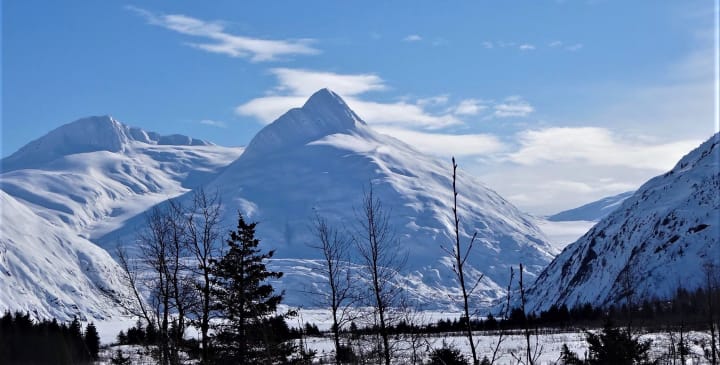
Everyone who had lived a single winter in interior Alaska was suddenly, and urgently aware how tenuous their situation had become. The sense of impending doom was palpable as the birch leaves yellowed and fell to the Boreal forest floor.
Camila took one of the last transports to New York where she was able to couch surf with family for a while. The concern and stress over her love was a constant torment but surely nothing worse than what he was experiencing.
The troops were working almost constantly. Getting through to anyone on the internet was sketchy. Rumors circulated surrounding whether that was a defense thing or more meddling from the Rinas. Regardless of the cause, the lack of information is always maddening when you’re worrying.
As the days of fretting blurred into weeks, Camila began taking advantage of new programs coming out through the Army for dependents. CPR, Red Cross, EMT and driving courses were being offered to family-members of servicemembers. With nothing better to do than make herself sick with worry, Camila signed up and learned everything that was made available. In just over a month, sometime in November of ‘31, she was as trained up as she was going to be in that timeframe and felt stuck sitting there waiting for news of something, anything she could help with.
“Nobody was hiring for anything right then. Like, all I could do was sit in my sister’s house and watch the TV news about them dealing with the stuff around LA. Like, they never even mentioned Alaska. Like at all. So, I get an email from my husband’s unit’s FRG and they’re telling us how we can learn skills to maybe help. If we’re interested, we had to go to this meeting at the Chapel on Tuesday.”
Things are already getting frigid in November in Interior Alaska. The first insulating layer of snow is covering the ground as overnight lows dip below zero. Alaskans in general are doing alright. Everyone still has summer stores of food and many are sharing with their neighbors. Fuel hiccups happened. Parts of the borough with neighborhoods showcased that Alaskan community survival spirit, like legends the Iditarod are built around.
“When I watched the news it was like all they could talk about Seattle and LA. It wasn’t even below freezing and these people were complaining about how cold they were! I was so mad. Didn’t they know that it was already snowing in Fairbanks?”
Camila helplessly read the calls for help coming from Alaska on social media. Desperate people were no longer asking for money -- they were asking for a way out. They hadn’t signed up for these hardships and had family everywhere else. Other people had the sort of charming Christmas holidays you only read about in Little House on the Prairie.
Some Alaskans began experiencing real hardships in January. The fuel truck deliveries had slowed with the -50 degree weather along the Alcan. In a normal January the air quality in Fairbanks is worse than industrial Beijing. During January, 2032 Fairbanks was still and quiet. Even with the inversions the air was clear. Only dog teams were bringing news and a few supplies between communities.
“I got back in time for the clean-up, okay? Nobody told us how bad that would smell. I swear, not even kidding, when I tell you that there was dead people in like every other house. They don’t tell you that on the news. They don’t tell you what it was like for these people because they were forgotten.”
In March, 2032 they started asking for volunteers to go to Alaska. Camila signed up and with her training was accepted immediately. They even let her move back into their 2-bedroom townhouse. It was nice to have the quirky fridge magnets back.
“I landed at Eielson, not Wainwright. Luis was there to meet me! It was just like the romantic moments they show in movies! He kissed me like he never kissed me before or since! Let me tell you, mija!”
Camila went on a tour of the immediate communities of Nenana and out passed Two Rivers. She took plenty of notes about the extra-extreme conditions the people there had been coping with all winter because of the lack of heating fuel and gas. At the places they stopped, the people reported that they weren’t doing too bad. Things were not easy but large scale death wasn’t imminent. Supplies were eagerly welcomed.
“It was unusual that the Army let my husband go to work on the security detail that came with my new job. We were on the front line team searching for unused, snow covered driveways hoping they would lead to a house where we could check on the residents. Our job was to follow each and every lead for human habitation. Other teams were following up on the queue of SOS calls from remote people.”
Once initial contacts were made, the first-responder contact team began making twice weekly trips to the closest “communities” to deliver urgent medications, MREs and water. We were even authorized to pass out hunting ammunition. Soon, they started piling bodies up at the meeting points for us to handle. The ground in interior Alaska is frozen solid for most of the year. Camila somehow found herself in charge of handling a mass casualty event.
“When I told them that we would help them bury their family members, I didn’t know they meant like right then, okay? When we were clearing the North Slope it was still frozen, it’s always frozen, so the bodies didn’t stink and the polar bears had eaten anything they could get at. I kind of think this is where I got my thousand yard stare. The slope was hard…. Okay?”
The clean-up crew of sorts eventually made their way up to the oil drilling operations north of the Arctic Circle. These operations are referred to as “The North Slope.” The conditions are among the harshest on the planet and are only operational because of the supplies the crews receive from the extreme and daunting Dalton Highway.
They ran out of fuel and heat a long time before anyone else did because it was assumed the corporations who hired them and transported them up there were looking after them. The few hundred bodies they helped recover were mostly frozen asleep in bed.
Breakup that year was particularly gross. The end of winter means the snow melts and the rivers start to flow again. Even in the best of times, it is always a muddy, filthy, soupy mess. Add to that the lack of services all winter and people in towns started getting sick with Cholera and other illnesses.
If an Alaskan is not actively preparing for the hardships of winter, they are in the midst of handling one. It may be this habit of steadfast independence and subsistence living that created the culture that despite it all, kept many Alaskans home even when they had the chance to evacuate later.
“My loud, Puerto Rican sass won them all over! None of these “Alaskans” can handle my spice! Luis and me can land anywhere in this state and sit at a table and eat hearty food with friends who have shared a certain… thing. Back in July, 2031; I couldn’t have imagined myself stacking frozen bodies. None of us who were stacking bodies and working relief efforts could have imagined this thing going on into summer.”
Green up in Alaska happens quickly. Thanks to the long daylight hours, before you know it, you have bounties of berries, fish, game and more. The Pentagon set up evacuation efforts heading into the next winter. Most of the remote residents chose not to take the government up on the ride out. They hadn’t experienced a winter much different than the normal ones. The people who had remained last year in the larger towns & cities were much more eager to wait out another winter... anywhere else.
Despite the added hardships, people still managed to put away quite a haul of food throughout the summer. Massive community efforts were organized to make sure every household that was hanging on into the next winter was well supplied with firewood and MREs.
The news said it was 314 days since the start of the siege when Rina left the eastern Pacific and trade routes were able to resume. It took weeks to get those shipments planned and months before the first major cargo ships set sail loaded with goods. With it’s substantially diminished population, Alaska was nowhere near the top for cargo destinations.
Alaska began receiving regular supply shipments again in February, 2033.
“I am not going to judge anyone in either of the winters for anything they did so that their families survived, okay? Yes, people ate other people. That stuff happens in things like this and I feel like we should be talking more about all of the helpers who saved lives.”
Luis finished up his contract with the Army and devoted himself to supporting Camila who found her calling with her high profile position on the Alaska Emergency Response Team. Camila has her eye on entering state level politics. They are in the process of adopting twin boys who were orphaned over the winter of ‘31.
--Shawn--
“Yes, I’m a chick with a dude’s name and a dude’s job. I grew up over by Healy and learned about being a guide working the summer tourist season around Denali. Before the siege, I ran a pot-friendly guide business. I mostly took stoned tourists out on kayak and canoe trips. Some fishing and some scenic. In the winter, I switched to aurora trips. People pay a premium to be able to do anything new while high.”
Shawn was 46 when the siege happened and locals will tell you she looks the same today as she did then. She has a short grey spiked cut with dancing mischievous eyes that betray her confidence at life. She appears more fit than an athletic 23-year-old. The rest of the United States might recognize her from the famous picture of the naked woman, standing on a canoe yelling at an American naval ship outside the Port of Valdez.
Her place was a classic Alaska dry cabin with one main room and sleeping loft above. Shawn’s cabin had a small water tank, and her outhouse was decorated with 1950-60s heartthrobs of both masculine and feminine sensibilities.
“With the siege, tourism had completely stopped. People living in the state weren’t out for family vacations, either. They were all just as busy worrying about what’s happening as everyone else. I smoked a lot of weed and tinkered on all the stuff I had been putting off. When I wasn’t doing that I was shooting the shit down at the bar. I get high down at the bar, too. Nobody has ever said anything about it. All the fishing fleets were in harbor and the tour boats, too. In the early days of Rina, we had some good drunken times hollering about the invaders ruining our lives. There were plenty of sloppy drunk hug-fests with everyone missing everyone else when we all die. All the locals were fucking everyone else. It was like nobody knew if that would be their last nut.”
Among the locals, Shawn has a reputation for being a bit on the wild side, good natured, fun and sometimes a little trouble. She was a hit with every man at the bar and a curiosity among women who had heard rumors she drives on both sides of the road.
“Oh yeah! I love the love of a woman! I try not to mess around town here because that always means trouble. I’m not the settling down type and I learned from experience -- don’t play with the fishermen's wives while they’re out of town. I may have earned a shiner or two in my day. Let’s face it, belligerent men love pussy jokes and fuck stories. I’ve always been a sucker for attention.”
On August 26, the usual crew of stressed out unemployed guys were gathered in the bar already in a heated debate about how long this thing would go on and about how they’d actually have to talk to their wives if the booze supply ran out. With absolutely no warning, the refinery across the port exploded quickly followed by the largest ships and boats in the harbor. The concussion wave blasted out all of the windows, front and back of the building and flung obese men about like they were rag dolls.
“It was Tony. Tony was sitting in front of me, his back to the harbor so when the blast hit, he flew forward onto me while his back was filled with shards of glass and shrapnel. I was pinned under him as he gargled his last words. He asked me to tell his wife he was sorry, and then he went limp and was gone; laying on top of me with parts of the table poking into my side. Any other time, I may have asked if he was happy to see me...”
The table piece that was poking into Shawn’s side was actually stabbing clear through just above her hip, somehow missing her organs. People in their homes away from the blast lost windows and rushed down to the harbor to render aid. There was one ambulance for the community. The hospital in Valdez is small and nowhere near ready for a mass casualty event with only ten long term care beds available.
In the seconds and minutes following the blast, the people who were knocked out started to come to and the wounded started wailing and crying for help. It felt like forever stuck under a dead man before another guy helped her out. Whoever he was he was unrecognizable with blood and dirt covering him. He shambled out of the bar as the dusty light streamed in.
“Of course that shit hurt. I had a giant splinter stabbing through my side. I didn’t know if it hit anything, sure felt like it did. I don’t remember going to the hospital, but I got there somehow.”
The hospital was overrun with injuries. Some were serious and some were not. The staff didn’t have time to set up emergency triage. As a guide, Shawn was required to stay current on first aid training. Despite the growing blood spot on her side, she was able to help with some of the minor injuries.
Not being critically wounded, Shawn underwent surgery the following day. The wood pieces were removed and the punctures stitched shut. Not having any beds available, she was released as soon as she was awake.
It was the first time she had seen the damage. The refinery was still burning causing people to cough. The Port of Valdez was an oil slick with debris of all sorts floating on it. The ships had mostly sunk and some were still burning. Some didn’t sink all the way. The businesses at the Marina with taverns, gift shops and boat charters were either leveled or blown back to the framing. People with filthy tear streaked faces and no more tears left to cry numbly scanned the bodies that had been laid along the street in a row. They had been covered except for the face with whatever fabric people could find, waiting for someone to claim them.
“It was kind of like an out of body experience. I’ve faced down more than one Grizzly and this scared me.”
Roughly half of the town’s remaining residents fled to anywhere else. A few medical drops came from the air. Those supplies reassured many survivors they weren’t entirely alone in this thing. The residents of Valdez that chose to stay through winter were filled with a righteous rage and failed to fully appreciate the consequences of their choices.
“I couldn’t tell you if they were Americans, Army or Space Force. We sure needed those supplies. That was probably the last bright spot for months. The smell of spoiled food and rotting flesh had brought out the scavengers. We lost a couple more to bear attack. Fucking Alaska. She’s a beautiful cunt.”
It was the early hours of almost daylight. Horrific wails and screams of terror echoed across the still black water. Shawn, who had taken to sleeping fully clothed, shoes on with her sidearm handy, popped out of bed to see a skinny grizzly sow running by with a child in her jaws being trailed by two bloody-faced cubs. Bears searching for a meal continued to be a problem right up until they bedded down for the winter. Shirley was discovered dismembered. Tyler’s remains were never recovered.
“I think. When we were making the decision to stay we hadn’t realized how fucked up everything was. In our heads we were used to having the port and the bays to go get food if we got cut off from supplies.”
All of the waterways around the Port of Valdez and an ever-increasing distance into the ocean was a sinister black oil-slick smothering everything in its path. Birds were still accidentally landing in it and unable to fly out again. Wind had pushed most of the rubble to shore. A king tide would pull it out again. The area was completely devoid of marine life.
The survivors in Valdez started having food problems in December. They were unable to fish. The winter snows were always much too deep for moose and avalanches commonly cut off the pass for days or weeks at a time during a normal winter. With no plows operating, they were cut off by road after the first major snowfall. They were still cut off at sea by the ongoing siege.
In January the first of the pets started being consumed. In February the taboo decision to eat sled dogs was made. Their musher wept and refused to eat.
By March things were getting desperate. Some of the survivors were sick and near death when the talk of eating them began circling others.
“I wasn’t even hungry anymore. I stayed in bed most of the time just kind of dozing off. One of the teenagers knocked on my door and told me about them going to kill and eat one of the sick people. So, I went looking for food. Maybe I would die and be done with this shit already.”
It was a sunny day and pretty warm. Shawn slid her canoe into the oil sheen by what used to be the docks. Her goal was to paddle as far as she could and hope she could find clear water with food to harvest and feed everyone.

“It wasn’t looking good. I mean there was nothing to eat and I was beyond hungry. I was weak. As I round this corner to one of the coves, there’s some big war ship tucked back in there! We’re over there starving and these fuckers are just sitting here?!”
Shawn started to paddle up to the comparatively giant boat in her tiny canoe. A voice boomed from the boat warning her to turn back or be fired upon. Knowing that she was going to die if she turned back, she started taking off clothes and with each garment would paddle a couple strokes closer. She could see the weapons aimed at her. She stood up and put her arms up. Her shocking skeletal figure immediately caused weapons to lower a bit.
“Somebody also had a camera aimed at me! I don’t know what I said to them as I was standing there. I think I said something about them being fat fuckers! HA! I plopped back down and had nothing left. I was spent.”
The crew brought Shawn aboard, ran an IV and let her rest. She told them about the cannibalism that was set to begin in town. It must have been a sight to see the naval ship pulling into port after such a long and hungry few weeks. They radioed in a call for aid and brought the sickest survivors on board for treatment.
“I don’t think those sorry souls ever knew how close they were to taking a turn on a spit!”
The Port of Valdez was a total wasteland. There still isn’t any tourism to speak of as the ecosystem slowly recovers. Shawn relocated to Seward, Alaska and resumed her 420 guide business.
About the Creator
MissAdventured
You will likely encounter a curse word casually tossed about and likely overused..
How-tos, fictions and doing all the things despite limitations.
It's a garbage can, not a garbage can't. #ms.misadventured
Contribute to the efforts! $DiW82
Keep reading
More stories from MissAdventured and writers in Horror and other communities.
Tangle With the 'Squatch
When I’m out on a “hunt” I try to take notes of things I see that strike me. I got a hot tip that back in the 70’s this one small lake up in the coastal mountains of Oregon was a hotbed of howling, footprints and other Sasquatch activity.
By MissAdventured5 years ago in Horror
"Scream 7" (2026): Running out of Fresh Screams
This is the seventh time we’ve had a Ghostface crisis. Scream 7 is the latest edition of the Scream franchise. Sydney Prescott and her family are under attack by another anonymous killer dressed in a Ghostface costume. While having issues with her daughter, Tatum, they run from the bloody murders, trying to determine who is behind it all.
By Marielle Sabbag4 days ago in Horror




Comments
There are no comments for this story
Be the first to respond and start the conversation.