
Objects That Were Never Meant to Be Found
An Investigation into Buried Artifacts, Sealed Rooms, and the Things Humanity Hid for a Reason

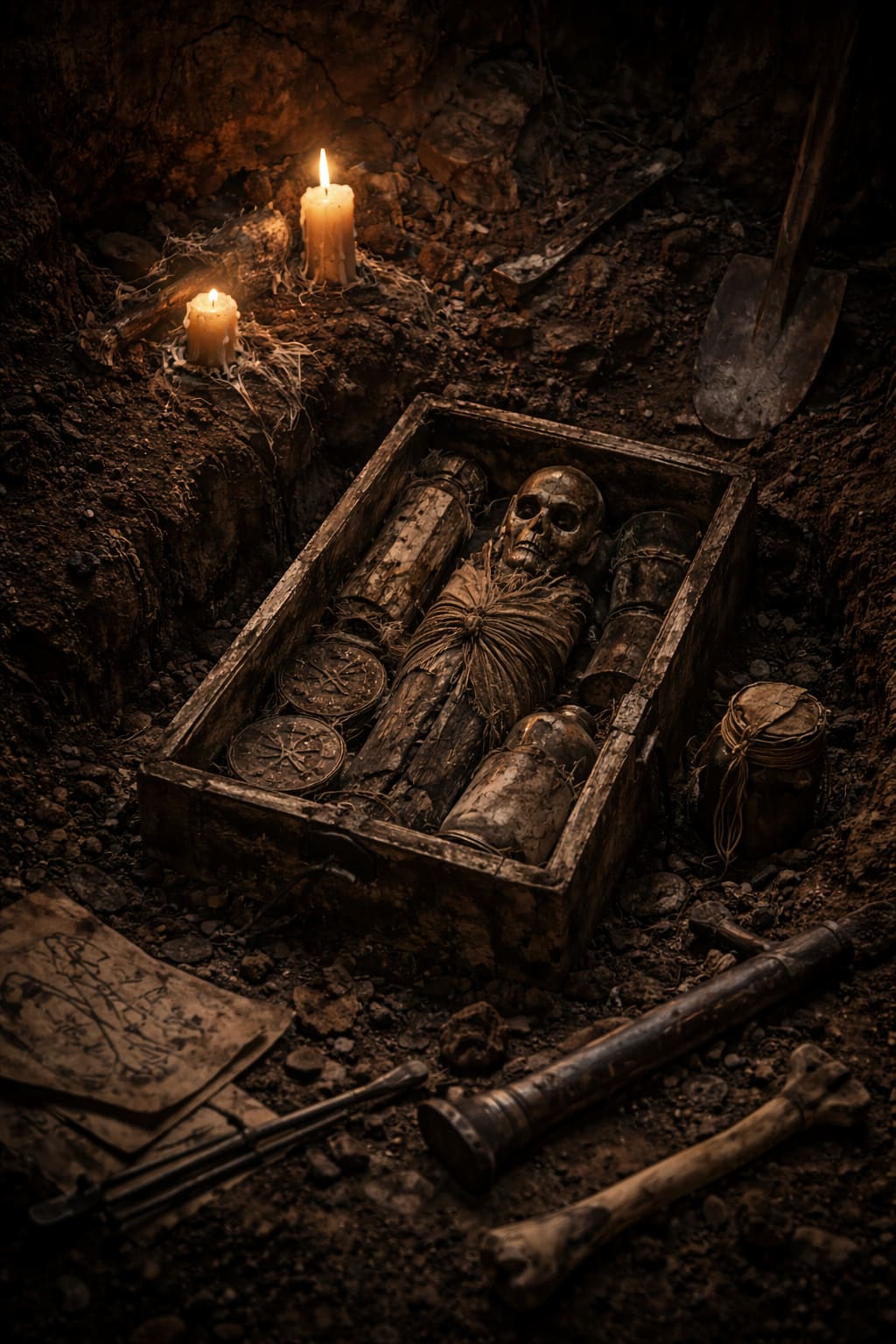
Some discoveries are celebrated. They’re displayed behind glass. Cataloged. Labeled. Explained. Their meaning is fixed, their danger neutralized by context and distance... Others are different.
They are found by accident. Dug up by construction crews. Pulled from the ocean floor. Discovered behind sealed walls or beneath layers of deliberate concealment. Their purpose is unclear. Their presence feels intrusive. The language surrounding them is hesitant, filled with qualifiers and speculation.
These objects are rarely introduced with excitement. They are introduced with caution. What separates them from ordinary artifacts is not age, value, or mystery. Its intent. The unmistakable sense that someone, at some point, went to considerable effort to ensure the object would not be encountered again. And yet... here it is.
The Difference Between Lost and Hidden
History is full of lost things. Tools dropped. Treasures misplaced. Records destroyed by time or disaster. Loss is passive. Concealment is not.
To hide something requires planning. Resources. Labor. And most importantly, motivation. Objects that were never meant to be found are often buried deeply, sealed carefully, or placed where retrieval would be difficult, dangerous, or unlikely.
Sometimes they are accompanied by warnings. Other times, the warning is the concealment itself. The question is not why these objects were created. The question is why they were removed from the world.
The Language of Sealing
One of the most consistent patterns surrounding these discoveries is how they were hidden. Not discarded. Not destroyed. Sealed...
Stone doors mortared shut. Chambers intentionally collapsed. Containers layered within containers. Symbols etched near entrances, not decorative, but directive. In some cases, the effort put into concealing an object far exceeds the effort put into creating it.
This suggests an uncomfortable possibility: whatever the object represented, it was considered too dangerous, disruptive, or consequential to eliminate outright. Instead, it was quarantined.
When Objects Outlive Their Context
Many of these discoveries share another trait: they are found long after the knowledge required to understand them has vanished.
Ritual objects with no surviving ritual. Devices with no known function. Materials whose composition doesn’t match known technologies of their time.
When these objects surface, modern analysis attempts to retrofit explanations. Religious symbolism. Artistic expression. Primitive experimentation. But these explanations often feel insufficient. Because the concealment doesn’t match the supposed harmlessness.
If an object was symbolic, why hide it? If it was ceremonial, why entomb it? If it was useless, why go to such lengths to keep it inaccessible? The mismatch is telling.
Objects That Interrupt Comfort
What makes these finds unsettling is not what they do, but what they disrupt. They challenge assumptions about technological timelines. They raise questions about belief systems we thought we understood. They suggest knowledge that didn’t vanish accidentally, but was actively suppressed.
In several documented cases, objects were reburied after discovery. Restricted. Classified. Removed from public view. Not because they were dangerous in any immediate sense, but because they resisted easy explanation.
Unexplainable objects don’t just confuse historians. They destabilize narratives.
The Problem of Intent
It’s tempting to believe that anything ancient and hidden must have been misunderstood by its creators. That fear or superstition led to unnecessary concealment. But the patterns don’t support that comfort.
These objects were often hidden after extended use. Signs of handling. Repair. Integration into daily or ceremonial life. They weren’t rejected immediately; they were removed deliberately.
Which implies a turning point. Something changed. And once it did, the object was no longer acceptable to leave accessible.
The Ethics of Digging
Modern archaeology operates on the assumption that uncovering the past is inherently good. That knowledge outweighs disruption. That nothing gained by concealment is worth preserving indefinitely.
But earlier cultures did not always agree. In many traditions, disturbing certain objects was believed to invite imbalance. Not because the objects themselves were evil, but because they no longer belonged to the present world. It's time had passed. Its purpose is fulfilled or rendered obsolete.
Removal was not curiosity-driven. It was containment. By digging, we assume every hidden thing wants to be known. That may be projection rather than truth.
Objects as Warnings
Some of the most carefully hidden items appear to serve no practical function at all. They are not tools. They are not weapons. They are not art in any conventional sense. They are markers.
Placed at boundaries. Beneath foundations. At the edges of settlements. Near places associated with transition, birth, death, decision, and departure. These objects don’t communicate through utility. They communicate through presence.
They are reminders. Or safeguards. Or declarations that something once occurred here, and should not be repeated. Their concealment ensures they remain in place, doing whatever silent work they were assigned.
When Discovery Feels Like a Mistake
A recurring detail in accounts of these finds is the discoverers' frequent unease. Not fear. Not excitement. Regret...
A sense that uncovering the object was a violation, even before its nature was understood. Workers refuse to continue excavation. Researchers describe headaches, insomnia, or an urge to abandon the site. Local communities object to the removal, citing reasons that are difficult to articulate.
This reaction is often dismissed as a psychological suggestion. But it happens too consistently to ignore. Something about these objects communicates a boundary. And we recognize it instinctively.
The Modern Reflex to Explain Everything
When confronted with objects that resist explanation, modern culture defaults to resolution. We label. We theorize. We place in controlled environments and declare the mystery managed. But explanation is not the same as understanding.
An object can be cataloged without being contextualized. It can be dated without being integrated. It can be displayed without being defused. In doing so, we may be repeating a familiar pattern, assuming that knowledge neutralizes consequence. History suggests otherwise.
The Possibility We Avoid
There is a possibility that sits uncomfortably beneath all of this, one we rarely address directly. What if some objects were hidden not because they were misunderstood, but because they were understood too well?
What if their creators recognized effects we no longer perceive? Social, psychological, environmental, or cultural consequences that didn’t lend themselves to easy control? What if concealment was not fear-driven... but responsible? Not an act of ignorance, but restraint?
Why These Objects Keep Resurfacing
Despite the effort taken to hide them, these objects continue to emerge. Construction, erosion, exploration, and disaster all peel back layers that were meant to remain intact.
Their reappearance often coincides with periods of upheaval. Rapid development. Cultural transition. Technological acceleration. This may be a coincidence. Or it may be repetition.
Each rediscovery forces the same choice faced by those who buried them: do we reintegrate what was removed, or do we respect the decision to hide it? So far, we always choose exposure. And we rarely pause to ask what that choice costs.
The Quiet Question Left Behind
Objects that were never meant to be found don’t demand belief. They don’t announce a threat. They don’t need mythology to be effective. They simply exist, out of time, out of context, and out of place.
Their concealment tells us more than their composition ever could. It tells us that earlier societies understood limits. That not everything beneficial to create is beneficial to keep accessible. That some knowledge, once removed, was meant to stay removed. The unease we feel when these objects surface is not superstition.
It is recognition. A quiet awareness that discovery is not always progress, and that some doors were closed with intention. Not because what lay behind them was imaginary. But because it was real enough to warrant being sealed away...
About the Creator
Veil of Shadows
Ghost towns, lost agents, unsolved vanishings, and whispers from the dark. New anomalies every Monday and Friday. The veil is thinner than you think....
Keep reading
More stories from Veil of Shadows and writers in Horror and other communities.




Comments
There are no comments for this story
Be the first to respond and start the conversation.