
My Top Three Ghost Hunting Bucket List Locations
Part 3


Here we are again! For this final installation of my ghost hunting bucket list, I chose three of the locations that may not have the most terrifying and undeniable haunts, but instead have the most intriguing and challenging. I’m inclined to believe that not everywhere needs a tragic backstory to be haunted by its past, even though tragedy has a way of seeping into the walls more than positivity. These locations open my eyes to the many facets of haunted locations, reminding me that not everything is quite as it seems
The Trans-Allegheny Lunatic Asylum - Weston, West Virginia
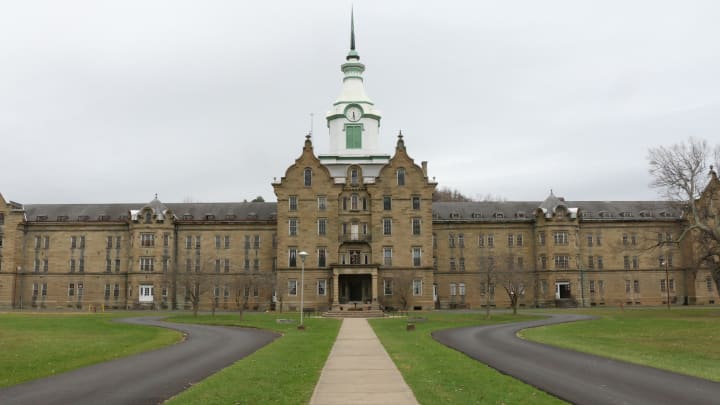
If you’ve read my article on The Trans-Allegheny Lunatic Asylum, you would know that the place hasn’t been the friendliest to those who enter the doors. I’ll link the article here, if you’re interested in a more detailed analysis of this location's paranormal past.
The Trans-Allegheny Lunatic Asylum was originally opened as The Weston State Hospital in 1864. The facility, designed to hold 250 patients, soon had a population boom. It’s highest population was in the 1950’s, coming in at over 2,600 people. Residents of the facility were admitted for reasons such as grief, domestic problems, seduction, or novel reading, if they were a woman. There were several attempts at closing down the asylum by local newspaper sleuths including two investigations done by the Charleston Gazette. Both found patients in nauseating living situations. Fecal matter would line floors, wallpaper torn from the wall, and up to five patients in a room meant for one, all naked and freezing. One of the most common “treatments” for patients stricken with mental illness was the transorbital lobotomy, commonly known as the icepick lobotomy, due to the primitive equipment used during the procedure.
The total number of deaths in the asylum's history is unknown due largely in part to poor record keeping and unmarking the graves of the deceased. The facility was meant to be state of the art, and mostly self-sufficient thanks to an onsite dairy, farm and waterworks, but soon fell into disarray. During its time of peak operation, the farms and dairy were unable to feed all the residents causing many to go hungry and reportedly die of starvation or malnourishment. Aside from the deaths related to mistreatment, there are many reports of patient and staff suicides as well as the mentally ill patients attacking one another resulting in the deaths of other residents of the facility. The asylum was forcibly shut down by the state in 1994 after regulations changed regarding the treatment of the mentally ill.
This has been a location on my list for a long time, not only because of the tragedy that struck, but the amount of unknowns going in. Many deceased victims are still unidentified and, sadly, have nobody to miss them in their absence from this world. I think one of the most important parts of investigating the paranormal is giving a voice to the deceased that have been silenced for so long. I would love to be able to give these patients their voices and amplify the stories about their lives.
The Seaside Sanitorium - Waterford, Connecticut
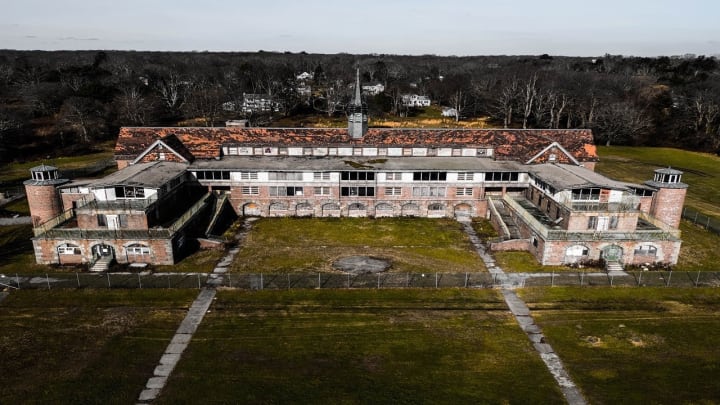
This massive structure was designed in 1934 to house patients fighting for their lives against the deadly tuberculosis(TB) epidemic striking the United States at the time. The facility was specially designed for heliotropic treatments for children suffering from this disease, which involved prolonged amounts of time in the sunshine to cure TB. The facility had massive decks that wrapped around the building facing the ocean where child patients would sit in the sun for hours each day as they fought their illness.
New drugs were soon developed in the fight against tuberculosis and the sanatorium became unneeded, as heliotropic treatments quickly became obsolete. The sanitorium would change purposes over the next 60 years, becoming a hospital, elder care facility and a home for the intellectually disabled.
This place is a very different location from many of the other ones on my bucket list. Although record keeping was still inadequate, given the time period, the records that have been kept, including patient diaries, paint a picture of a place that was run in a way that put patients first. While fighting tuberculosis was brutal and difficult, especially for children, the facility and its staff showed the patients a very high level of care. There is no record of abuse, overcrowding or funding issues like many facilities faced during this time.
I think this would be a much more lighthearted investigation. Most of the patients at the Seaside Sanitorium were children, and while they fell victim to a terrible disease, they were shown respect and kindness until their last moments. The facility did all they could with the scientific knowledge they had to keep children alive and well. I still believe that there are probably spirits who wander through the hallways wondering what happened. To die so young and brutally is a tragedy in itself, and this is a case where the main goal of my investigation would be to help young souls move to the other side and be at peace.
The Congress Plaza Hotel - Chicago, Illinois

Ever heard of Louis “Two Gun” Alterie? Maybe you’ve read about Jack “Machine Gun” McGurn? Okay, but you definitely know about John Dillinger? Some of the most famous names of the prohibition period in the United States were linked to the Midwest city of Chicago. And just as any high-roller would, these men needed a place to hang out and do some “business” if you know what I mean.
The Congress Plaza Hotel was constructed during the Chicago World's Fair in 1893. Not much has changed since then in the building, it remains as grand and luxurious as it was over a century ago. It’s location on Michigan Ave is a perfect spot to meet up for a drink at the bar or escape the Mrs. for a night with the boys. But during the time of American prohibition and the unlawful consumption of alcohol, one man in particular made The Congress his own personal “office” if you will. One of the most feared men in Windy City history, a man they say haunts the entirety of Chicago - Al Capone. Capone lived in the hotel throughout the 1920’s and 1930’s using the hotel as a front for his business practices. He would have regular meetings in the hotel and it was even rumored he used tunnels beneath the hotel for transporting his products.
If you’re unfamiliar with the story of Al Capone, I’ll give you some background. Capone was born in 1899 to poor immigrant parents. By the time the 18th amendment was ratified in 1920, Capone was a bona fide gangster. He soon found a place in the business of bootlegging liquor, selling and manufacturing it illegally. It’s widely believed that he used The Congress Hotel for a front for this illegal practice. Capone fell into other practices that brought him more and more publicity. In his days, gangsters were just as widely regarded as movie stars. That was, until Capone was found to be responsible for the 1929 Valentine’s Day Massacre. People felt Capone had taken the power too far, but Capone, a staunch narcissist, was determined to keep his title and fight for his “causes”.

Al Capone spent most of the last years of his life imprisoned at Alcatraz Prison in California. He was released in 1939, a physician noting that his mental state was in rapid decline. Through his life of crime and outrunning the law, Capone had been diagnosed with Syphilis. The disease would be the reason for his declining health and ultimately his death in 1947.
So what does all this have to do with ghost hunting? Al Capone was the most feared man in Chicago, and even larger parts of the United States during his heyday. It’s said that because he was mentally declining during his time in prison, when it was his time to leave this earth, his spirit went to the place it remembered - Chicago. Capone’s ghost is said to haunt, not only The Congress Hotel, but many other locations in the city. The ghost of this gangster has been spotted many times in the hotel since his death, walking the halls, sitting in the bar and downstairs in the basement.
There are many other ghosts that roam the halls of one of the oldest hotels in Chicago, but I wanted to finish this list with the most infamous. I’d give anything to be able to talk with Al Capone’s spirit. The evil and malice that he carried in life has probably followed him to the other side, and while it would be terrifying, my curiosity is a driving force and the thrill would make it all worth it.
About the Creator
Alesia Brooks
Disney blogger with a dark side
24-year-old writer and photographer
Follow along with my misadventures - IG: @livinglikealesia
Keep reading
More stories from Alesia Brooks and writers in Horror and other communities.
The Amityville Horror - Horrifying Fact or Historical Fake
If you’re an American who hasn’t heard of The Amityville Horror, you are probably five-years-old or live under a rock. The novel became a horror sensation in the 1970’s, Jay Anson wrote about the story of the Lutz family and their experiences living at 112 Ocean Avenue. The story goes that George and Kathy Lutz move their family into a beautiful home in New York. They purchase the house for a suspiciously low price, but soon realize why the sellers were so antsy to get the property off their hands when they begin experiencing terrifying events. The house once belonged to the DeFeo family and was the location of their murders, at the hands of their son, Ronald Defeo Junior. The new residents experienced physical and emotional changes before finally fleeing the place, lasting only 28 days.
By Alesia Brooks5 years ago in Horror
Burn the Witch
The house at the end of the cul-de-sac wasn’t a place of magic; it was a rotting blemish of crumbling limestone and damp half-timbering. It slumped tiredly against the city wall, as if trying to melt into the shadows of the battlements. There lived the widow—a woman whose sole remaining sin was that she had simply outlived her usefulness to anyone.
By C.G. Burns6 days ago in Horror




Comments
There are no comments for this story
Be the first to respond and start the conversation.