
Mount Osore: Japan’s Gateway to the Underworld
Sulfur, séances, and the riverbed of dead children — inside one of Earth’s most haunted landscapes
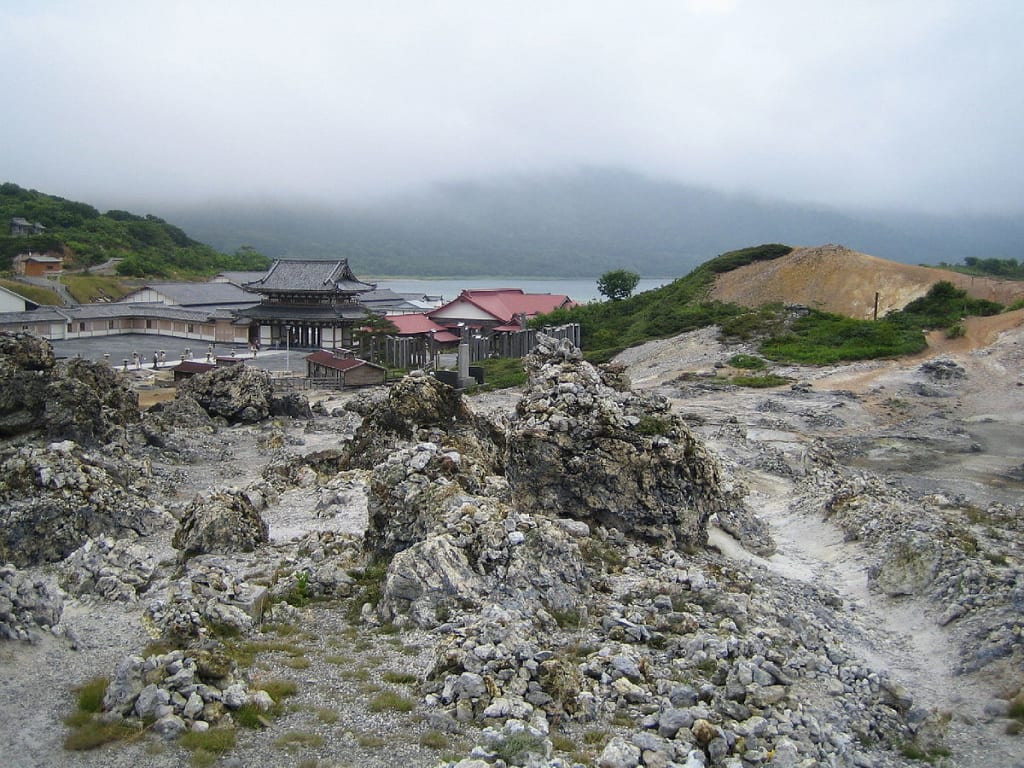
Perched at the end of the remote Shimokita Peninsula in Aomori Prefecture, Mount Osore (Osorezan), also "Fear Mountain" or "Dread Mountain," is more than a natural wonder. It is a spiritual maelstrom where Buddhist cosmology, volcanic desolation, and profound bereavement meet. Sanctified as one of three most sacred sites in Japan (the others being Mount Kōya and Mount Hiei), the landscape here mirrors Buddhist conceptions of the afterlife, drawing pilgrims, mourners, and paranormal seekers.
A Gateway to the Underworld: History and Landscape
Rediscovered by monk Ennin (Jikaku Daishi) in 862 AD, Mount Osore's history is veiled in divine prophecy. While studying in China, Ennin had been presented with a vision that commanded him to go east in Japan. After traveling for 30 days, he arrived at a volcanic wasteland that recalled Buddhist accounts of the underworld:
Sulfur vents out hot, toxic gases, a ghostly "barren moonscape" of spiny, carbonized rocks.
Lake Usori, a picturesque but lethal caldera lake whose acid water can corrode metal.
The Sanzu-no-Kawa River, like the River Styx, which souls must cross to reach the afterlife. A vermilion bridge marks where the righteous pass with ease, while the wicked struggle in vain.
This hellish terrain—encircled by eight mountains representing lotus petals in Buddhist cosmography—cemented Osorezan's status as a literal jigoku (hell) on earth. Ennin's Bodai-ji Temple was a pilgrim site, although history was leveled by war and conflagration. The building today dates from the 16th century.
Ghost Evidence: Where Spirits Walk the Earth
Ghostly apparitions are woven into rituals, folklore, and raw experiences:
Sai-no-Kawara: The Riverbed of Lost Children
A desolate area near the temple is reputed to catch children who died before their parents. Story goes that the spirits pile rocks to escape hell but are tormented by demons who destroy their cairns. Toys, pinwheels, and rock heaps are left by tourists to assist them, creating an unhappy mosaic of grief. Whirling pinwheels are a sign of reincarnation—a glimmer of hope amid purgatory.
The Itako Mediums: Voices from the Void
At the heart of Osorezan's haunting fame are the itako—blind female shamans trained from birth in brutal ascetic disciplines (ice-water baths not withstanding) to converse with the dead. Twice annually (July 20–24 and October), they hold kuchiyose séances, summoning spirits with rasping cries and unnatural poses. Less than two dozen itako remain today, their rituals a fading thread binding the spirit world.
The Wandering Jizo Statue
At Bodai-ji, a 2-meter-tall image of Jizo—the bodhisattva who releases souls from hell—stands wearing monk's robes. Locals say it roams the grounds after dark; tattered robes are attributed to desperate souls grasping it in hopes of salvation.
Ethereal Encounters
Visitors remember sulfur-odored breezes that appear ghostly whispers, black specters near fumaroles, and a choking sense of being watched. As one visitor noted: "If you close your eyes, you can almost feel the spirits going by" near Sanzu River bridge.
Between Hell and Paradise: A Landscape of Duality
Well away from its hellish imagery, Osorezan is all about duality:
Gokuraku Beach, a white beach on Lake Usori, is Buddha's pure land. Pilgrims make prayer here, offering goods for the deceased.
Healing hot springs at Bodai-ji—employed for centuries—defy deterioration with waters said to heal conditions such as neuralgia and eye illness.
The Itako Taisai festival turns fear to catharsis, attracting thousands in search of closure through mediums, memorial stupas (tōba), and shared rituals.
Cultural Legacy: Art and Modern Pilgrimage
Osore's mystique infuses contemporary culture:
Artist Yoshitomo Nara (Aomori) subconsciously borrows from its doll-clad landscapes in works like Not Everything But/Green House.
Director Terayama Shuji used it as a focal setting in Pastoral: To Die in the Country, amplifying its creepy ambience.
Accessibility: It's open May–October, and the journey takes a 40-minute bus ride from Shimokita Station (fare: ¥810). The final approach along beyond the Sanzu River is akin to entering a parallel world.
Why It Still Haunts
Mount Osore is not your typical "haunted" site—it's where human sorrow, religion, and geology converge. As folklorist Marilyn Ivy suggests, it's a gigantic system of memorializing unbound dead (muenbotoke), in which grieving is ritualized into form 6. Here, in this in-between space, the distinction between the living and the dead is existentially fragile, so that any spin of a pinwheel and whoosh of a sulfur vent becomes witness to eternity's echo.
About the Creator
Kyrol Mojikal
"Believe in the magic within you, for you are extraordinary."
Keep reading
More stories from Kyrol Mojikal and writers in Horror and other communities.
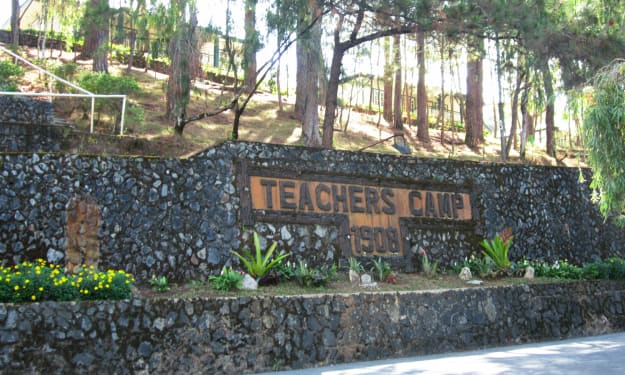
Teacher's Camp, Baguio: The Philippines' Most Haunted Heritage Site
The Spooky Past and Ghostly Whispers of Baguio, Teachers Camp Perched at Leonard Wood Road in the Philippines' summer capital, Teachers Camp stands on top of a colonial treasure and spine-tingling ghost stories. Its early start in 1908 as an American and Filipino teachers' training camp (most especially the "Thomasites") belies a tempestuous past behind the camp's peaceful exterior which upholds its reputation as the country's most haunted haunt.
By Kyrol Mojikal9 months ago in Horror
"Scream 7" (2026): Running out of Fresh Screams
This is the seventh time we’ve had a Ghostface crisis. Scream 7 is the latest edition of the Scream franchise. Sydney Prescott and her family are under attack by another anonymous killer dressed in a Ghostface costume. While having issues with her daughter, Tatum, they run from the bloody murders, trying to determine who is behind it all.
By Marielle Sabbag8 days ago in Horror
A More Human Vocal
When we launched Vocal nearly a decade ago, the world was a very different place. LLMs did not exist, and stories were created one at a time by people sitting down to write, revise, and share something personal. Many of our assumptions about publishing, trust, and participation were built for a world where effort and output were inseparable.
By Justin @ Vocal4 days ago in Resources



Comments
There are no comments for this story
Be the first to respond and start the conversation.